Explore the best places
Monuments in Odivelas


Fonte das Fontaínhas
- heritage
Rua das Fontaínhas
1685-134, Famões
This spring originated in the Ribeira das Águas Livres stream and, after the construction of the aqueduct of the same name, was reduced to a spring and a small stream, which once served as a public laundry. It was built in 1888, and the exploitation of its waters began in 1910.

Memorial de Odivelas
- heritage
Largo da Memória
2675-407, Odivelas
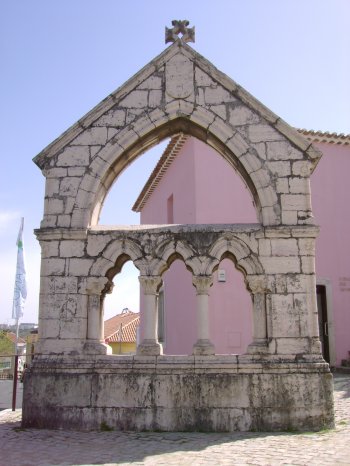
The monument consists of a large pointed arch surmounted by a colonnade supporting three-lobed arches, crowned by a shield. Its initial function was to demarcate the territorial boundaries within the jurisdiction of the Odivelas Monastery. The exact date of its construction is unknown, but it is believed to date from the 14th century.
Mosteiro de Odivelas / Antigo Mosteiro de São Dinis e São Bernardo / Instituto de Odivelas
- heritage
Largo Dom Dinis
2675-336, Odivelas
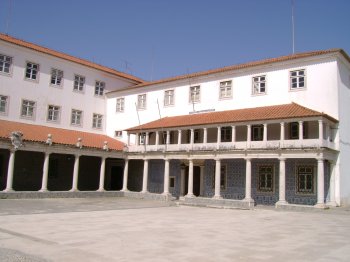
Built between 1295 and 1305, this monastery, founded by King Dinis, belonged to the Cistercian Order. Heavily damaged by the 1755 earthquake, only the door and the apsidal chapels of the church remain, as well as some sections of the cloisters. The Gothic apse, composed of the main chapel and two apsidal chapels covered by chamfered ribs, is particularly noteworthy. This monastery houses the tombs of King Dinis and his daughter, Dona Maria Afonso.
Padrão do Senhor Roubado
- heritage
Rua Pedro Álvares Cabral
1675, Pontinha
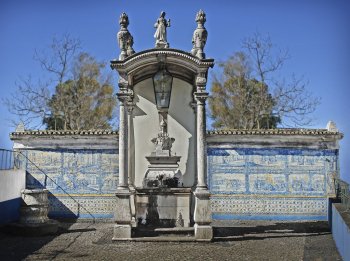
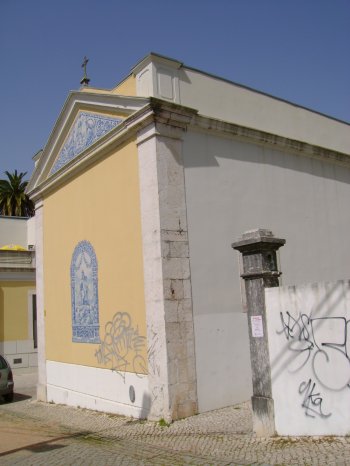
The Monument to the Stolen Lord, dating from 1744, consists of an enclosure in the shape of an isosceles trapezoid, featuring a pulpit that gives it the dimension of a place of divine worship, and a wall entirely covered with monochromatic tiles, serving as a kind of altar. Its construction was due to a robbery carried out in the church of Odivelas in 1671 by a young man who was later condemned in this place, which then became a space where the faithful asked forgiveness for their sins.
Fonte dos Castanheiros
- heritage
Rua dos Castanheiros
1685-585, Famões
Composed of three perfect semicircular arches, topped by a pediment with spandrels that frames three inlaid medallions, the Chestnut Tree Fountain evokes a bucolic and neo-romantic revival. Located on a picturesque farm, it was the first to be explored by private individuals in 1931.
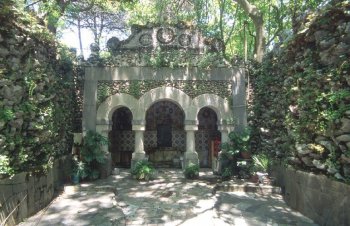
Casa do Arcebispo/ Quinta da Memória
- heritage
Rua Guilherme Gomes Fernandes
2675-372, Odivelas
A rectangular, two-story Baroque house, of the ecclesiastical palace type used for recreation. The farm and palace were founded by D. Rodrigo de Moura Teles, a notable figure in the Catholic Church, in the 18th century. Currently, it houses the President's Office, the City Council, the main hall, and the municipal auditorium.
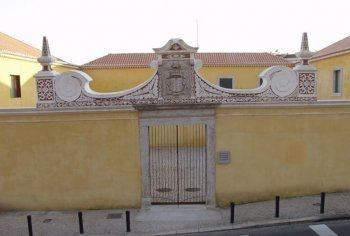
Aqueduto das Águas Livres
- heritage
Rua Dom Diniz
1685, Famões
Belonging to the set attached to the Águas Livres Aqueduct, an aqueduct, in stone, created to get water to the Terreiro do Paço de Queluz for consumption of the Royal Mews. The work was created in the place of two sources: the source of Gargantada and do Pocinho and served several fountains and fountains in Queluz. Built by d. João V, in 1731, was only to be done in the mid-19th century. The main section is 14 kilometres in length, of which eight in the municipality of Amadora.
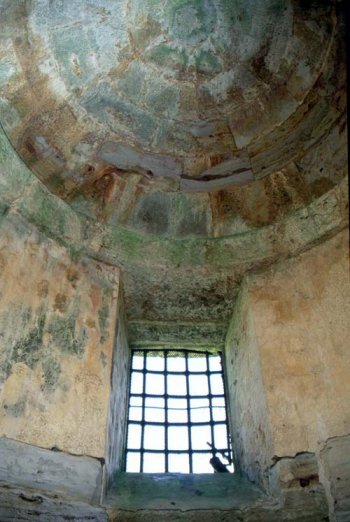
Igreja Matriz de Odivelas /Igreja do Santíssimo Nome de Jesus
- heritage
Rua Alberto Monteiro
2675-273, Odivelas
Baroque church of longitudinal plan composed by the juxtaposition of the ship with the chancel, showing coverage with gabled roofs and in coruchéu. It was built at the end of the 17th century over an ancient temple. Inside, the main altarpiece stands out, with a high gilded Rococo dressing room.
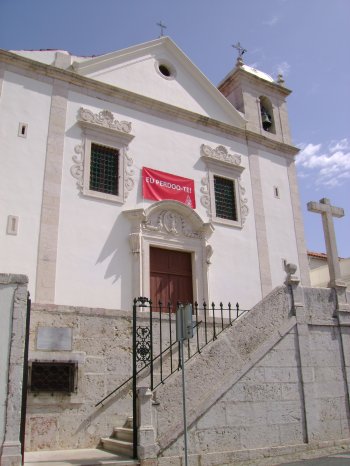
Capela de Nossa Senhora do Monte do Carmo
- heritage
Travessa Nossa Senhora do Monte Carmo
2675-417, Odivelas
Chapel of longitudinal plan composed by the juxtaposition of the nave and chancel, showing the gable roofs coverage. It was built by Gil Vaz Lobo, alcaide-mor of the town of Sintra, in the 17th century. In 1998\/1999 was recovered and transformed into the library.
Moinho da Laureana
- heritage
Rua Marechal Gomes da Costa
1685, Famões
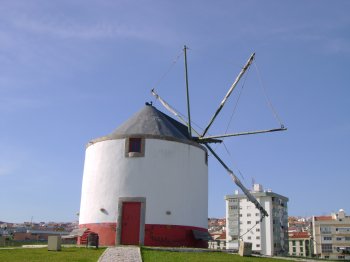
Windmill dating from the 18th century, recovered between 1999 and 2001, running now as a museum.