Explore the best places
Country in Portugal


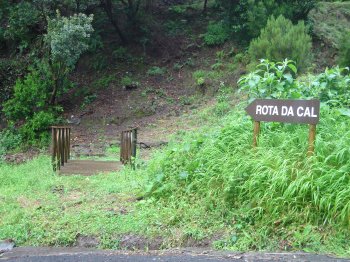
Estação da Biodiversidade de Lamas de Olo
- country
EM313, 100
5000, Lamas de Olo
Also known as the Tagis Biodiversity Station, as it was developed in partnership with TAGIS (Portuguese Butterfly Conservation Centre), it offers short, signposted walking trails that showcase the biodiversity of the Alvão Natural Park.
Fórnea
- country
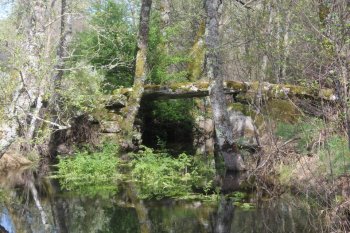
Fórnea
2480, Alcaria
Many hiking trails lead to this location, where it is possible to observe a geological phenomenon that resulted in a natural amphitheater. Inside Fórnea is Cova da Velha, a cavity from which a spring flows down to the Ribeiro da Fórnea stream.
Grutas de Santo António
- country
Rua das Grutas
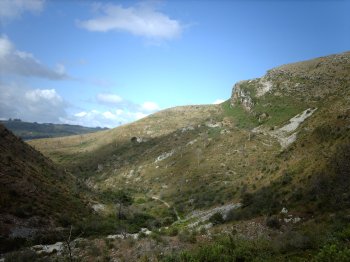
2480-034, Alvados
Discovered in 1955, they are part of a group of caves in the Serra de Minde mountain range. Their configuration is gallery/chamber type, with the unique feature of ventilation through a natural chimney. Replete with stalactites and stalagmites, the largest chamber is approximately 6000 m2 and can be visited.
Grutas de Alvados
- country
Rua das Grutas
2480-034, Alvados
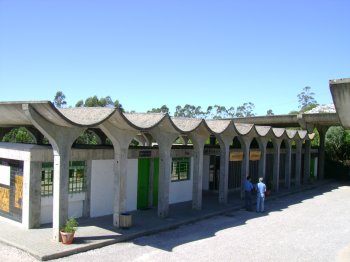
Discovered in 1964, they are found in the Serra de Minde, in an area where these formations are abundant. They have a gallery/chamber/well configuration. Notable features include stalactites, stalagmites, and illuminated lakes in the successive interconnected chambers.
Grutas de Mira d'Aire
- country
Avenida Doutor Luciano Justo Ramos, 470
2485-050, Mira de Aire
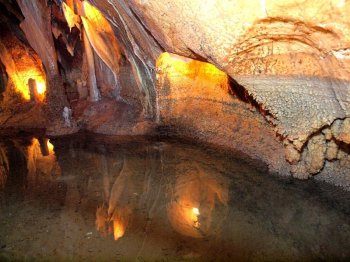
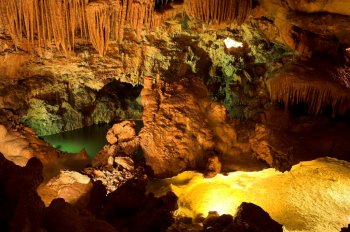
Discovered in 1947, these are the largest caves in Portugal. They have a gallery/room/shaft configuration and their formation is due to erosion and tectonic changes. They feature underground lakes and rooms with beautiful limestone formations. They have two elevators and are 110 meters deep. Here lies the Great Lagoon, formed by the Rio Negro, an underground watercourse that, in winter, forms the Mira de Aire Lagoon. In 2010 it was classified as one of the Seven Natural Wonders of Portugal.
Baía do Seixal
- country
Saixal
2840, Seixal
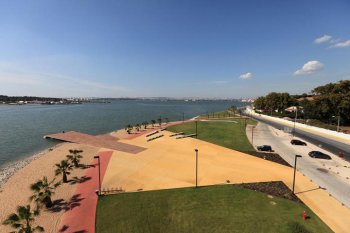
Seixal Bay, considered the landmark of the municipality, is renowned for its rich landscape, birdlife, and aquatic fauna. In an area of almost 500 hectares, many migratory birds are sighted, such as herons, kingfishers, and occasionally colonies of flamingos. Due to its natural conditions, the bay serves as a setting for various sporting activities.
Serra da Marofa
- country
Serra da Marofa
6440, Figueira de Castelo Rodrigo
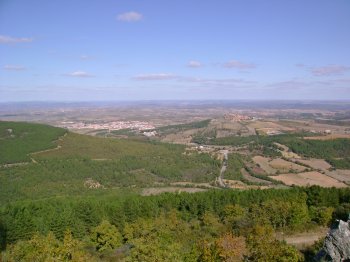
A mountain range, 977 meters high, ten kilometers long and 7.5 kilometers wide, belonging to the Ancient Massif between the Douro and Tagus rivers. It is located southwest of Figueira de Castelo Rodrigo, between the Côa River and the Spanish border, and is characterized by a forest of abundant pine and oak trees. At the top, highlights include the Chapel of Our Lady of Fatima, built in 1947, the Grotto of Our Lady of Lourdes, a replica of the one in France, and the landmark of the place: the imposing Christ the King statue.
Reserva Natural do Estuário do Sado
- country
Reserva Natural do Estuário do Sado
7580-709, Santa Susana
Encompassing most of the estuary and its surrounding area (municipalities of Alcácer do Sal, Grândola, Palmela and Setúbal), the Sado Estuary Nature Reserve is a mix of river and sea water, where sandbanks and mudflats, beaches and dunes, and salt marshes and reed beds hide from less curious eyes, in a rich ecosystem with varied fauna and flora. The Reserve is particularly important as a nesting site for waders and ducks, possessing the most significant dolphin population in the country. The marginal areas and areas such as the Tróia dunes and the Herdade do Pinheiro lagoons are an integral part …
Centro de Educação Ambiental de Vinha de Mouros
- country
Rua Vinha de Mouros
4860-414, Cabeceiras de Basto
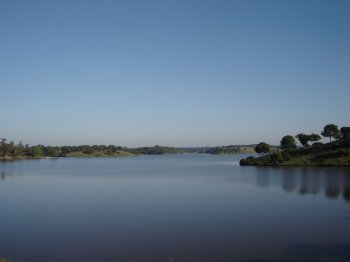
A forested area that stretches from the village to Ranha and Gragilde, in Painzela. This area contains valuable plant species, along with a diverse array of local fauna. In addition to this beautiful area, it also boasts sports and leisure facilities.
Rota da Cal
- country
Sítio de Lameiros
9240-211, São Vicente
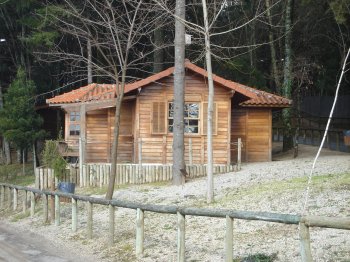
This route allows visitors to discover the tradition of lime extraction, which for many years was part of life in São Vicente, the only place in Madeira where limestone exists. The aim is, therefore, to recreate an activity that took place until the mid-1970s.