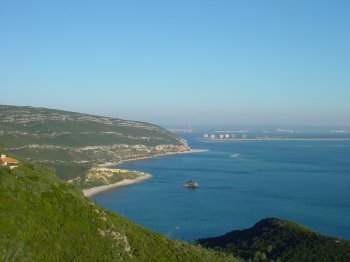
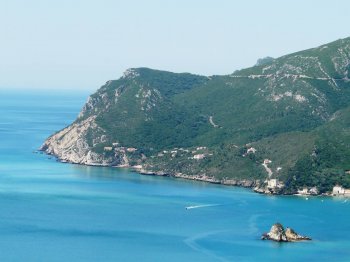
Pedra da Anixa is a zoological reserve where the characteristic plant and marine animal diversity of rocky coasts is most evident. Located in Portinho da Arrábida, it is an example of a rocky outcrop amidst vast stretches of underwater sand, giving this place a unique character.
The Arrábida Natural Park encompasses a series of landforms that form the Arrábida mountain range. This park was created with the aim of preserving the natural, socio-cultural, economic, and historical values of the region. The natural and scenic importance of this area is enormous, due to its rare natural characteristics and scarce human development. At first glance, it seems like a wall over the Atlantic – the Alto dos Píncaros, at the top of the Serra do Risco, at 400 meters altitude, drops abruptly into the Atlantic – but the Arrábida Natural Park hides a multiplicity of morphologies that make …
Located in the Natural Park of the Arrábida Hill, it overlooks the Atlantic Ocean. It spreads from the Palmela hillock to the Cape Espichel and it is 35 km long, 6 km wide in average, and reaches its peak at the Alto do Formosinho. Occupied since the days of old, the roman presence may be seen in the tanks that the romans used for salting the fish. A space with landscapes of great beauty that includes woods and beaches alike. It is extremely rich in terms of animals and plants, with local species, as well as in architectural terms, namely …
A wide estuary, with several areas of benches and swamps. It is separated from the sea by the peninsula of Tróia and it is composed by two main regions: the central bay of Setúbal and Marateca and the Alcácer channel. The inner part of the estuary is surrounded by rice fields and cane fields and the outter part is densely populated and industrialized.
This hill belongs to the mountain range that includes the Arrábida Hill and ends abruptly by the sea. It reaches its peak at the Píncaro, at an altitude of 381 metres, and it is hence the highest cliff in continental Europe. An excellent place for mountain climbing.
The Sado river, that has it spring on the Vigia Hill, is unique because it flows from the south to the north and then finally has its mouth in Setúbal. The water level is quite varied, due to the tides, which causes river islands and favours the existence of plants and animals.