Explore the best places
Villages in Oliveira do Hospital


São Gião
- country
- heritage
São Gião
3400-655, São Gião
A very old village located on the foothills of the Serra da Estrela, it has a section of Roman road. The main church, known as the Catedral das Beiras, stands out. It is a large temple with gilded carvings, a ceiling with 102 paintings, and liturgical vestments. Nearby, the "Curral dos Romanos," also known as the Dólmen da Sobreda (Property of Public Interest), a curious olive press from the medieval period, in the town of Rio de Mel, and the Penedo da Moura, a natural cave, are worth a visit.
Lourosa
- country
- heritage
Lourosa
3400, Lourosa
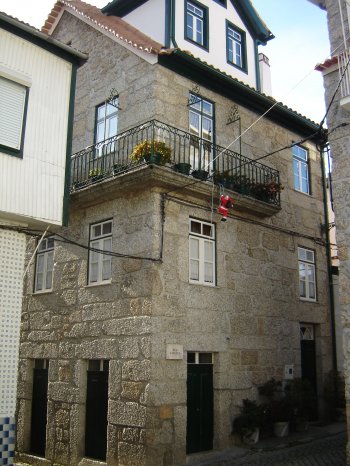
This town's main attraction is the Mozarabic church, the only one on the Peninsula, which attests to the town's antiquity, predating the Christian reconquest. Also of great cultural interest are the remains of medieval anthropomorphic tombs, some Roman and perhaps Visigothic. Also, noteworthy are the pillory (a Property of Public Interest) and several sunny houses from the 17th and 18th centuries.
Avô
- country
- heritage
Avô
3400, Avô
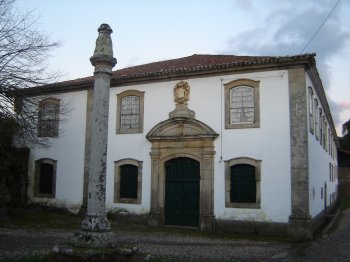
The name of this village originated in Couto de Avão, because there was no bridge over the Alva River and the Moura Stream, so the old town could only be entered by fording (ad vadum). The warrior-poet Brás Garcia Mascarenhas, author of the epic poem "Viriato" (18th century), lived here. This land was inhabited by the Romans, perhaps the founders of the ruined castle. Among the monuments, the main church, presumably commissioned by King Afonso Henriques, is noteworthy, as is a 16th-century manor house, a pillory, and a chapel.
Bobadela
- country
- heritage
Bobadela
3405, Bobadela
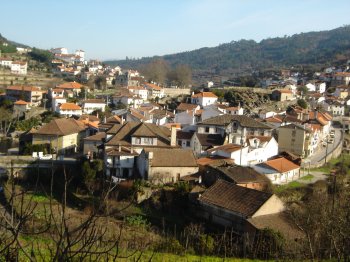
The siege of the "municipium" in the roman days, in the 1st to 4th centuries bC, and later on th siege of a small mdieval parish. Its architectural heritage includes the Roman Arch, a National Monument, the pillory, the mother church, the roman amphitheatre, the roman bridge of Ribeira de Cavalos, the chapls of Our Lady of Luz (Light), Our Lady of Socorro (Help) and of Saint Sebastião, the menhir of the Pimheiro dos Abraços and several manors. A special note to the museum at the Godinhos houses, with a manuelin window, as well.
Aldeia das Dez
- country
- heritage
Aldeia das Dez
3400, Aldeia das Dez
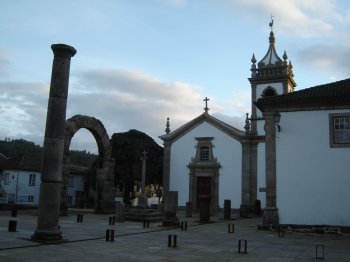
This village is located on the northern slope of the Colcurrinho hill (at an altitude between 400 and 500 metres), with the Alcovo river in the background. It was already inhabited in the pre-roman epoch, as proven by the ruins of a Portuguese-roman castro (a celtic village) nearby. The parish was created in 1543 by the bishop of Coimbra, Dom Jorge de Almeida. The rural granit houses are extremely picturesque. The architctural heritage includes the mother church (18th century), the fountain's crucifix, the sanctuary of Our Lady of Preces (Prayers) - Located on the Colcorrinho Hill, at an altitude of …
Seixo da Beira
- country
- heritage
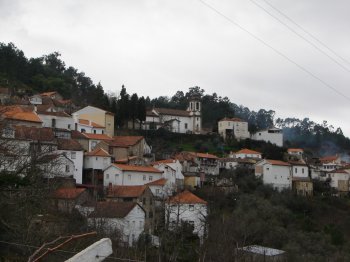
Seixo da Beira
3405, Seixo da Beira
A very old village in a granite land, surrounded by pine trees, eucaliptus trees and bushes. It is a grandiose natural heritage. From pre-history there are imposing megalithic monuments. Several churches and chapels, as well as a pillory with some manuelin vestiges stand out.