Explore the best places
Monuments in Santiago do Cacém


Ruínas Romanas de Miróbriga
- heritage
Estrada das Cumeadas - EM550
7540-236, Santiago do Cacém
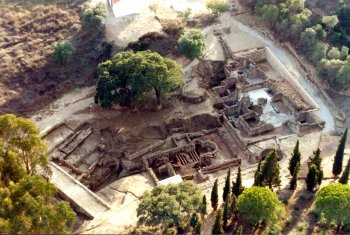
A fortified settlement from the Late Bronze and Iron Ages, upon which a city was built in Roman times. Temples, a commercial area, baths, pavements, and a hippodrome, among other remains, are evident. Of note is the ancient spectacle site, the Roman circus, with a capacity of 25,000 people.
Igreja Matriz de Santiago do Cacém/ Tesouro da Colegiada de Santiago
- heritage
Rua do Castelo
7540, Santiago do Cacém
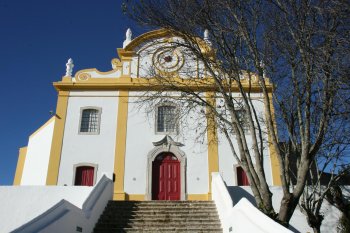
This church's highlights include the ogival side portico, the vault covering the high choir, and the 14th-century Gothic stone high relief depicting Santiago fighting the Moors. Over the centuries, the building underwent alterations, revealing vestiges from various periods. The four sections of the central nave and side naves, separated by broken arches on octagonal pillars with cubic capitals, the Porta do Sol (Sun Gate) with its broken archivolt, the high relief in the subchoir, and the tomb of Álvaro Mendes Brito are some examples of the Gothic style. The Manueline style is evident in the structure of the original transept, …
Castelo de Santiago do Cacém
- heritage
Rua de Santiago
7540, Santiago do Cacém
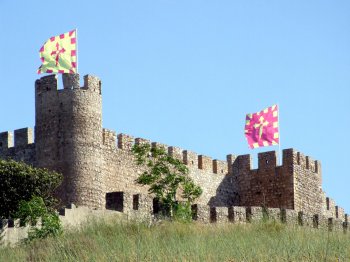
This castle, which dominates the town, has a rectangular plan and its foundation is attributed to the Islamic period. Definitely conquered from the Moors in 1217, King Afonso II ordered the construction of a castle there, which he donated to the Order of Santiago. Over time, and due to its loss of military function, it began to deteriorate. Within the wall are remains of the citadel, a cistern, and other buildings.
Moinho da Quintinha/ Cumeada
- heritage
Estrada das Cumeadas
7540, Santiago do Cacém
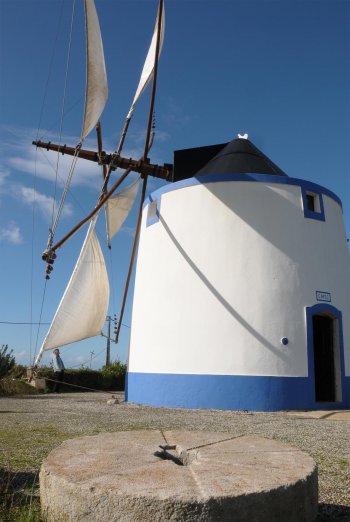
A masonry mill with a truncated cone-shaped tower and a rotating cap driven by a windlass. It has been in operation since 1982. Whenever weather permits, tourists can observe the traditional grain milling process. At the beginning of this century, the Quintinha Mill is the only example in Portugal of the beginnings of a milling school.
Palácio dos Condes de Avillez
- heritage
Rua Condes de Avillez
7540, Santiago do Cacém
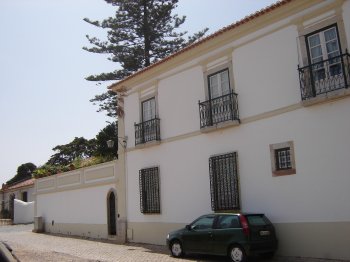
The façade of this building follows two different lines, one with several windows and doors around a central vertical body, and the other with several windows with iron grates. The back of the building was turned into a leisure and spiritual refuge area with three interesting architectural features: a small Swiss chalet (The Tea House), a revivalist and eclectic chapel and an interesting traingualar building, named the Hothouse.
Igreja Matriz de São Francisco da Serra
- heritage
Praça José Pedro Guerreiro Malhadais
7540, São Francisco da Serra
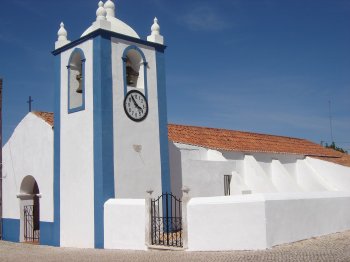
A church with one sole nave and frescoes of the 16th and 17th centuries that show angels with incense, dressed in the 1500s fashion, and also a group of images related to the life of Jesus.
Capela de São Pedro
- heritage
Passeio das Romeirinhas
7540, Santiago do Cacém
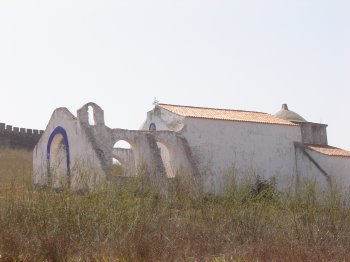
The chapel, which burned in 1895, has very simple lines, with a masonry portal and an opening on the fronton, composed of a high altar and a sacristy. Two different architectural modules can be viewd here. Inside, one can find a John Paul II tile of the 1980s and a Saint Peter of the 18th century.
Capela de Nossa Senhora da Graça
- heritage
IC33
7500, Santo André
A small rural temple where the pilgrims come. A special note to its general architectural quality and to the chapel's tiles.
Igreja Matriz de São Bartolomeu da Serra
- heritage
Beco 1º de Maio
7540, São Bartolomeu da Serra
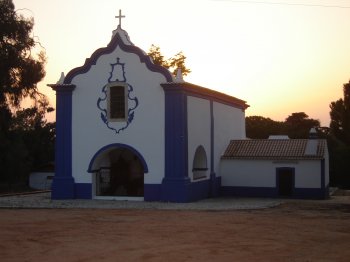
The oldest temple feature is the primitive image of its patron saint - Saint Bartholomew - in calcareous rock (14th century), currently in the parish residence of Santiago do Cacém.
Igreja Matriz de Nossa Senhora Abela
- heritage
Rua Padre Hermano de Almeida Lima
7540, Abela
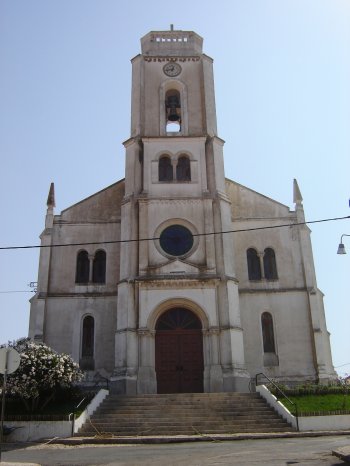
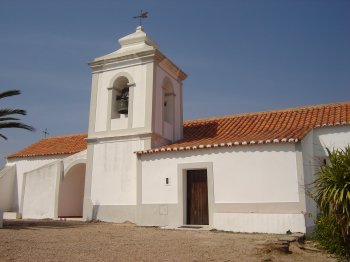
A church inspired by the French models, which can be seen in the fact that beeltower is on the façade, forming a façade-tower, and in the arch with round archivolts that stand on very fine columns.