Explore the best places


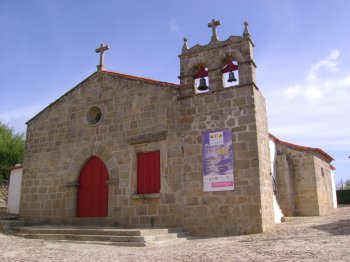
Igreja de Santa Maria do Castelo
- heritage
Largo de Santa Maria, 14
6400-410, Pinhel
This religious monument consists of a three-bay nave, a chancel, side chapels, a sacristy, and a bell tower. The main façade consists of a rounded portal and a circular oculus, flanked by a bell tower, the upper one having a double bell tower. This façade features a window overlooking the Stations of the Cross. The interior features the baptistery, which houses the baptismal font, the Mannerist niche, the painted panels of the chancel and altarpiece, and the Christ the Redeemer statue on the tabernacle door.
Cineteatro São Luís
- art
Rua Antonio Jose de Almeida, 27
6400-455, Pinhel
A place with excellent conditions for cultural activities such as cinema, theater or exhibitions.
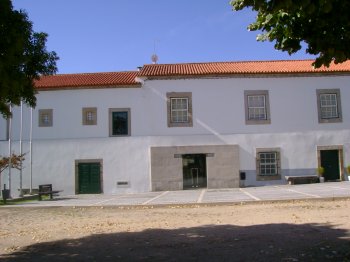
Biblioteca Municipal de Pinhel / Biblioteca Municipal Luís Augusto das Neves
- heritage
Rua Tenente Valadim, 3
6400-460, Pinhel
A space dedicated to information, culture, and leisure, with areas designed for the general public: children's sections, youth sections, audiovisual sections, and adult sections. There is also a newspaper section and a collection of antique documents.
Núcleo de Arte Rupestre da Faia
- heritage
Cidadelhe
6400-191, Cidadelhe
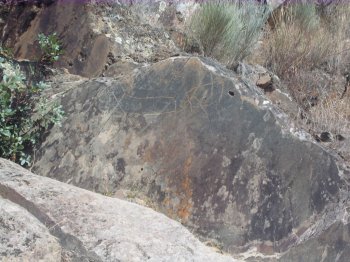
A core composed of figures engraved in granite, representing two opposing bovids and a sequence of four bovid heads pointing toward the ground, which are associated with schematic paintings from recent prehistory. Certain painted lines add unengraved details, suggesting the hypothesis that some of the elements are Paleolithic. It is a UNESCO World Heritage Site (1998) and a National Monument by IGESPAR, part of the Côa Valley Archaeological Park.
Antigo Paço Episcopal / Casa da Cultura
- heritage
Rua dos Combatentes da Grande Guerra - Parada Coronel Lima da Veiga
6400-348, Pinhel
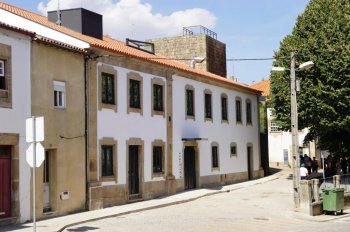
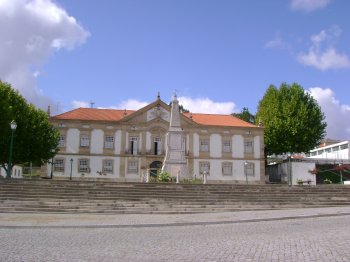
Residential architecture in Baroque, Pombaline, and Classicist styles, with significant elements characteristic of grand Baroque architecture. At the front stands a monument dedicated to the Dead of the Great War and a fountain. The building is quadrangular in shape and surrounds a courtyard. The painted ceiling depicts the image of the Virgin and Child and Saint John the Baptist. Today, it is the headquarters of the municipal company Falcão and hosts recreational and cultural activities throughout the year.
Miradouro do Castelo de Pinhel
- country
- leisure
Rua do Castelo, 4
6400-340, Pinhel
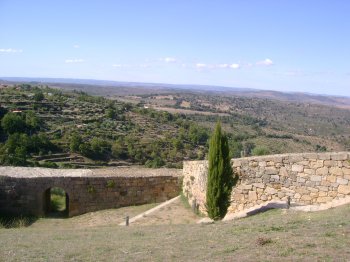
In addition to the space surrounding the beautiful Pinhel Castle, the lookout provides a privileged view of the entire city, its historic center, and the surrounding area. In 2005, the space received a virtual lookout capable of telling the story live in the locations and settings where the events took place, combining high-tech with history.
Centro Interpretativo do Castelo e Territórios de Pinhel
- art
Rua do Castelo
6400-340, Pinhel
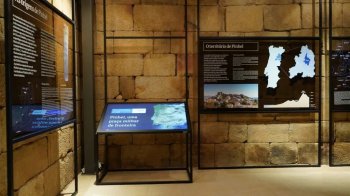
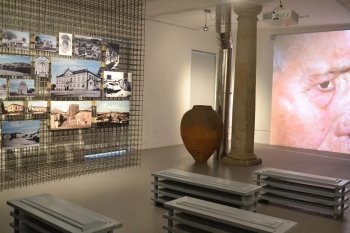
This is an exhibition center located within Pinhel Castle itself, making this cultural space a point of great interest, as it frequently hosts a variety of exhibitions that are well worth visiting.
Museu Municipal de Pinhel
- heritage
Largo Ministro Duarte Pacheco
6400-444, Pinhel
The Pinhel Municipal Museum is dedicated to developing cultural activities in various spaces throughout the city and municipality, as well as collecting and disseminating material and immaterial information and testimonies to preserve and transmit the history and collective experiences of Pinhel.
Centro Histórico de Pinhel
- heritage
Rua de Santa Maria
6400-410, Pinhel
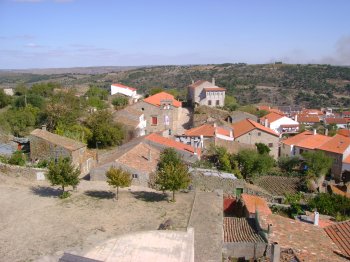
Pinhel's origins date back to the Chalcolithic period, but earlier remains exist, as suggested by the rock carvings in Cidadelhe, in the Côa Valley. For this reason, the historic center of this town deserves a long stop, to appreciate its narrow streets, adapted to the terrain, and the rich heritage of the medieval and modern periods.
Castelo de Pinhel
- heritage
Rua do Castelo, 4
6400-340, Pinhel
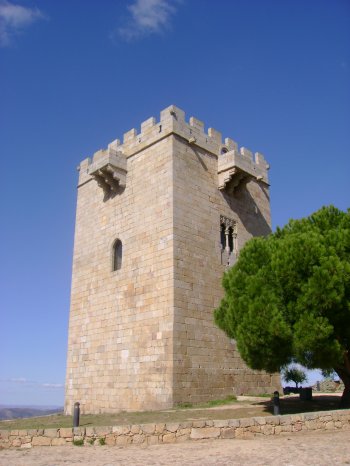
This castle was formerly a Lusitanian fortification, but it was the Romans who made it militarily important. During the reign of King Dinis, fortification and expansion work was carried out, with six towers being erected and walls being built around the town. After losing its defensive function, the castle fell into decline. Currently, only a few sections of the walls, some gates, and two towers remain. It is believed that this site once housed a castrum built by Lusitanians, Vetoans, or Turduli who took refuge there. It was later occupied by the Romans. The first restoration work was carried out …