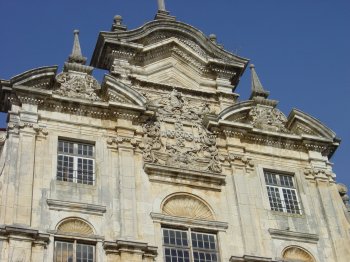
A magnificent Jesuit temple, part of the College of the Society of Jesus, whose construction began in 1598. After the expulsion of the Jesuits from Portugal in 1759, it was handed over to the Cathedral Chapter. The main façade, austere yet elegant, is composed of two superimposed sections corresponding to two distinct construction periods: the first section, up to two-thirds of its height, is in the classical style, while the second is in the Baroque style. Inside, noteworthy features include the various Baroque carved altars from the late 17th century, the organs located on the side walls of the chancel, …
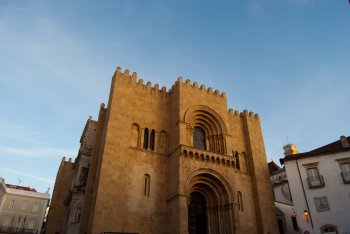
This is one of the most beautiful Portuguese Romanesque monuments, with an external appearance resembling a fortified church. The current construction began in 1162, during the reign of King Afonso Henriques. It served as the Episcopal See until 1772 and subsequently belonged to the Misericórdia (a charitable institution) until 1778. From 1785 to 1816 it was occupied by the Third Order of Saint Francis, and after that date it became the seat of the parish of São Cristóvão. The main façade features a magnificent portal, formed by arches supported by columns with decorated capitals. The 13th-century cloister was the first …
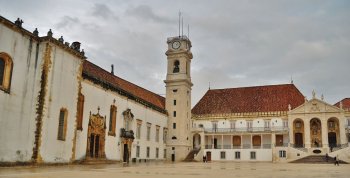
This monument is considered to be the ex-libris of the city. Dated from 1728, this tower with 34 meters height is richly decorated and composed by several overlapped bodies. On the last floor are the clock and a belvedere on top.