Explore the best places
Heritage in Portugal


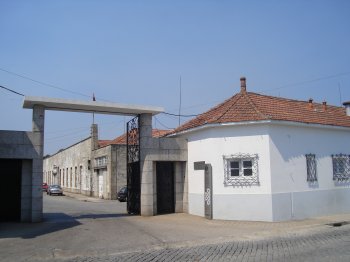
Fábrica de Fiação e Tecidos de Santo Tirso / Fábrica Santo Thyrso
- heritage
Avenida da Fábrica de Santo Tirso, 88
4780-257, Santo Tirso
Founded in 1896 on land provided by Santa Casa da Misericórdia de Santo Tirso, the spinning factory began operating in 1898. It is still possible to see the working-class neighborhood today, dating back to the 40s of the 20th century. The company was in operation until 1990. It currently operates as a space for events.
Igreja de São Pedro de Roriz
- heritage
Rua do Mosteiro de Roriz
4780, Roriz
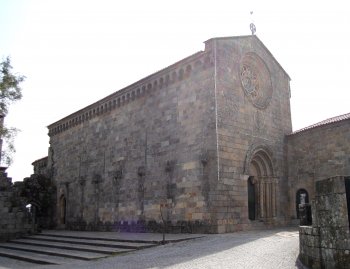
The Monastery of São Pedro de Roriz was founded by Lady Unisco Godiniz, in the year 978. Its affiliation with the Benedictine Order dates back to 1902. In the 17th century, notable works were carried out, directed by Frei João Turriano, which results in the current appearance of the monastery. Its interior is rich in gilded carving and reveals traces of one of the most notable carvers of the "Braga school", Frei José de Santo António Ferreira Vilaça. Its style shows influences from French and German Baroque and Rococo.
Capela da Igreja de São Tomé de Negrelos
- heritage
Rua Patrício Alves Carneiro, 94
4780, São Tomé de Negrelos
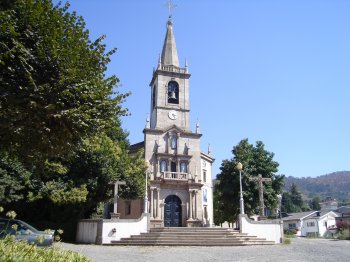
Despite the successive renovations that changed its origin, this church maintains the 16th century logic, quadrangular, formed by eight columns with composite capitals. The chapel, inside, has a 16th century style.
Mosteiro de São Bento / Mosteiro de Santo Tirso
- heritage
Largo Abade Pedrosa
4780-368, Santo Tirso
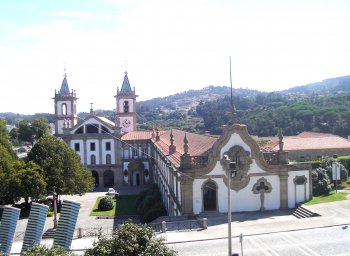
Founded in the 8th century, this monastery was rebuilt in the 13th century. From that time, the Gothic cloister with an arched arch with abundantly ornamented capitals remains. The church, built in the 17th century, is preceded by a narthex, with three arches topped by niches. The entire interior is worthy of reference, particularly the carvings.
Castro do Monte do Padrão
- heritage
Monte do Padrão
4825, Monte Córdova
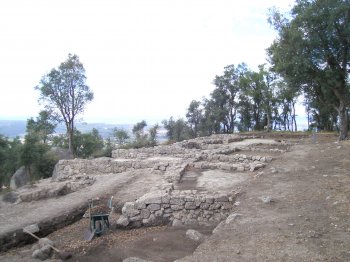
Protohistoric fortified settlement with circular buildings, surrounded by three orders of walls, and revealing traces of occupation in Roman and medieval times. Two large buildings stand out that occupy the central area of the station's upper platform, one of which is composed of a Domus with a quadrangular plan, with a central atrium and some compartments around it, and the other with a rectangular plan.
Museu Municipal Abade Pedrosa
- heritage
Avenida Unisco Godiniz, 100
4780-373, Santo Tirso
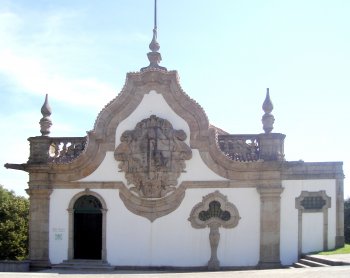
Opened in 1989, located in the conventual wing of the former Benedictine monastery of Santo Tirso, it is an archaeological museum, where you can find the collections of Abbot Joaquim de Pedrosa (early 20th century), Carlos Faya Santarém (1950s) and of the Municipal Archeology Office. It also preserves a Roman milestone to Magnentius that marked mile XXI of Itinerary XVI between Braga and Lisbon.
Farol da Ponta da Barca
- heritage
Rua do Corpo Santo, 11
9880-368, Santa Cruz da Graciosa
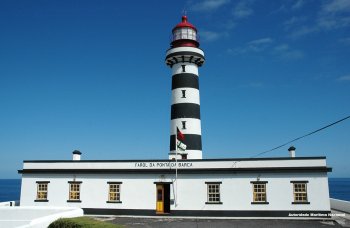
Single-story lighthouse, featuring a 23-meter-high cylindrical tower, making it the tallest lighthouse tower in the Azores. In front of this lighthouse is the famous stone whale, a curious rock formation that, seen in profile, resembles a whale.
Farol do Carapacho / Farol da Ponta da Restinga
- heritage
Ponta da Restringa
9880, Santa Cruz da Graciosa
Also called Farol da Ponta da Restinga, this lighthouse is located 191 meters above the sea and is 14 meters high. It was built in 1956.
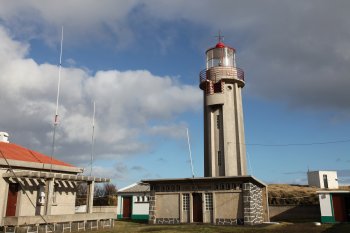
Igreja do Santo Cristo dos Milagres
- heritage
Rua Infante Dom Henrique
9880-378, Santa Cruz da Graciosa
Church built in the 16th century and later rebuilt, with the current building dating from the 18th century. Highlight for its images, especially the one of Senhor Santo Cristo.
Moinhos de Vento da Graciosa
- heritage
Rua do Degredo - Pico das Mentiras
9880-370, Santa Cruz da Graciosa
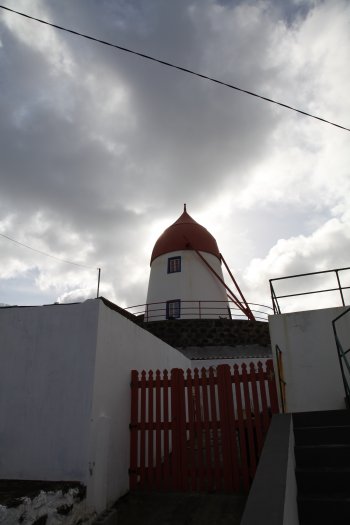
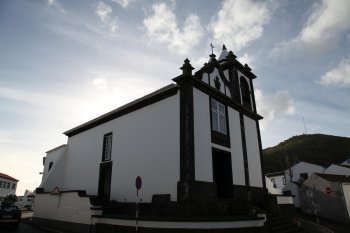
The windmills are one of Graciosa's calling cards. Dutch in style, its distinctive red roofs and unfurled sails create a scenery worthy of a visit.