Explore the best places
Heritage in Portugal


Igreja de São João Baptista
- heritage
Adro de São João
2200-365, Abrantes
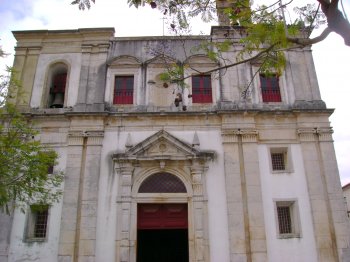
This church, founded by Queen Saint Isabel in 1300, was later rebuilt by Philip II between 1589 and 1633. Of particular note are the Renaissance stone coffers in the chancel, the 16th-century tiles, the stonework of the side altars, the pulpits, and the wood carvings.
Torre de Menagem do Castelo de Abrantes
- heritage
Rua Dom Francisco de Almeida
2200, Abrantes
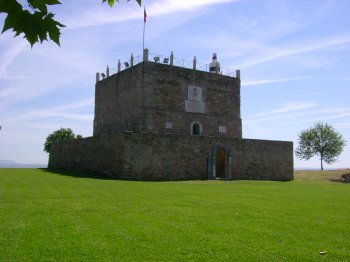
Be sure to visit this Keep, one of the few remaining vestiges of the old Abrantes Castle, dating from the 12th century. The Keep was built later, at the beginning of the 14th century, during the reign of King Dinis. The tower has a quadrangular plan and is located in the center of the parade ground.
Memorial A Forja
- heritage
Rua do Museu A Forja
2205, Abrantes
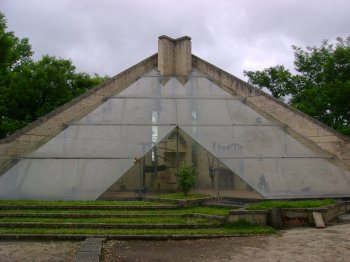
This is a small open-air museum, inaugurated in 1980 and erected in homage to all who contributed to the birth of Metalúrgica Duarte Ferreira. It includes a reconstruction of the workshop, some wrought iron tools, and the evolution of the forge, from its beginning until the 1980s.
Conjunto Urbano do Centro Histórico de Abrantes
- heritage
Abrantes
2200, Abrantes
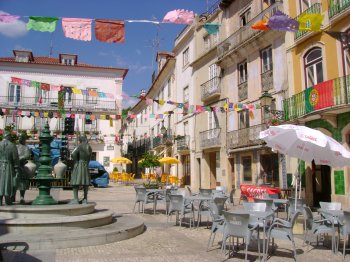
The historic center of Abrantes is characterized by houses with facades decorated with geraniums or hollyhocks. Notable landmarks include the churches of São João, São Vicente, and Santa Maria do Castelo, classified as national monuments, as well as the Misericórdia church, the portal of the Convent of Nossa Senhora da Esperança, the António Botto library, the Town Hall building, and Casa Almada, classified as properties of public interest.
Fortaleza de Abrantes / Castelo de Abrantes
- heritage
Rua Dom Francisco de Almeida
2200-242, Abrantes
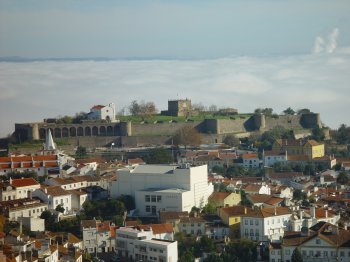
A castle situated on the right bank of the Tagus River, composed of medieval fortifications and bastions. This castle underwent profound reconstructions and changes throughout the centuries, notably in the 17th and 19th centuries. In the 17th century, King Afonso V, fearing an invasion from Spain, ordered the rebuilding of old fortifications. This fortress was considered the key to the defense of the Beiras region and played an important role during the French invasions. It retains the keep and some sections of the wall with round turrets. The vaulted spaces with tiles are particularly noteworthy. The Church of Santa Maria …
Igreja de Santa Maria do Castelo
- heritage
Rua Dom Francisco de Almeida
2200-242, Abrantes
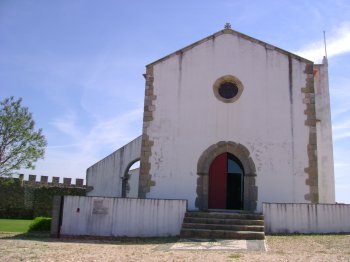
Commissioned by King Afonso II in 1215, this church was destroyed by an earthquake in 1429 and rebuilt from 1433 onwards. In the last quarter of the 15th century, the tombs of Don Diogo and Don Lopo were built here. Of particular note are the Gothic triumphal arch, the 16th-century tombs, the Mudéjar tile panels, and part of the original altarpiece. In 1921, the Abrantes Regional Museum was established here.
Museu Nacional Ferroviário - Núcleo de Macinhata do Vouga
- heritage
Rua Eugénio Gomes Quaresma
3750-593, Macinhata do Vouga
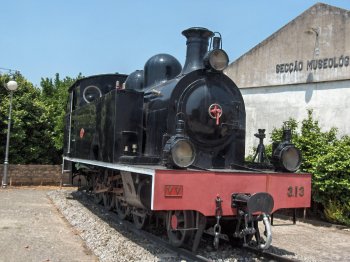
The Museum Centre is located at the second station on the Sernada to Aveiro branch line (in the Vouga Valley), occupying some old, adapted facilities. Here you can appreciate the collection of the National and Vouga Valley railway companies.
Ponte do Vouga
- heritage
EN1
3750-110, Águeda
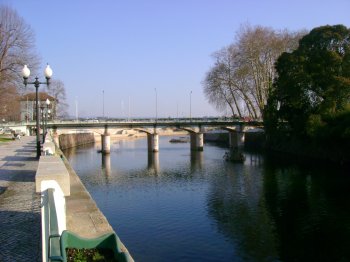
Also known as the Old Marnel Bridge, this bridge consists of a counter-curved deck supported by five arches.
Casa Solar da Quinta da Aguieira
- heritage
Rua do Caminho de Ferro
3750-879, Águeda
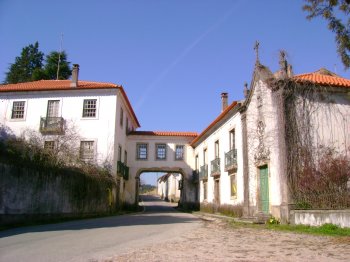
A manor house of vernacular architecture, with an irregular floor plan comprising a residential wing, a chapel, and annexes. These different structures are connected by an enclosed upper passageway with distinct roofs.
Estação Arqueológica de Cabeço do Vouga
- heritage
Sitio da Mina
3750-551, Águeda
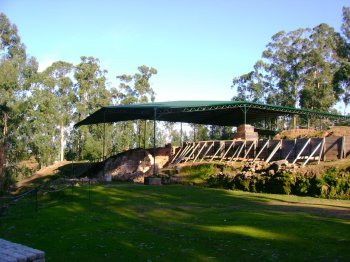
This is a fortified enclosure, named Castelium Marnelis, located next to the Vouga River, on Mile LXXIV of the Roman Itinerary XVI between Braga and Lisbon. Archaeological excavations have uncovered fragmented sections of the wall and four semicircular buildings. Due to the dimensions of the wall, its foundations are visible to the naked eye.