Explore the best places
Heritage in Portugal


Igreja de São Nicolau
- heritage
Largo Ramiro Nobre
2000-039, Santarém
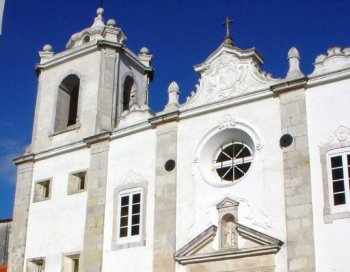
A national monument of Gothic origin, it was rebuilt in 1600 in the Mannerist style after a fire destroyed the original structure. Inside, the Manueline tomb of João Afonso, founder of the city's old hospital, and the Gothic tomb of Fernão Rodrigues Redondo are also classified as national monuments. Also noteworthy are the two paintings by Bento Coelho da Silveira. The church, which includes the Chapel of St. Peter, has a 19th-century pipe organ.
Conjunto Urbano do Centro Histórico de Santarém
- heritage
Santa Iria da Ribeira de Santarém
2005, Santarém
The historic center of Santarém is a veritable open-air museum. Strolling through this urban area, you can admire around 25 listed buildings that reflect different architectural styles, ranging from Gothic to Mannerist. These testimonies of past eras reflect well the importance the city has held throughout its rich and extensive history, largely derived from its geographical location, which was seen as strategic, on the right bank of the Tagus River.
Torre das Cabaças ou Cabaceiro
- heritage
Rua Engenheiro Zeferino Sarmento
2000-121, Santarém
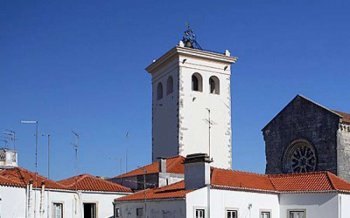
It is, in fact, the Clock Tower of Santarém and was erected in the 15th century on top of a tower within the walled enclosure of the old medieval town. It is one of the city's best-known buildings, and its popular name, Torre das Cabaças (Tower of the Gourds), comes from the clay gourds used to amplify the sound of the imposing bronze bell dating from 1604. From its 26-meter height, it is possible to see the city's urban layout and the surrounding fields. Currently, it houses the Time Museum.
Muralhas e Portas de Santarém
- heritage
Jardim das Portas do Sol
2000, Santarém
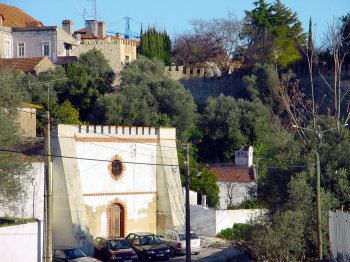
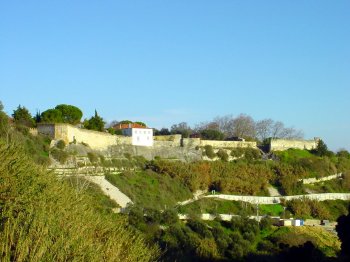
Anyone traveling from the neighboring municipality of Almeirim to Santarém via the Don Luís Bridge, which crosses the Tagus River, will find the walls of the Ribatejo capital before them. However, little remains of Santarém's imposing and ancient fortifications, although in the Jardim das Portas do Sol, which sits atop the walls, it is still possible to find three turrets. Several sections of walls and a stretch of the Porta de Santiago are other vestiges of what was once an important medieval castle.
Castelo de Alcanede
- heritage
Rua da Encosta do Castelo
2025, Alcanede
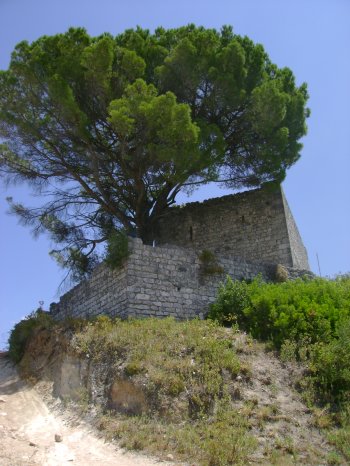
Located 25 kilometers from the town center is this monument of probable Arab origin. Rebuilt after the 1531 earthquake, it features an interesting sculpture above the main gate, where three castles and an eagle are visible. After assuming great defensive importance, it lost its usefulness over the years, and only between 1941 and 1954 did it undergo renovations that gave it its current appearance, with two towers. It served as a prison during the Middle Ages.
Sé de Santarém
- heritage
Praça Sá da Bandeira, 1
2000-135, Santarém
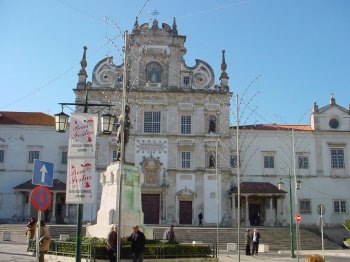
A national monument that stands out for its grandeur and architectural beauty. Dedicated to Our Lady of the Conception, it is believed to have been built between 1672 and 1711 by the Society of Jesus, later becoming the Patriarchal Seminary. It features a Mannerist façade and structure and a Baroque interior, with striking polychrome stone inlays, gilded wood carvings, and paintings on the ceilings of the nave and chancel. It has a 19th-century pipe organ and houses the Diocesan Museum.
Igreja e Claustro do Convento de São Francisco
- heritage
Rua 31 de Janeiro
2000-142, Santarém
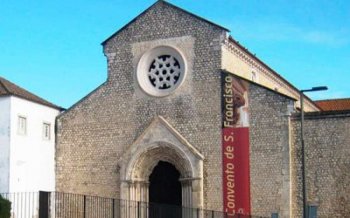
Built in the 13th century, it underwent several modifications over the years, its structure bearing marks of various styles such as Gothic, Baroque, Manueline, and Renaissance. Inside, one can observe high-quality decorative elements such as the Renaissance arch of the Chapel of Saint Anne or the Mannerist design of the Chapel of Souls. In the central nave, the upper choir stands out, where the tomb of King D. Fernando is located.
Igreja da Graça / Igreja de Santo Agostinho
- heritage
Largo Pedro Álvares Cabral
2000-109, Santarém
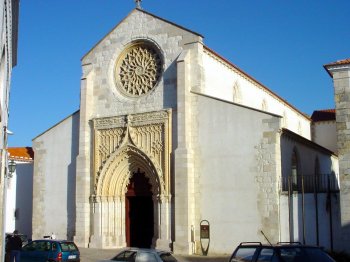
Built in the 14th and 15th centuries, it is one of the most striking examples of mendicant Gothic architecture in Santarém. The façade is worth admiring, particularly the rose window and the flamboyant portal, while the interior has three naves with pointed arches and two wings of columns with capitals ornamented with vegetal and anthropomorphic motifs. This national monument was once a convent of Augustinian friars and houses important tombs such as that of Pedro Álvares Cabral, the discoverer of Brazil.
Igreja de Santa Clara
- heritage
Avenida Gago Coutinho e Sacadura Cabral
2000-129, Santarém
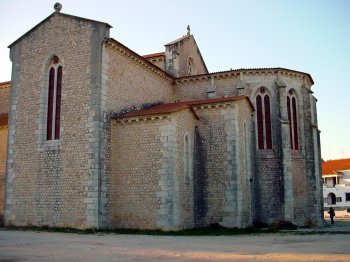
Built in the 13th century at the behest of King Afonso III, it is one of the largest and most emblematic monuments of mendicant Gothic architecture in Santarém. During the 17th century, it underwent several renovations that modified its form. Currently, the eight rows of tall Gothic columns adorned with frescoes and carved capitals stand out, with lighting provided by a rose window and several windows and slits. Inside, the Gothic tomb of the founding king's illegitimate daughter is a prominent feature.
Casa Museu Anselmo Braamcamp Freire
- heritage
Rua Braamcamp Freire
2000-094, Santarém
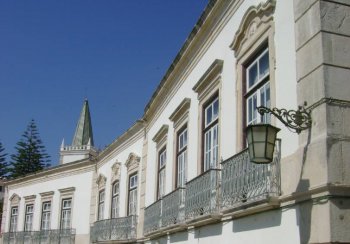
It is located on the first floor of the Municipal Library building, which originally housed the palace of the Barons of Almeirim, a characteristic Ribatejo mansion remodeled in the 19th century. This Museum Centre presents an important artistic and bibliographic collection, highlighting collections of painting, furniture, decorative art and sculpture, in addition to an interesting and unusual bookstore. Collections from the Camões Library and a collection of contemporary art can also be seen.