The parish church, Temple of longitudinal plant, is flanked by a churchyard, walled that for a long time was used as a cemetery, still sporting the whole floor lajeado. The main façade has a portal of rectangular shape, surmounted by a round window surmounted by a belfry with two tears "founders, each of them with a Bell, crowned by two pinnacles, with ball Finial, and a cross trilobada. The interior of this church is of a great ornamental wealth. The granite stone walls are partially covered in the chancel, by a tiled wainscot, with liturgical reasons represented; one of the …
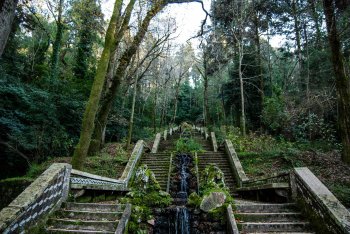
In a landscape of singular beauty, in the heart of the municipality of Mealhada, stands a truly monumental garden, captivated by the richness of the place, considered by many to be unique in the world, where the colors of nature and the rays of sunlight piercing the trees blend in the prevailing silence - the Bussaco National Forest. Commissioned by the Order of Discalced Carmelites in the 17th century, in seclusion and contemplation for over 200 years, the space impresses with the number of plant species it houses, over 700, from all over the world, such as firs, sequoias, limes, …
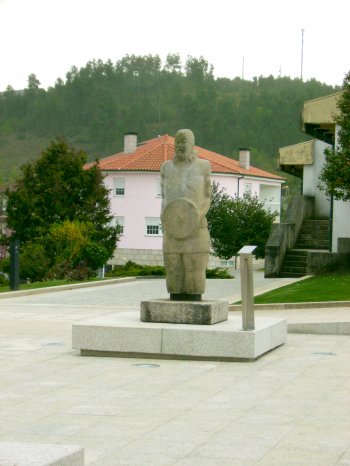
Monolith carved in granite representing the figure of a warrior, (2nd century iron age. I ad) erect and in stop position. Was found, along with other similar copy, probably in the 19th century. 18TH CENTURY (and was later, in the 20th century, found two more mindless statues) in great Castro do Lesenho, (at an elevation of 1075 meters) in Fields, parish of s. Salvador de Viveiro. This Warrior is wearing sagum (out exuberantly decorated with geometric motifs of concentric circles chained and plaids), v-neck and short sleeves, girded by a belt with four parallel veins. The head is proportionate, displaying …
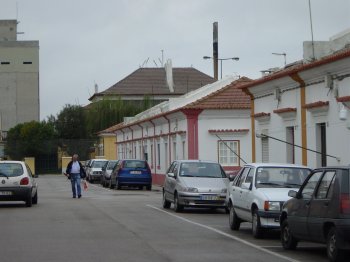
In the beginning of the 20th century, most precisely in 1907, Afredo da Silva buys a plot of ground from the Bensaúde family in the Lezíria, between the North Beach in Barreiro and the Moinhos Beach in Lavradio, and there he builds the C.U.F. factories. It started labouring in the next year with an olive husk transformation unit in order to produce soap, which employed 100 workers. In 1909 appears the first factory of sulphuric acid and super phosphate to produce fertilizers. As the century went on, the industry continued growing and this old village of fishermen and millers, with …