Explore the best places
Monuments in Elvas


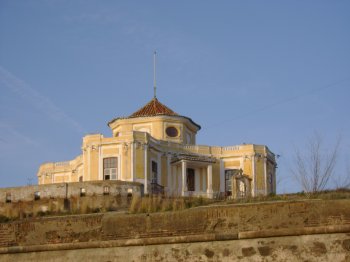
Santuário do Senhor Jesus da Piedade
- heritage
Avenida da Piedade
7350-094, Elvas
This large, religious-style architecture is an example of one of the most symbolic Baroque monuments of the reign of King João V, built in 1753. The church we see today replaced a chapel. Among other notable features are the tiles from the second half of the late 18th century that decorate the walls; inside, the two marble altars of various hues are another highlight. The week-long pilgrimage to the Lord Jesus of Mercy takes place every year around September 20th.
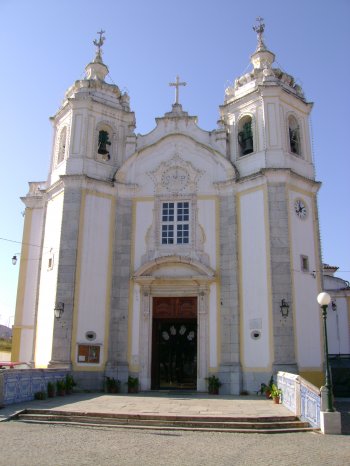
Igreja da Ordem Terceira de São Francisco
- heritage
Largo dos Terceiros
7350-238, Elvas
A single-nave church featuring 18th-century tiles depicting the life of Saint Francis of Assisi, the carvings in the chancel, and the imagery stand out. The temple was built between 1701 and 1719. Finishing work continued for several years, with the date 1761 inscribed on the door.
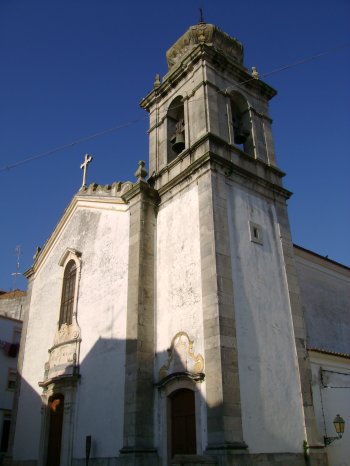
Forte de Santa Luzia
- heritage
Outeiro de Santa Luzia
7350, Elvas
A monument of military architecture, created by a series of figures, including, for example, Martim Afonso de Melo, Hieronimo Rozetti, Lassart, and Rui Correia Lucas. Its construction model has served as inspiration for other forts. Today, it houses the Military Museum.
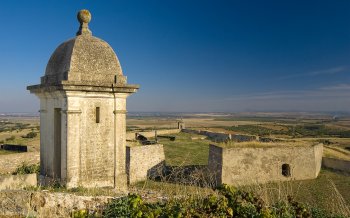
Aqueduto da Amoreira
- heritage
EN372
7350, Elvas
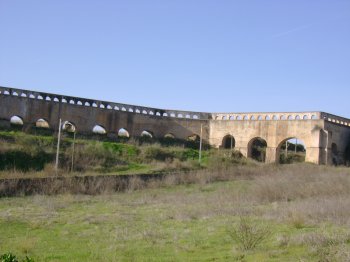
Built in 1498 according to the design of Francisco de Arruda and, later, by Afonso Álvares, Diogo Marques and Pero Vaz Pereira, who finished it in 1622. Four floors of arcades supported by buttresses cut through the main part.
Igreja de Nossa Senhora da Assunção
- heritage
Praça da República
7350-127, Elvas
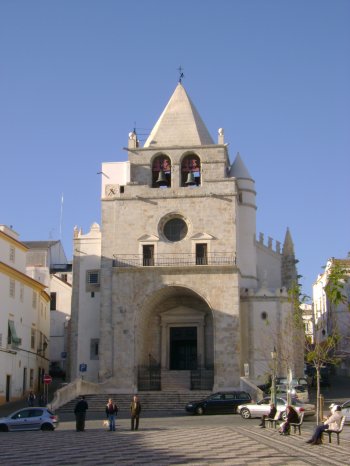
The former Elvas Cathedral, built in 1517 to a design by Francisco de Arruda, underwent significant modifications in the 17th century. It has a longitudinal plan and consists of three naves. The 17th- and 18th-century tilework stands out.
Muralhas e Obras Anexas da Praça de Elvas
- heritage
EN373
7350, Elvas
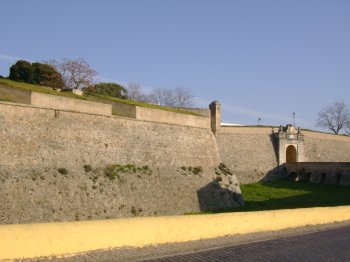
A square in the shape of an irregular polygon, with twelve fronts, seven bastions, and four half-bastions. The keep is located on a hillside. The defensive system of the stronghold encompassed the Forts of Santa Luzia and Graça. Currently, the gates of the Alcáçova and the Miradeiro remain.
Igreja de São Domingos ou dos Domínicos
- heritage
Largo de São Domingos
7350-423, Elvas
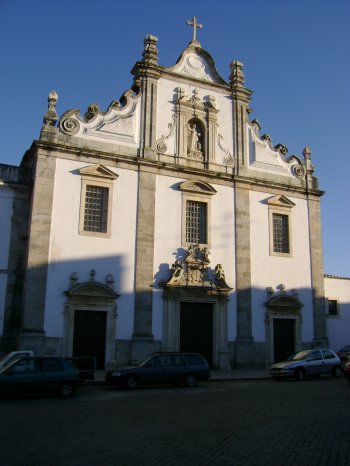
Founded in 1267, the temple has undergone significant modifications over the centuries. From the original church, only the apse of the main chapel remains. It features a 17th-century façade and a Baroque portico flanked by angels. The interior has three naves, and the 18th-century side altars are made of marble.
Castelo de Elvas
- heritage
Rua da Parada do Castelo
7350-082, Elvas
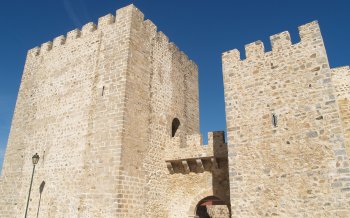
The parade ground is shaped like an irregular polygon. The citadel is entered through three main gates: the Porta da Esquina, the Porta de Olivença, and the Porta de S. Vicente. The keep was rebuilt in 1488. Above the entrance door are the coat of arms of King John, surmounted by a tile panel depicting the Holy Family. The original fortifications were reportedly built on a hill fort, later Romanized. After the reconquest of Elvas from the Moors, King Sancho II ordered the fortification to be rebuilt. It underwent modifications during the reigns of King Dinis, King John II, and …
Igrejas das Domínicas
- heritage
Largo de Santa Clara, 3-C
7350, Elvas
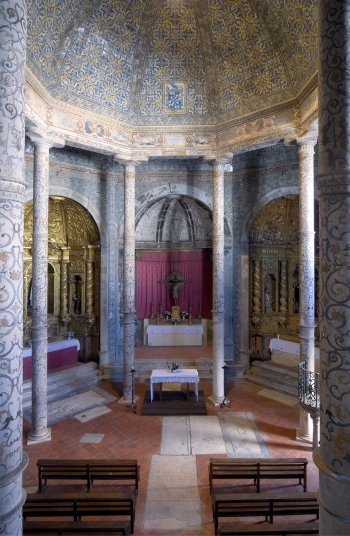
Built in the 16th century, the temple underwent modifications in the 17th century. The main Renaissance portico has a round arch and is framed by two pilasters. Of note is the complete polychrome tile covering from 1659.
Forte de Nossa Senhora da Graça ou de Lippe
- heritage
Monte Senhora da Graça
7350-410, Alcáçova
An example of 18th-century European military architecture, built by King José I on the site of a former fort. This bastioned fort sits on an impressive rocky hill. Its wide spaces, interplay of lines and volumes lend it power and military effectiveness. Its distinctive feature is the Governor's residence, an unusual building within the fort's architectural context. It is also known as Lippe Fortress, named after the architect who proposed its construction. Inside, there is a chapel honoring Our Lady of Grace.