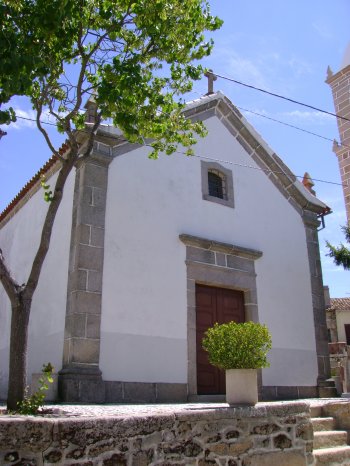
Explore the best places
Monuments in Sabugal


Ponte de Sequeiros
- heritage
Badamalos
6320, Badamalos
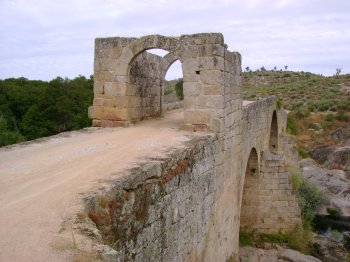
This medieval, fortified bridge has three arches and retains part of its protective tower and tollbooth. It consists of a ramped deck over semicircular arches, with two cutwaters.
Porta da Vila do Sabugal
- heritage
Rua Santo Condestável
6320, Sabugal
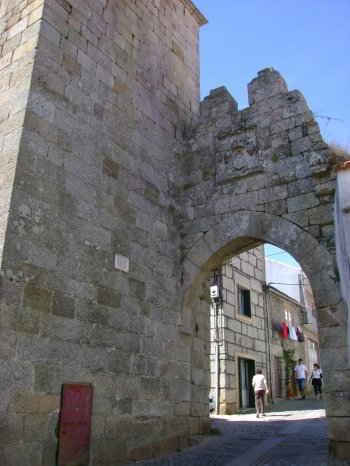
Also known as the Town Hall Gate, it is one of the four gates in the walls, probably dating from the 13th century. It features a pointed arch at the front and a lowered arch at the back, and is covered with a segmental barrel vault.
Casa Árabe
- heritage
Rua da Mesquita
6320-530, Sabugal
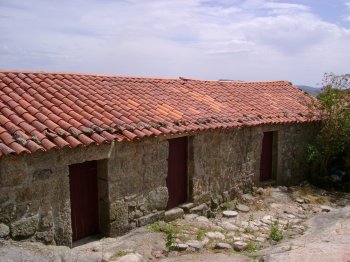
The exact date of construction of this house is unknown; while oral tradition suggests it dates from the Muslim period, the inscription on the door lintel points to a late medieval occupation. It has a single floor, an irregular L-shaped floor plan, and a gable roof.
Castelo de Vilar Maior
- heritage
Largo da Misericórdia, 9
6320-601, Sabugal
The earliest occupation of this site possibly dates back to pre-Roman, Roman or Muslim times, and it was later rebuilt in 1139. It has an irregular oval layout, with a square keep, three levels, straight arrow slits and a pointed arch doorway.
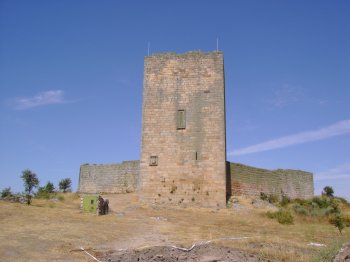
Castelo de Alfaiates
- heritage
Praça Brás Garcia de Mascarenhas
6320-081, Sabugal
It is believed that this castle was built before the establishment of the nation, during the reign of Alfonso IX of León. Later, King Dinis recovered much of that region, ordering restoration and expansion works on its fortresses. King Manuel I granted a new charter to the town, leading to further restoration works. Currently, two square towers remain, one of the entrance gates bearing the royal crown and the coat of arms of King Manuel. Nothing remains of the wall that surrounded the town.
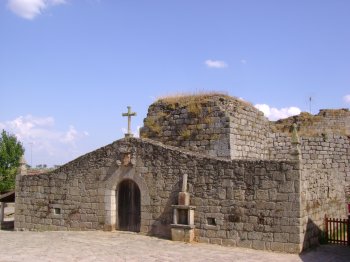
Castelo do Sabugal e Restos da Muralha
- heritage
Largo de Santa Maria
6320-328, Sabugal
This fortification was built in the 12th and 13th centuries and later expanded by King Dinis. During the Manueline period, some alterations were made, of which the portal that gave access to the drawbridge remains. It also preserves the alcazaba with its pentagonal-based keep, the Torre das Cinco Quinas (Tower of the Five Corners), protected by machicolations and turrets, and the ring of walls that surrounds the town. Of particular note are the thickness and height of the alcazaba's curtain walls and the existence of the barbican.
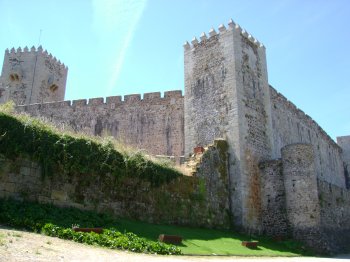
Castelo de Sortelha
- heritage
Largo do Pelourinho
6320-536, Sabugal
A castle of probable Muslim construction, whose oldest written document mentioning it dates from the reign of King Sancho I, who ordered repairs to be made to the castle. Later, King Manuel I benefited from restoration works, marked by the insertion of the Manueline coat of arms on the castle walls. The alcazaba remains, with machicolations and loopholes protecting the entrance to the enclosure, and inside, a cistern. In the center of the citadel is the keep, with a square plan and a single floor. The walled enclosure, with two gates flanked by towers, completely surrounds the town.
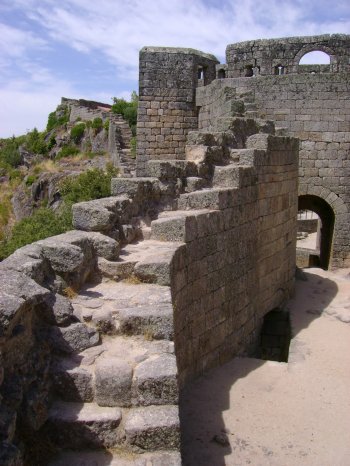
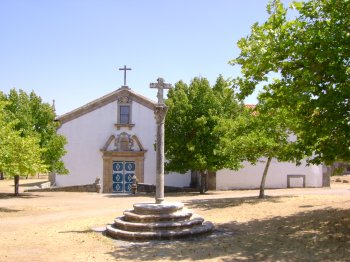
Cruzeiro da Sacaparte
- heritage
EN332
6320, Sabugal
18TH century cruise, quadrangular basis, with a circular shaft and a cross with the image of Christ carved.
Igreja Matriz de Sortelha / Igreja de Nossa Senhora das Neves e Torre Sineira
- heritage
Largo da Igreja
6320-536, Sabugal
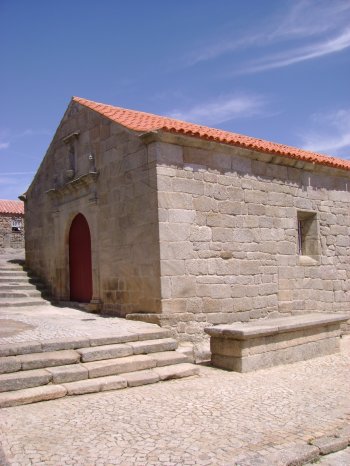
It is believed that the primitive building was built in the 14th century, working at the time as a watchtower. It was later remodeled in 1573, suffering more reconstructions in the following centuries. It consists of a longitudinal plan composed, with a single nave and a square chancel, with coverage in fake wooden barrel vault on the ship and in "alfarge" style in the chancel. Despite medieval origin, the Church denotes a large Renaissance influence.
Igreja Matriz de Vila Boa / Igreja de São Pedro
- heritage
Largo da Igreja, 3
6320-581, Sabugal
Church built in the 19TH century and the 20th century, consisting of a nave only and a separate belfry. Featured, inside, for the altarpieces of gilt.