Explore the best places
Monuments in Celorico da Beira


Troço de Calçada Romana
- heritage
Celorico da Beira
6360-362, Celorico da Beira
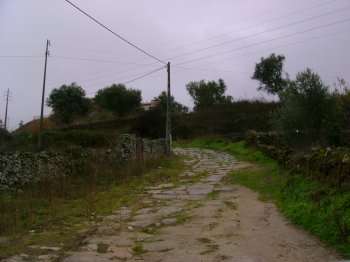
This section belongs to an old Roman road that connected Guarda to Mangualde, and it is possible that it also belonged to the Viseu-Linhares road. It is paved with aligned stones and divided into three sections.
Necrópole de São Gens e Penedo do Sino
- heritage
Lavandeira
6360-302, Celorico da Beira
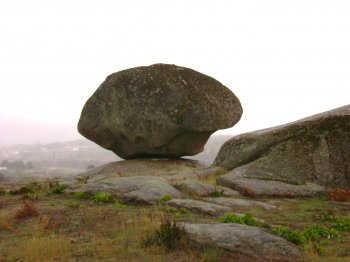
This is an ancient cemetery with four types of tombs: bathtub-shaped, triangular, anthropomorphic, and carved into movable stones. Near these graves is the Penedo do Sino, a pedunculated granite block, shaped by weathering, and well-known for its strange and beautiful balance. This site was occupied between the 1st and 2nd centuries and later between the 12th and 13th centuries, although it is believed that this necropolis dates from the 6th to the 14th centuries.
Igreja da Misericórdia de Celorico da Beira
- heritage
Rua da Misericórdia, 11
6360-309, Celorico da Beira
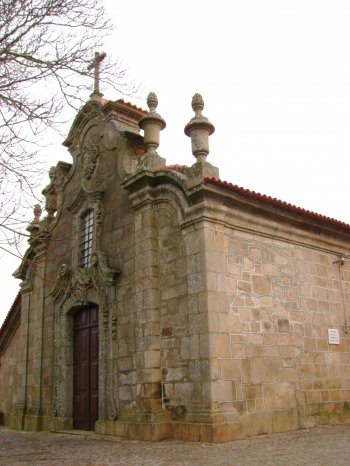
This church, built between the 17th and 19th centuries, features Baroque characteristics but with some Neoclassical touches. The main facade is divided into three wall sections separated by Tuscan pilasters, and also features a segmental arch portal with a double carved molding. Inside, the decoration, in plaster and painting, is noteworthy.
Casa do Judeu
- heritage
Travessa do Passadiço
6360-080, Linhares da Beira
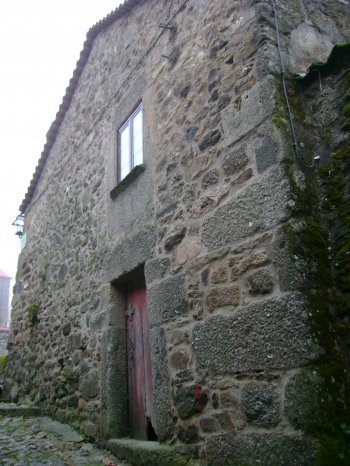
A noble house with a granite masonry facade, where the main door stands out, protected by a porch with a typical design. As was customary in Jewish homes, the door is wide with a lintel, chamfered jambs, and divisions at the back to mark the hierarchy.
Igreja Matriz de Linhares da Beira / Igreja de Nossa Senhora da Assunção
- heritage
Largo da Igreja
6360-080, Linhares da Beira
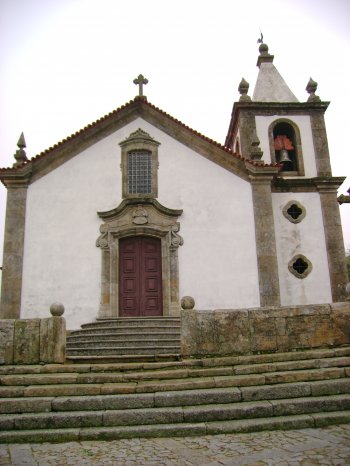
Rebuilt in the 17th century, this church displays some Romanesque features in the chancel and side door. The façade is notable for its interrupted triangular pediment and the flower-shaped window with four petals. Inside, the decorated altars are particularly noteworthy. Some of the existing paintings are attributed to Grão Vasco.
Igreja de Santa Maria de Celorico da Beira
- heritage
Praça de Santa Maria
6360-362, Celorico da Beira
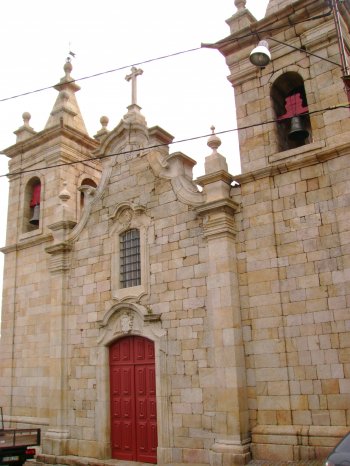
The temple was built in the 13th and 14th centuries and renovated in the 18th century, still preserving its Baroque façade and two bell towers from that period. Notable features include the statuary and some paintings, the coffered ceiling with painted figures of saints, the 17th-century tiles, and the tombstones. During the third French invasion, it served as a field hospital for the English.
Castelo de Linhares da Beira
- heritage
Rua do Castelo
6360-080, Linhares da Beira
Located on a hill at an altitude of approximately 800 meters, in the foothills of the Serra da Estrela mountain range, this castle is believed to have been a fortified settlement occupied by the Romans and destroyed by the Moors in the 9th century, before being reclaimed by King Dinis. Only the enclosure defined by two towers with several floors remains.
Castelo e Muralhas de Celorico da Beira
- heritage
Rua do Castelo
6360-339, Celorico da Beira
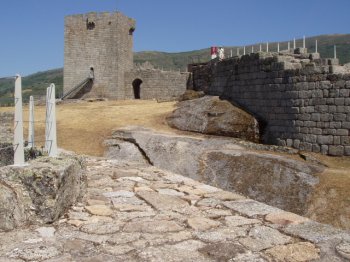
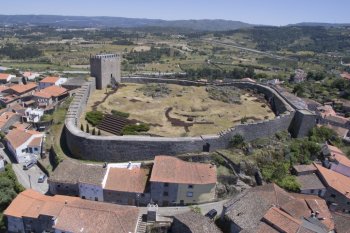
Castle consisting of a wall with two towers and a keep. Located atop a granite outcrop overlooking the village, it dates from the 14th century. Notable features include the straight-arched loopholes, rectangular-faced merlons, and pointed-arch main gates. The walls have an irregular configuration and an exposed parapet.
Pelourinho de Baraçal
- heritage
Rua do Forno
6360-020, Baraçal
16th-century Manueline pillory, to present a punch with three steps, an octagonal shaft (not existing or even capital base), and a pyramidal-shaped Finial.