Explore the best places
Monuments in Vila Nova de Foz Côa


Estação Arqueológica do Prazo
- heritage
Freixo de Numão
5155, Cedovim
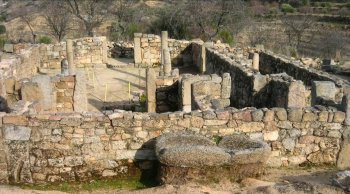
Archaeological ruins that comprise a complex array of structures reveal a multitude of occupations from the Neolithic period to the Middle Ages. Well-preserved remains of an early Christian temple, tombs containing bones from different eras, a large anthropomorphic stele, and an imposing menhir can be observed. The presence of a manor house and bathing area testifies to the importance of this Roman manor house.
Casa de Almendra / Solar dos Viscondes do Banho
- heritage
Largo da Amoreira - EN332
5150-014, Vila Nova de Foz Côa
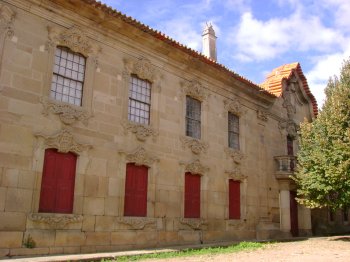
Built in the 18th century, this house is considered one of the finest examples of Baroque civil architecture. Constructed of granite, it features Rococo decoration concentrated in the windows and main door. This construction demonstrates elements of Douro Baroque architecture, influenced by Nicolau Nasoni. In the early 19th century, Napoleonic troops were stationed here, later setting fire to the building in 1810 before withdrawing. From 1895 onwards, it underwent partial reconstruction, initiated by the 3rd Viscount of Banho.
Castelo de Numão
- heritage
Rua Direita
5155-617, Numão
This castle possessed one of the best defensive border walls. Currently, only a few gates, sections of the wall, and towers crowning the hilltop remain. Several anthropomorphic tombs are also preserved near the east gate. Its layout had an irregular configuration, almost without battlements, and with three gates (the West Gate, the Arch Gate, and St. Peter's Gate), a keep, and four more towers.
Castelo de Castelo Melhor
- heritage
Rua do Castelo, 15
5150-109, Castelo Melhor
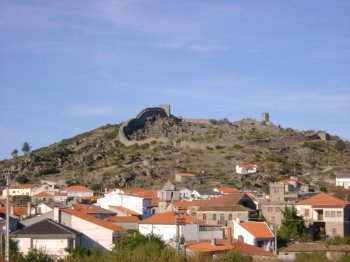
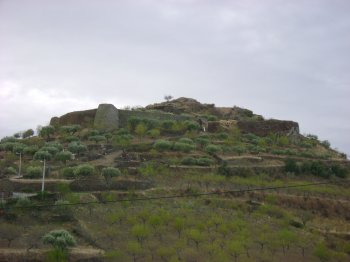
Possibly built upon a Lusitanian hill fort, this castle sits on a hill. It retains some sections of the wall, gates, a small tower, and a cistern with a regular plan. It is possible to observe the perimeter of the wall that surrounded the inner courtyards and the Keep. From a distance, it resembles a king's crown planted on a mound of earth.
Igreja Matriz de Vila Nova de Foz Côa / Igreja de Nossa Senhora do Pranto
- heritage
Praça do Município, 16
5150-642, Vila Nova de Foz Côa
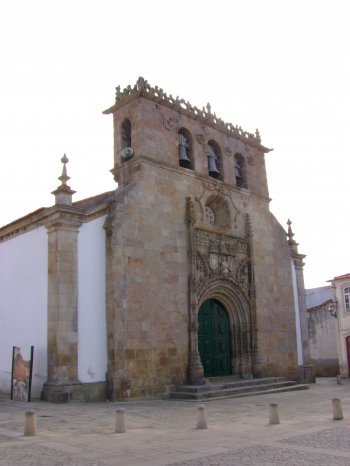
The church consists of three naves, a chancel, a sacristy, and an archive. The façade features a full-arch portico with Manueline decoration (flanked by two national coats of arms), armillary spheres, a fleur-de-lis, and a cross of Christ. It is topped by a bell tower with three windows and four Renaissance busts. Inside the church, the Baroque altars, the coffered ceiling of the chancel, the statuary, and the inclination of the columns are noteworthy.
Pelourinho de Foz Côa
- heritage
Praça do Município
5150-642, Vila Nova de Foz Côa
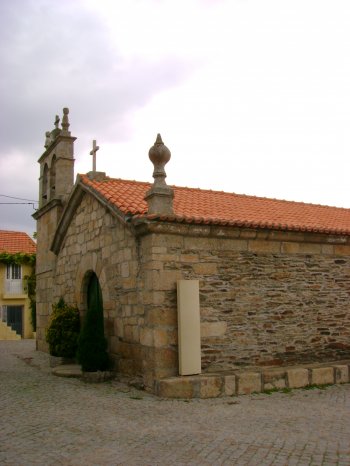
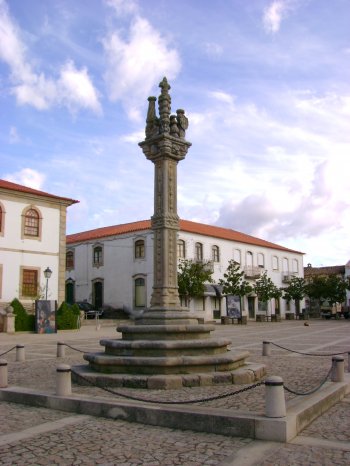
It is composed by a square shaft with a ring decorated with Manueline elements. The capital is ornate with strings and scallops standing four pinnacles with escutcheons evolving central elements finished with one fleur-de-lis.
Pelourinho de Freixo de Numão
- heritage
Largo Doutor José Augusto Pinto de Magalhães
5155-237, Cedovim
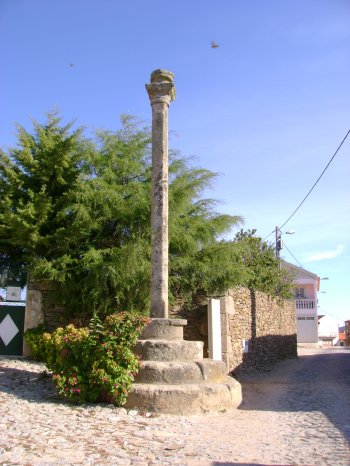
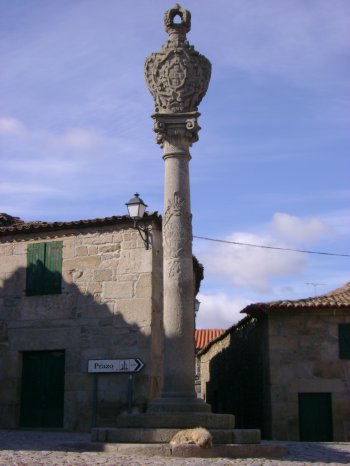
It possesses cylindrical shaft topped by a capital, decorated with volutes and acanthus leaves. This supports an orb and one shield with D. Maria and the Municipality arms, finished by a Crown.
Pelourinho de Muxagata
- heritage
Largo da Praça
5150-331, Vila Nova de Foz Côa
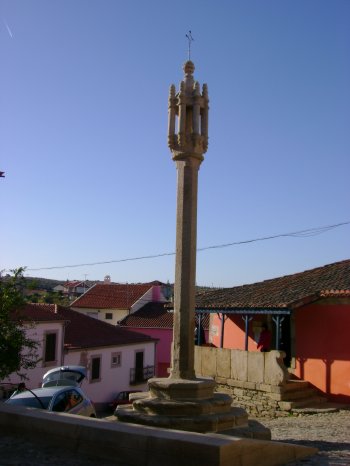
Pillory with an octave shaft with a closed orb finished by a spire with armillary sphere topped by an iron Cross.
Pelourinho de Horta
- heritage
Rua do Pelourinho
5155, Cedovim
Pelourinho dating from the 18th century, comprising three circular steps and a shaft of column at prisma.