Explore the best places
Discover new places in Lisboa


Conjunto urbano da Baixa Pombalina
- heritage
Baixa Lisboeta
1100, Lisboa
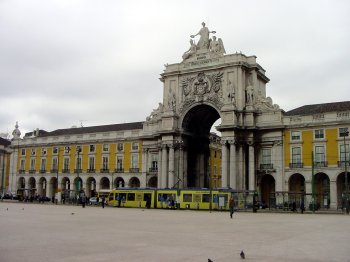
The downtown is the result of an urban innovative project, imbued on a clear concern for modernity. With a rigours geometrical sketch, it has its main references on the Tejo River and the D. José statue. Nearby are also the Rossio and Figueira squares. This area was totally rebuilt after the earthquake of 1755, and became one of the best examples of European urban planning. Going through the long avenues you will notice that the neoclassical imponent buildings shelter, nowadays, commercial shops. The Portas de Santo Antão Street is the most indicated to take a walk.
Conjunto urbano da Rua de São José
- heritage
Rua de São José, 10-42
1150, Lisboa
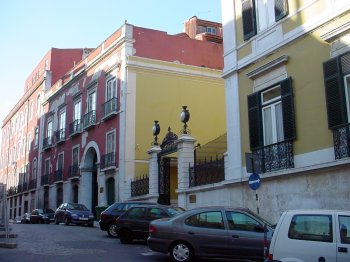
Urban ensemble formed by edifications of several periods, from the XVII century until the end of the XIX century. It begins at the Glória lift, where a palace (now used by the post) stands, and ends in a house belonging to the Ordem Soberana de Malta. Seize the opportunity to take a walk though the beautiful gardens on the area.
Conjunto da Praça da Viscondessa dos Olivais
- heritage
Olivais Velho
1800, Lisboa
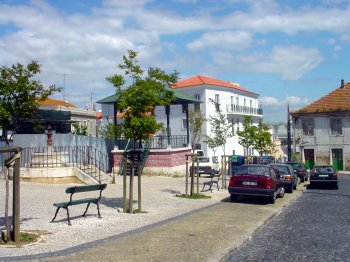
Characterized by a strong rural component, this set was once the centre of a playground area, in the town suburbs, organized in several farms, most of them long lost. Standing out there is a small house from the “pombalino” period, on the north top of the square, the asylum-school building “Viscondessa dos Olivais”, with more noble characteristics, and the Santa Mary church, with an initial 17th century sketch and profoundly altered after the earthquake.
Cinemas NOS Alvaláxia
- leisure
Rua Francisco Stromp (C. C. Alvaláxia)
1750, Lisboa
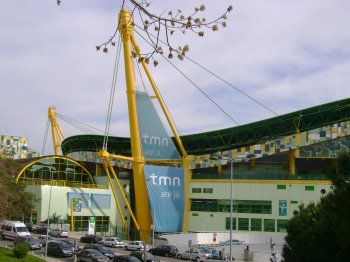
These 16 new and modern rooms at the fittings of the Estádio Alvalade XXI, are part of a large entertainment area at the stadium. The screening is digital and the halls are amphitheatres.
Pavilhão de Portugal
- art
Alameda dos Oceanos (Parque das Nações)
1990, Lisboa
Planed by the architect Álvaro Siza Vieira to the Expo 98, the building is inspired in the Portuguese architecture typologies. It was one of the most visited pavilions at the expo and is now one of the ex-libris of the Parque das Nações and the place of international political meetings. The impressive “concrete sheet” suspended at the exterior gives the construction a singular touch of modernity.

Biblioteca Municipal Orlando Ribeiro
- heritage
Estrada de Telheiras, 146
1600-772, Lisboa
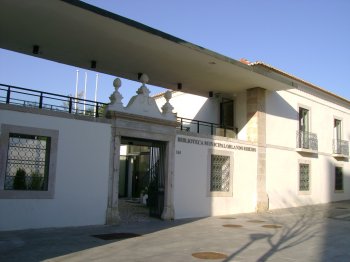
Library with a vast collection of documents.

Museu Rafael Bordalo Pinheiro
- heritage
Campo Grande, 382
1700-097, Lisboa
Museum dedicated to the life and work of Rafael Bordal Pinheiro. The collecyion of the museum comprehends the most complete collection of Bordalo Pinheiro’s ceramics, with its hyper-naturalism, as well as extensive documentation. The building received an honourable mention from the Valmor Prise in 1914.

Museu Nacional de Arqueologia
- heritage
Praça do Império - Edifício dos Jerónimos
1400-206, Lisboa
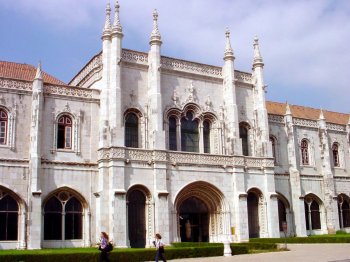
The present National Museum of Archaeology (MNA) was founded in 1893. It is the reference institution of the Portuguese archaeology, keeping regular correspondence with museums, universities and investigation centres all over the world. Apart from the exhibitions, the museum offers several services such as the regular edition of publications, conservation and repair of archaeological goods, seminars, conferences and lectures, specialized library, fundamental scientific research, among others.
Museu Geológico
- heritage
Rua da Academia das Ciências, 19 - 2º
1200-003, Lisboa
Created in 1848 by the first “Geologic Commissions” to be the base of the territory investigation and placed in this building since 1859, the Geologic Museum assembles the most complete set of palaeontologist and stratigraphic Portuguese collections, as well as important minerals and pre-historic archaeological collections. This is a rare example of the museography of the XVIII and XIX centuries nowadays.