Explore the best places
Heritage in Portugal


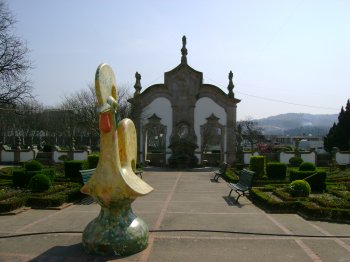
Fonte do Jardim das Barrocas
- heritage
Largo da Porta Nova
4750-329, Barcelos
A well-crafted fountain, set in a garden designed to popular taste and featuring the most media-savvy figure in the municipality: the Barcelos rooster.
Convento do Calvário do Bom Jesus da Franqueira
- heritage
Travessa do Senhor Fonte de Vida,189
4755-399, Pereira
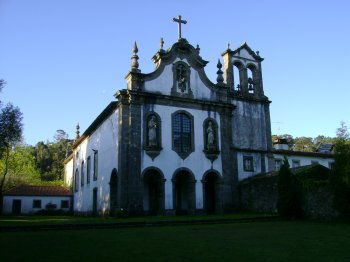
The former Convent, built in 1563 with stones from the historic Faria Castle, boasts beautiful architecture perched high above Barcelinhos, offering stunning panoramic views.
Museu Arqueológico de Barcelos / Paço dos Condes de Barcelos
- heritage
Rua Doutor Miguel Fonseca
4750-323, Barcelos
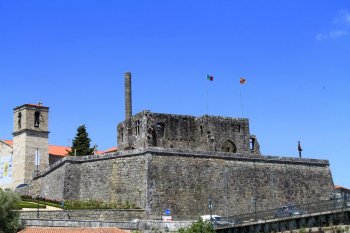
The Archaeological Museum was created in 1920 and exhibits granite artifacts ranging from Prehistory to the end of the Modern Era, including a menhir from Feitos/Palme, medieval sarcophagi, heraldic symbols, and Romanesque architectural elements from dismantled churches or monasteries, most notably the Cruzeiro do Senhor do Galo, the landmark of Barcelos.
Solar dos Pinheiros
- heritage
Rua Doutor Miguel Fonseca
4750-322, Barcelos
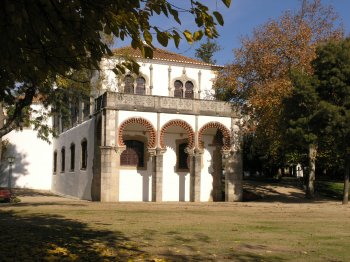
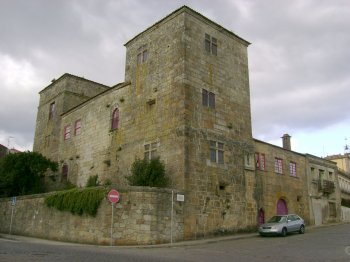
A 15th-century building designed by Pedro Esteves, auditor of the House of Braganza. It consists of a central volume and two rectangular towers. It has an extensive façade, flanked by two towers and with pointed, twin, and rectangular windows. The portal, the twin openings, and the shutters on the ground floor indicate a medieval character.
Igreja Matriz de Barcelos
- heritage
Rua Doutor Miguel da Fonseca
4750-322, Barcelos
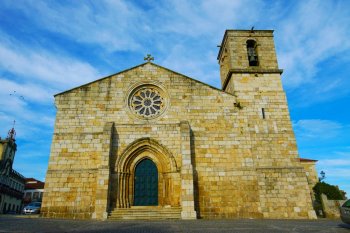
A transitional temple exhibiting Romanesque and Gothic influences, with modifications in the 16th and 17th centuries. The portal has four archivolts, with eight small columns resting on capitals, and the nave walls are covered with blue and white tile panels from the 18th century, depicting episodes from the life of the Virgin Mary. Of particular note are the Blessed Sacrament chapel with its 18th-century gilded woodcarving and the chancel with two valuable sculptures: one of Our Lady of the Assumption in Baroque style and another representing Our Lady of Franqueira.
Igreja e Mosteiro de Vilar de Frades
- heritage
Lugar do Socorro
4750-000, Areias de Vilar
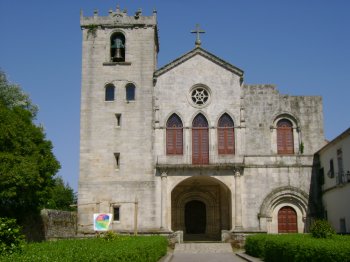
This church, with its 16th-century features, has a segmental arched porch at the entrance supported by two columns. Inside, the remarkable vaulted ceiling of the nave, with its crossed ribs, and the 18th-century tile panels that adorn two of the side chapels stand out. From the original 11th-century monastery, a magnificent Romanesque portal with two archivolts remains, resting on four small columns with historiated capitals.
Ponte Medieval de Barcelos
- heritage
Rua Fernando Magalhães
4750-290, Barcelos
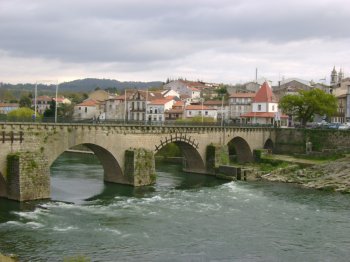
Gothic-style bridge with a defensive tower and three turrets. It connects Barcelos and Barcelinhos. Its existence is mentioned in various documents dating back to the 14th century. It was rebuilt in the 15th century by order of Dom Afonso, 8th Count of Barcelos.
Conjunto Urbano do Centro Histórico de Barcelos
- heritage
Largo da Porta Nova
4750, Barcelos
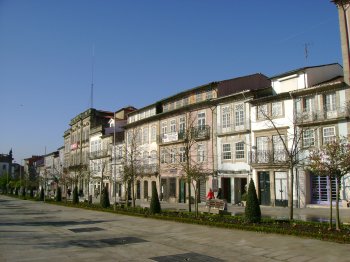
Within this urban set, traces of Romanesque, Gothic, Manueline, Renaissance, and even Baroque and Neoclassical architecture are evident. Among the vast existing heritage, the Parish Church, the Palace of the Counts of Braganza, the Church of Senhor da Cruz, and the Fountain at Campo da Feira deserve mention.
Museu de Olaria
- heritage
Rua Cónego Joaquim Gaiolas
4750-306, Barcelos
Created in 1963, this museum is the result of a donation of a valuable collection gathered by the ethnographer Joaquim Sellés Paes de Villas Boas. It began as the Regional Ceramics Museum and later became the Museum of Portuguese Popular Ceramics. However, when the pottery pieces formed a collection, it simply became the Pottery Museum. In this space you can appreciate more than 6600 pieces from various regions of the country, from Portuguese-speaking countries and some from abroad, divided into four main groups: black pottery, matte red pottery, glazed pottery and figurative pieces.

Paços de Évora / Palácio de Dom Manuel
- heritage
Praça 1º de Maio - Rua 24 de Julho, 1
7000-650, Évora
The Ladies' Gallery is the remaining part of the palace built by the Avis dynasty in the 16th century, in the Gothic-Renaissance style. Gil Vicente staged seven of his plays in this palace, dedicated to Queen Maria of Castile and Queen Catherine of Austria. The gallery often hosts exhibitions.