Explore the best places
Heritage in Portugal


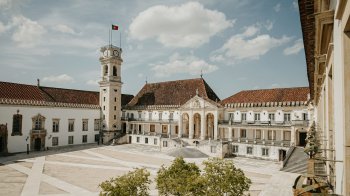
Edifício da Universidade de Coimbra
- heritage
Praça da Porta Férrea
3004-531, Coimbra
The university, founded in 1290, is one of the oldest in Europe. After alternating between Lisbon and Coimbra, it was definitively transferred to the city on the Mondego River in 1537, during the reign of King João III, establishing itself in the Royal Palace. The building became the property of the University in 1597, during the Philippine rule, and underwent several renovations over time. In 1772, the Marquis of Pombal gave new statutes to the University, and the Faculties of Mathematics and Philosophy were created, in addition to several Institutes. Notable features of the set include: the Iron Gate (the …
Quinta das Lágrimas
- heritage
Estrada das Lágrimas
3040-266, Coimbra
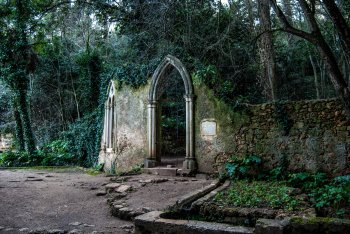
The importance of this place is mainly related to the love story of Don Pedro and Lady Inês de Castro. It's worth highlighting the romantic beauty of the Quinta, the rarity of some botanical specimens (some classified as trees of national interest), the Gothic window, and the fountain, believed to be the Fountain of Love sung about by Camões. The Solar da Quinta, built in the 18th century by the Osório Cabral family, currently houses a charming hotel.
Mosteiro de Santa Clara-a-Nova
- heritage
Calçada de Santa Clara
3040-270, Coimbra
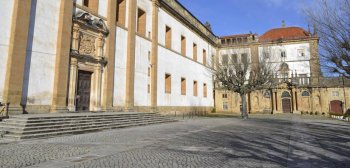
The first stone of this building was laid on July 3, 1649, during the reign of King John IV. The new Monastery was built to house the body of Queen Saint Isabel and the Poor Clare nuns from the original Convent of Santa Clara, which was in an advanced state of disrepair. The church, with a single nave, consists of a choir and a chancel. In the lower choir is the original tomb of Queen Saint Isabel, executed by Master Pero in 1330, a work sculpted from a single block of limestone. On the walls, tiles and altarpieces from the …
Mosteiro de Santa Clara-a-Velha
- heritage
Rua Baixo, 57
3040-266, Coimbra
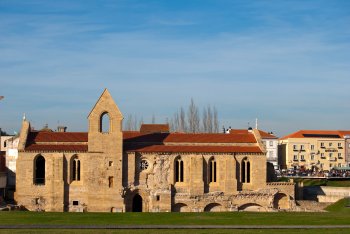
The monastery was originally founded by Dona Mor Dias in 1283. In the 14th century, Clement V granted permission to Dona Isabel of Aragon to found a new monastery, which was established on the same site, with the renovation and expansion of the old buildings. The church was consecrated in 1330 and suffered its first floods in 1331. The degradation caused by the floods led to its abandonment in 1677. The church, with its vaulted nave, is an example of mendicant Gothic architecture. Notable features include the remarkable Hispano-Moorish tile panels, the rose window on the western façade, and the …
Sé Nova de Coimbra
- heritage
Largo Feira dos Estudantes
3000-214, Coimbra
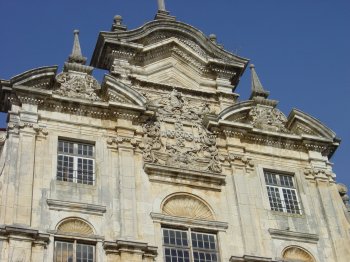
A magnificent Jesuit temple, part of the College of the Society of Jesus, whose construction began in 1598. After the expulsion of the Jesuits from Portugal in 1759, it was handed over to the Cathedral Chapter. The main façade, austere yet elegant, is composed of two superimposed sections corresponding to two distinct construction periods: the first section, up to two-thirds of its height, is in the classical style, while the second is in the Baroque style. Inside, noteworthy features include the various Baroque carved altars from the late 17th century, the organs located on the side walls of the chancel, …
Sé Velha de Coimbra
- heritage
Largo da Sé Velha - Rua do Norte, 4
3000-383, Coimbra
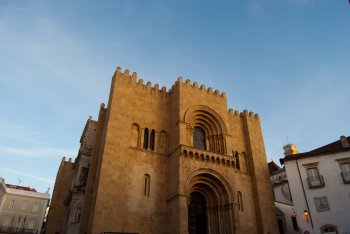
This is one of the most beautiful Portuguese Romanesque monuments, with an external appearance resembling a fortified church. The current construction began in 1162, during the reign of King Afonso Henriques. It served as the Episcopal See until 1772 and subsequently belonged to the Misericórdia (a charitable institution) until 1778. From 1785 to 1816 it was occupied by the Third Order of Saint Francis, and after that date it became the seat of the parish of São Cristóvão. The main façade features a magnificent portal, formed by arches supported by columns with decorated capitals. The 13th-century cloister was the first …
Estação Arqueológica do Prazo
- heritage
Freixo de Numão
5155, Cedovim
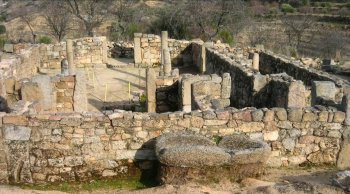
Archaeological ruins that comprise a complex array of structures reveal a multitude of occupations from the Neolithic period to the Middle Ages. Well-preserved remains of an early Christian temple, tombs containing bones from different eras, a large anthropomorphic stele, and an imposing menhir can be observed. The presence of a manor house and bathing area testifies to the importance of this Roman manor house.
Museu da Casa Grande
- heritage
Rua Direita
5155-246, Freixo de Numão
The Casa Grande museum displays collections of archaeology (from the Paleolithic to the Modern Age, with special emphasis on the Roman period), regional ethnography (agricultural tools and implements directly related to farming and objects related to breadmaking, shepherding, wine production, olive oil and almonds) and local history, through the collection of materials and documentation related to the history of the former municipal seat. It also has a section of the Casa do Moutinho.
Museu de Sítio de Ervamoira
- heritage
Quinta de Ervamoira Ramos Pinto
5150, Vila Nova de Foz Côa
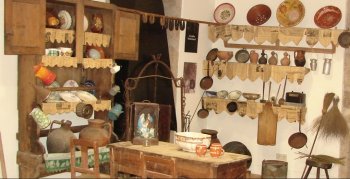
The Ervamoira Site Museum, inaugurated in 1997, is located on the Ervamoira Estate, in the heart of the Côa Valley Archaeological Park. A visit to the Ervamoira Museum will introduce you to the various areas linked to the history of the site and the Douro wine industry: Natural Heritage, Roman and Medieval Archaeological Heritage, Ethnographic Heritage, the history of Casa Ramos Pinto, the Estates and the Viticulture of the Upper Douro. Visits to the Farm and the Ervamoira Museum are organized by appointment and conducted by a guide.
Museu do Côa
- heritage
Rua do Museu
5150-620, Vila Nova de Foz Côa
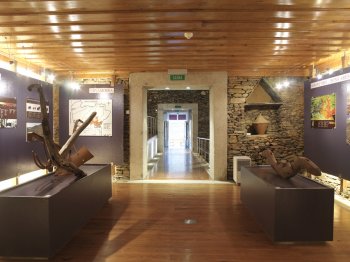
The Côa Museum is a cultural space designed to promote the historical and cultural heritage of the Côa Valley Archaeological Park. The building interacts strongly with the landscape, developing across four floors that include an auditorium, educational services, administrative area, shop, and exhibition rooms.