Explore the best places
Heritage in Portugal


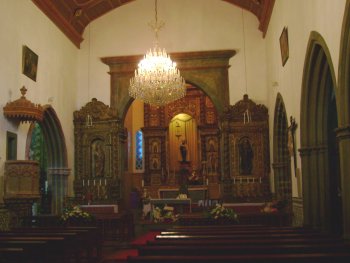
Palácio Nacional de Queluz
- heritage
Largo do Palácio Nacional de Queluz
2745-191, Queluz
This building originated from the desire of King Pedro V to transform the Quinta de Queluz into a palace. Construction began in 1747 under the direction of Mateus Vicente de Oliveira and later J. B. Robillon, who gave the palace its exquisite decoration. Inside the palace, the throne room, the music room, and the ambassadors' room are prominent features. Its gardens are adorned with statues, lakes, and fountains. The grand canal has walls covered in tiles.
Palácio Nacional de Sintra
- heritage
Largo Rainha Dona Amélia
2710-616, Sintra
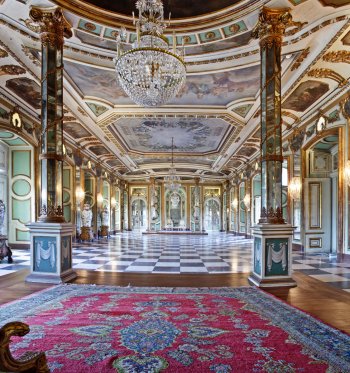
Also known as the Palace of Sintra, this impressive palatial example is the only surviving example of the great Royal Palaces of the Middle Ages. With a complex and irregular layout, this palace is the result of several construction campaigns, the main ones being from the reigns of King John I, King Manuel I, and the first third of the 16th century. The Palace of Sintra is the most ambitious Mudéjar art project in Portugal. Frequently used by medieval monarchs, it has many rooms, among the most important being the Archers' Room, the Guest Room, the Arab Room, the Chinese …
Quinta da Regaleira
- heritage
Rua Barbosa du Bocage, 5
2710-567, Sintra
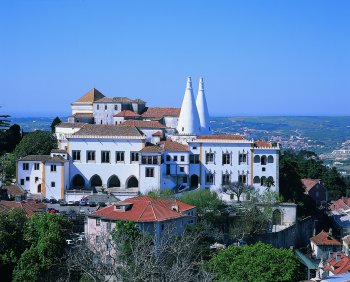
This estate, which belonged to the Barons of Regaleira, was built in the early 20th century. Designed by the Italian architect-set designer Luigi Manini, it was built in the Romantic style. This space is considered one of the most important examples of revivalist architecture in Portugal. The estate presents itself as an impressive combination of styles and constructions (gardens, wells, towers, lakes, statues, caves) where an intimate yet theatrical feeling is maintained.
Castelo dos Mouros
- heritage
Cimo da Serra
2710-405, Sintra
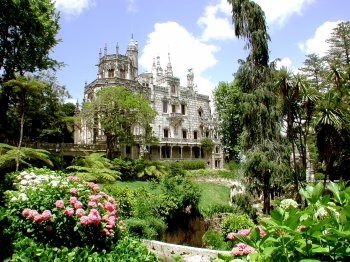
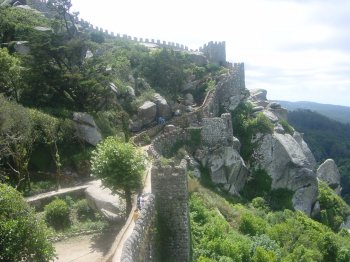
This castle was built in the 12th century and later underwent several modifications, mainly during the reign of King Ferdinand II. Its current appearance possibly dates from this period. Of the original Moorish castle, the cistern, the battlement line, and the square towers that reinforce the wall remain. Inside its enclosure, there is a ruined Romanesque chapel.
Palácio Nacional da Pena
- heritage
Estrada da Pena
2710-609, Sintra
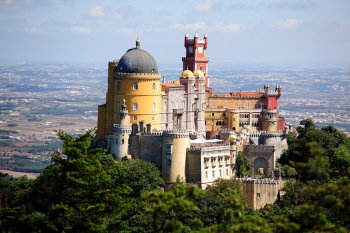
The Pena National Palace was built on the ruins of a Manueline-style convent and served as a summer residence for the monarchs. This work perfectly combines Neo-Gothic and Neo-Manueline elements with Muslim and Indian elements. This combination, along with the lush vegetation of the Pena park, accentuates its exotic and fantastical aspect. Inside, the ambiance of a royal residence is preserved.
Convento dos Capuchos
- heritage
Serra de Sintra
2710, Sintra
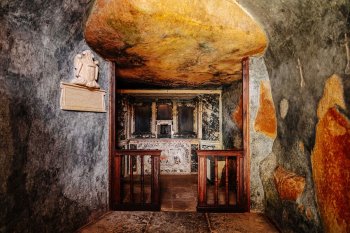
Built amidst cliffs and vegetation, this convent is also known as the Convent of Santa Cruz da Serra or of Cork. A simple, rustic construction, it was founded in 1560 by D. Álvaro de Castro, fulfilling a vow he made to his father, D. João de Castro. Everything in this space is miniature: the cells, lined with cork, the refectory, and the small church with its marble altar, whose vault was carved from the rock itself. It is believed to have been abandoned in 1834, following the suppression of religious orders decreed by the liberal regime.
Igreja da Penha Longa
- heritage
Quinta da Penha Longa
2710, Linhó
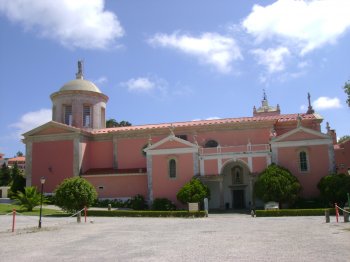
A 16th-century single-nave church with a Mannerist side portico and a magnificent dome topped by a statue representing Saint Michael the Archangel. In the chancel, with a Greek cross plan, stands a Baroque altarpiece, gilded and painted, with double columns and twisted archivolts. Also, noteworthy inside are the paintings, tiles, and statuary.
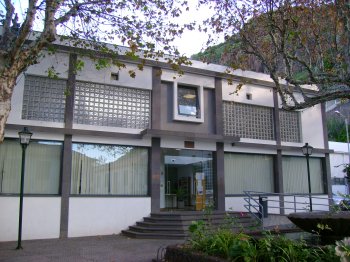
Biblioteca Municipal da Ribeira Brava
- heritage
Rua de São Francisco, 4
9350-211, Ribeira Brava
Library with a vast collection of documents.
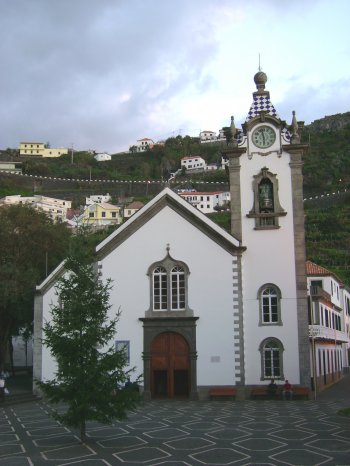
Igreja Matriz de Ribeira Brava
- heritage
Rua Camachos, 20
9350-214, Ribeira Brava
Founded in the 15th century, the Parish Church of Ribeira Brava, or São Bento, has undergone several interventions over time, and therefore presents Manueline, Mannerist, and Baroque characteristics. It houses a varied and rich collection of paintings, sculptures, goldsmithing, and woodcarving from the 16th and 17th centuries, making it one of the most important heritage sites in the region. Its treasure has been exhibited at the Royal Museum of Fine Arts in Brussels, and within the church, it constitutes the Silverware Collection.
Núcleo das Pratas
- heritage
Rua Doutor Manuel Arriaga
9350-221, Ribeira Brava
The Parish Church of Ribeira Brava displays a collection of 66 silver pieces, including crowns, chalices and other items from the 16th and 17th centuries.