Explore the best places
Heritage in Portugal


Fortim de São Bento
- heritage
Rua Gago Coutinho e Sacadura Cabral
9350-213, Ribeira Brava
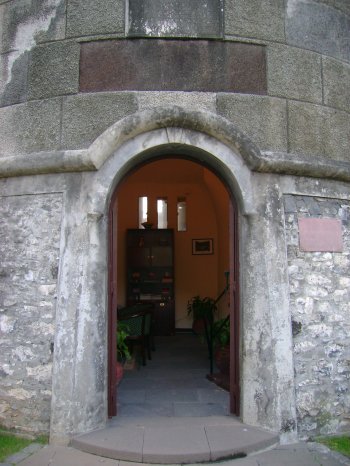
Commissioned by Governor Duarte Sodré Pereira to defend that anchorage, this small fort was built in the early 20th century to replace an earlier 16th-century fortification dedicated to Saint Sebastian, which had been destroyed by a strong alluvial flood in 1803. It is a circular tower with a revivalist design, retaining the original Baroque inscription and coat of arms.
Passeio Marítimo de Ribeira Brava
- heritage
Rua Gago Coutinho e Sacadura Cabral
9350-217, Ribeira Brava
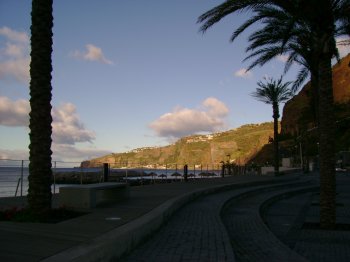
An ideal area for strolling and relaxing, offering beautiful views of the sea and the island's verdant slopes. Along the way, there are several restaurants and bars.
Museu Etnográfico da Madeira
- heritage
Rua de São Francisco, 24
9350-211, Ribeira Brava
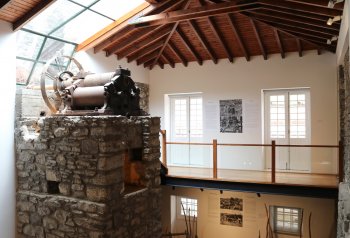
Opened in 1996, this museum is housed in the former Ribeira Brava brandy distillery. The space features permanent ethnographic collections, notably on fishing, transport, weaving, watermills, viticulture, and cereal processing. Temporary exhibitions are held in another room, aiming to present various themes related to Madeira's culture to the public.
Igreja de Nossa Senhora do Ó de Águas Santas
- heritage
Rua do Mosteiro, 957
4425-140, Águas Santas
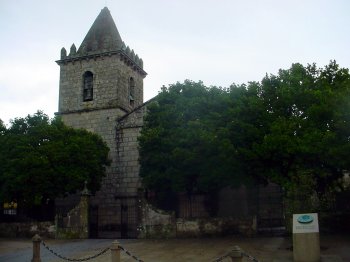
This church was once a temple of the Friars of the Order of Saint Joseph of Jerusalem, and was later transferred to the Order of Malta. It subsequently underwent several renovations, resulting in a façade crowned by a crenellated bell tower, a portal flanked by four pairs of columns with decorated capitals and pointed arch archivolts. On the north façade, another portal stands out, with the Maltese Cross engraved on its tympanum.
Mosteiro do Divino Salvador de Moreira
- heritage
Alameda Padre Alcino Azevedo Barbosa
4470-604, Moreira
The original monastery dates from the mid-9th century. The new church began to be rebuilt in the 16th century and was completed in the 18th century. The granite façade reflects a certain austerity, and the church has a single nave with an inscribed transept, a rectangular chancel, and bell towers, with the chapel and sacristy attached. Inside, noteworthy features include the main altar and the two altars in the transept, executed later than the building, in Maia Baroque style; the large upper choir with stalls supported on a wide, segmental arch and a Baroque organ; the barrel-vaulted ceiling forming coffers …
Santuário Mariano de Nossa Senhora do Bom Despacho
- heritage
Rua Padre José Pinheiro Duarte, 39
4470-151, Maia
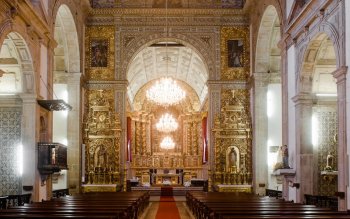
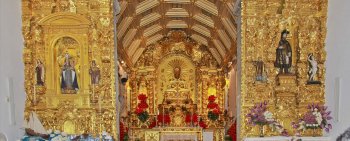
The church, built in 1738 in the Baroque style, has a longitudinal plan, a single nave, and a rectangular chancel. The interior is decorated with gilded wood carvings, altarpieces, and Baroque coffers, and features a Maltese cross and a stained-glass window in homage to Our Lady of Good Dispatch. The main facade is particularly noteworthy for its tile cladding. In 2003, it was declared a Marian Sanctuary by decree of the Bishop of Porto, D. Armindo Lopes Coelho, when Our Lady of Good Dispatch was crowned Patron Saint of the entire municipality. The feast in her honor is celebrated on …
Maia 360º - Torre do Lidador
- heritage
Praça Doutor José Vieira de Carvalho, 45
4474-006, Maia
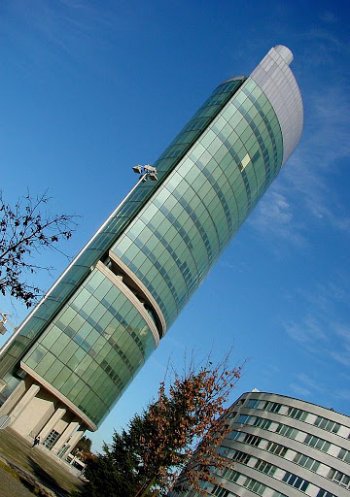
On select days, it's possible to climb to the Lidador Tower viewpoint, where the City Hall services are located, and enjoy a privileged view of Maia and the entire Porto Metropolitan Area. Inaugurated in 2001 and standing 92 meters tall, this is the 5th tallest building in the country and the tallest outside Lisbon. Visible from any of its 10 parishes, the Tower is a landmark of the municipality and its most recognized brand image. Participation in the guided tour is free, but prior registration is mandatory.
Quinta dos Cónegos
- heritage
Rua do Souto, 363
4470-215, Maia
The former recreational estate of the Bishops of Porto, comprising a beautiful 18th-century house in the purest Baroque style and with a strong influence from the school of Nicolau Nasoni – it is thought that the statuary and some architectural elements may even be his work. Here we find the beautiful "Gardens of Maia", fountains, chapels and a swimming pool. Inside, the chapel with its 17th-century gilded altarpiece deserves mention.
Museu de História e Etnologia da Terra da Maia
- heritage
Praça 5 de Outubro
4475-601, Castêlo da Maia
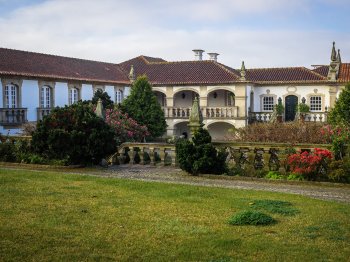
This 18th-century building, which once served as a primary school and as the Maia Town Hall, now houses the Museum of History and Ethnology of the Land of Maia, with two floors and large exhibition rooms. The permanent ethnographic and historical collections aim to portray, through objects, the most prominent aspects of rural life and local daily life.
Museu Carlos Machado
- heritage
Rua do Dr.Guilherme Poças, 65
9500-100, Ponta Delgada
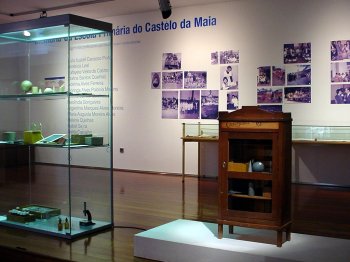
Founded in 1876, the museum is housed in the former convent of Santo André and features a Natural History section, begun in the 19th century, which includes specimens of Azorean flora and fauna. Here you can appreciate collections of painting, sculpture, sacred art, tiles and goldsmithing that make up the Art section, the regional ethnography section, and even a toy collection.