Explore the best places
Heritage in Portugal


Paço Real de Dom Dinis
- heritage
Largo Dom Dinis, 14
7100-509, Estremoz
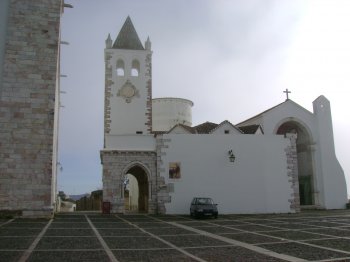
Located on the outskirts of Estremoz Castle, the old Dinisian Palace has been reduced to a small galilee with a ribbed vault, with a series of pointed arches and twin columns.
Convento dos Congregados de São Filipe Néri
- heritage
Rossio Marquês de Pombal
7100-513, Estremoz
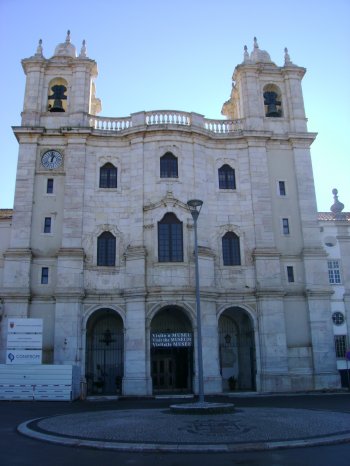
Built in the early 18th century, it served as the palace of D. Constantino de Bragança, Viceroy of India, and only later as a convent. Highlights include the stonework and tiles, which depict scenes from the life of St. Philip Neri, and the beautiful marble staircase, featuring hunting scenes.
Castelo de Évoramonte
- heritage
Rua da Convenção, 6
7100-314, Estremoz
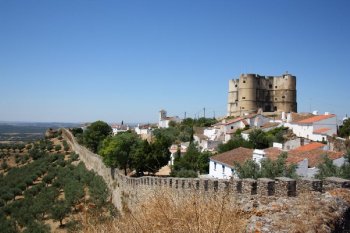
The castle sits atop a steep hill at the western edge of the Ossa mountain range. The original fortification still includes the wall and gates from the reign of King Dinis. Within the walls, the highlight is the Paço de Homnagem (Homage Palace), which, along with the keep, forms a vast, regular quadrilateral. The palace's design is inspired by Italian Renaissance palaces.
Antiga Igreja e Convento das Maltesas
- heritage
Rossio Marquês de Pombal
7100-513, Estremoz
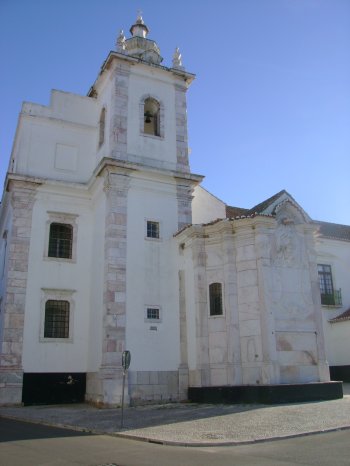
A building comprising a church, cloister, and convent area. This former mansion house was a convent for Maltese nuns and a hospital of mercy. It currently serves as a church and is one of the campuses of the University of Évora.
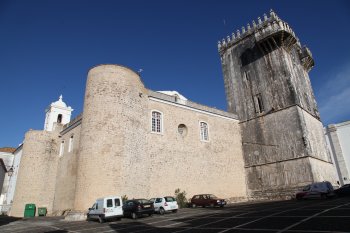
Castelo de Estremoz
- heritage
Largo de Dom Diniz
7100-555, Estremoz
A pentagonal castle with a wall reinforced by turreted buttresses. The walled enclosure of the ancient citadel rises around the 27-meter-high white marble keep. Beyond the medieval wall, the town boasts a vast expanse of Restoration War-era fortifications, with crenellated towers and two round-arched gates. Near one of the gates is a rectangular tower in the Roman-Gothic style with several windows. The royal palace, restored by King João V, is located on the outskirts of the castle.
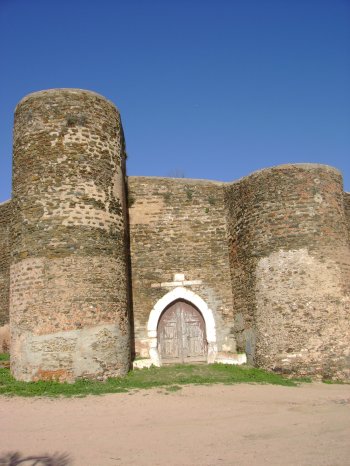
Castelo de Veiros
- heritage
Rua Nova
7100-708, Estremoz
La fortificación medieval se conserva en su forma original, flanqueada por torres redondas y varias puertas medievales. Durante la Guerra de la Restauración de 1662, el Marqués de Caracena destruyó la torre del homenaje.
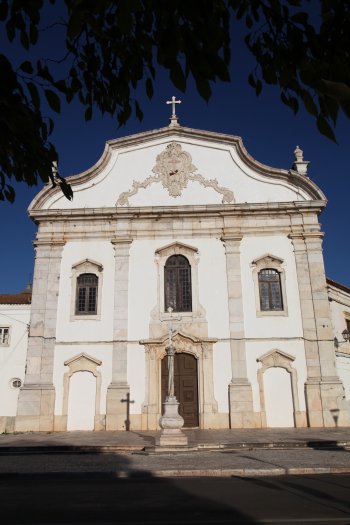
Igreja do Convento de São Francisco
- heritage
Largo dos Combatentes da Grande Guerra
7100-111, Estremoz
The transept has an elongated rectangular floor plan, with the Latin cross-shaped transept. All that remains of the transept is the polygonal apse on the south side. The façade is divided into two sections and topped by a triangular pediment with an undulating cornice on the sides. Notable is the architrave divided by three wide pilasters, with rectangular windows with a triangular cornice on the upper section and similar porticoes on the ground floor. Inside, the nave has five sections, separated from the galleries by solid ashlar walls, punctuated by tall, pointed-arched openings with two archivolts. Notable on the gallery's …
Capela de Nossa Senhora dos Mártires
- heritage
Mártires
7100-148, Estremoz
A 14th-century Gothic temple with flying buttresses and a porch. Its floor plan consists of a horizontal articulation of the apse with the nave, built entirely of finely cut marble ashlar, with a nave covered by a gable roof supported by flying buttresses with a pendentive cornice and a perfect arch span. The portico stands out, a simple pointed-arch span framed in beveled ashlar, flanked by tiled wainscoting. Also worthy of special attention is the apse with a polygonal front of two bays marked by buttresses, which also finish the radial axes. The interior is lined with 18th-century historiated tiles.
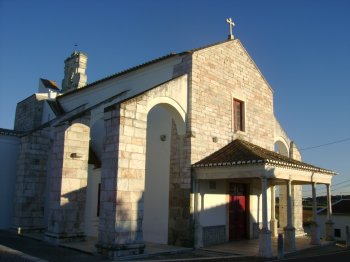
Passo do Pretório
- heritage
Luso
3050-201, Luso
It is one of the twenty steps of the Via Sacra do Bussaco.
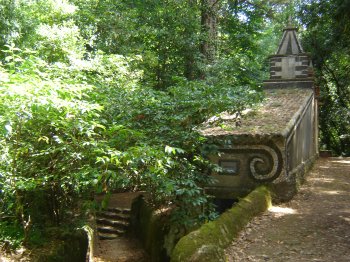
Edifício do Palace Hotel do Bussaco
- heritage
Luso
3050-261, Luso
It was here that, on September 27, 1810, the Battle of Bussaco was fought, in which Wellington, commanding Anglo-Portuguese troops, defeated the French army under Massena. This important historical moment, which marked the end of the French invasions, is depicted in some of the tiles inside the building, now converted into a luxurious hotel. Nestled in the majestic Buçaco Forest, it offers a stunning architectural, historical, and scenic ensemble.