Explore the best places
Heritage in Portugal


Museu Municipal de Arqueologia e Etnografia de Barrancos
- heritage
Travessa do Arco, 2
7230-030, Barrancos
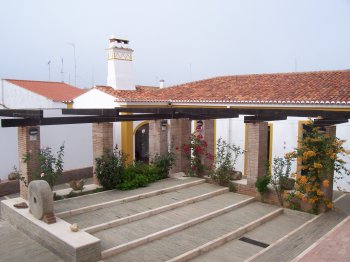
A museum housed in a renovated manor house, it houses Islamic and Iberian epigraphic pieces discovered at Noudar Castle. It also features Punic sculpture.
Castelo de Noudar
- heritage
EM1023
7230, Barrancos
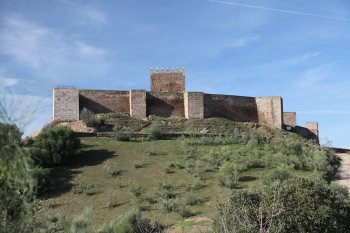
After serious problems caused by Castilian rule, King Dinis handed Noudar over to the Order of Aviz, forcing them to build a strong castle and granting the town numerous privileges. Thus, the castle was built in 1308 by order of King Frei Afonso, master of the Order of Aviz, and underwent numerous repairs over the centuries. It consists of a hexagonal wall and enclosure, reinforced by regularly spaced cubes, with two gates defended by barbicans and two wicket gates. Recently, several archaeological investigations have been conducted to integrate and recover the origins of this fortification.
Mosteiro de São João D'Arga
- heritage
Arga de Baixo
4910-035, Arga de Baixo
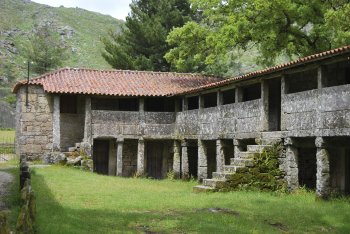
Located in Serra D'Arga, this monastery dedicated to Saint John the Baptist presents itself. Currently, the chapel is only open to hikers on feast days.
Museu Municipal de Caminha
- heritage
Travessa do Tribunal
4910-164, Caminha
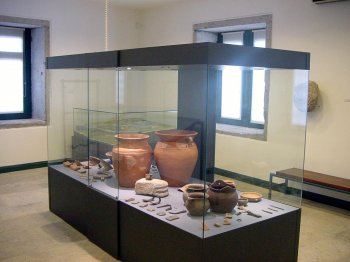
An archaeology museum displaying valuable artifacts unearthed from various archaeological sites in the municipality, documenting a broad chronological period from prehistory to Romanization. It features a room dedicated to prehistory and others dedicated to the Castro culture. The museum also houses a wealth of archaeological material for interested researchers to study. It also houses an ethnographic collection covering fishing, agriculture, linen processing, and regional clothing, as well as a valuable collection of sacred art.
Igreja Matriz de Caminha / Igreja de Nossa Senhora da Assunção
- heritage
Largo da Matriz
4910-155, Caminha
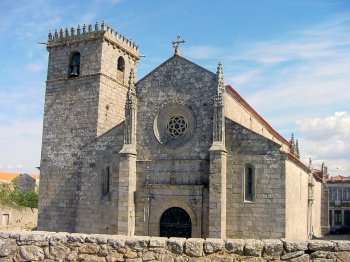
This Gothic temple is built of granite. The façade features a Renaissance portal crowned by a rose window and is flanked by a tower. Inside, one can see 17th-century tiles, gilded altarpieces in the national style, and two Neo-Manueline confessionals.
Forte da Ínsua
- heritage
Ínsua de Santo Isidro - Rua Foz do Minho
4910-180, Cristelo
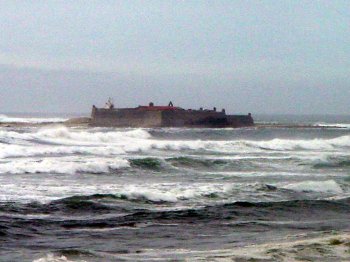
Ínsua Fort is situated on a rocky islet and has an irregular polygonal shape. Inside the wall is a small chapel that displays the design of the original Romanesque temple. On the terraces, you can see some bronze artillery pieces on iron carriages.
Forte do Cão
- heritage
Avenida Forte do Cão
4910-012, Gelfa
This small fort was built by Dom Pedro II in the 17th century to protect the coast from Spanish attacks during the Restoration War. It features a star-shaped layout and four single-elevation bastions.
Forte da Lagarteira
- heritage
Avenida Campo do Castelo
4910-490, Vila Praia de Âncora
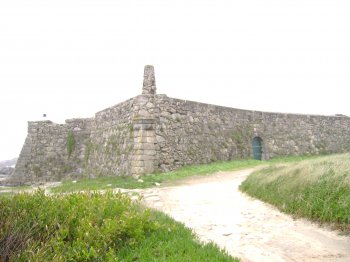
This 17th-century structure was built during the reign of Dom Pedro II to defend the coast from pirate attacks during the Restoration War. The fort's door is topped by a stone bearing the royal coat of arms.
Conjunto Fortificado de Caminha
- heritage
Calçada da Escola
4910-111, Caminha
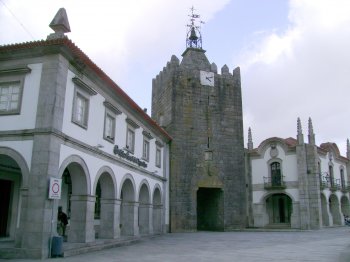
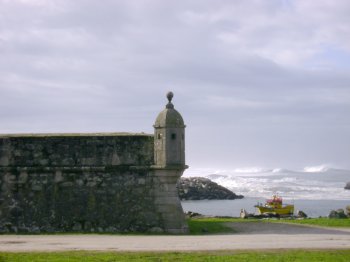
Of this set of 18th-century curtain walls and bastions, the bastions of the main church and Santo Antônio church, the Graça wall, and the Clock Tower stand out. The rectangular tower features a small terrace where the bell tower rests. Above the arch of the gate, which once defended the town, is an image of Our Lady of the Conception.
Torre do Relógio de Caminha
- heritage
Praça do Conselheiro Silva Torres, 8
4910-156, Caminha
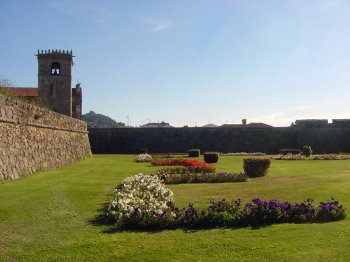
The Clock Tower is a medieval monument that once formed part of the town's defensive wall. Along with the Town Hall and Misericórdia buildings, both dating back to the 16th century, the tower forms an important architectural complex.