Explore the best places
Heritage in Portugal


Pelourinho de Vilar Seco
- heritage
Avenida Fortunato de Almeida
3520-300, Vilar Seco
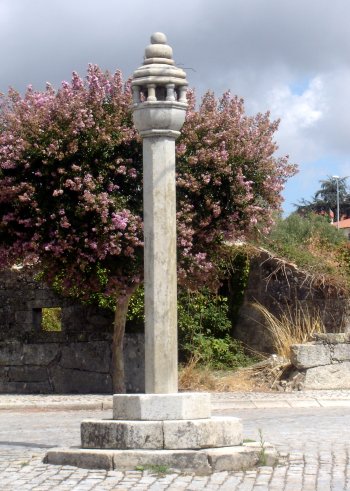
This cage pillory was reconstructed from fragments. It consists of three steps supported by a baseless, prismatic shaft with eight smooth faces. The top is an open cage with eight low columns resting on an octagonal bowl. The roof is a polygonal dome crowned by a circular molding and two stepped spheres, superimposed as a pinnacle.
Casa de Santar
- heritage
Rua de Miragaia
3520-125, Santar
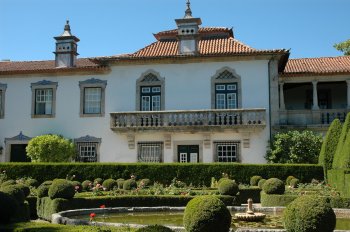
It was known as Quinta do Casal Bom, a residence that Dom Sancho II elevated to a manor and estate, gifted to one of his men who distinguished themselves in war. Today, it is known as Casa de Santar, a property that has been in use for 13 generations. Adorned with beautiful gardens, it sits on a series of boxwoods that culminate in an 18th-century pond. In front of the house, the "Chafariz da Carranca" stands as the House's coat of arms. Visiting this house is like traveling back in time, through the gardens and all the unique features of …
Casa do Soito e Paço dos Cunhas
- heritage
Largo do Paço
3520-130, Santar
Only a few small parts remain of the 17th-century Paço dos Cunhas. This pioneering construction had a decisive influence on 18th-century Portuguese Baroque mansions. Casa do Soito, an elegant 18th-century mansion, was modeled after the Paço dos Cunhas, with a façade filled with curved, framed openings and a central arched cornice. The garden is a highlight, with statues, flowerbeds, balustrades, and benches covered in Baroque tiles.
Casa das Fidalgas
- heritage
Avenida Viscondessa de Taveiro
3520-147, Nelas
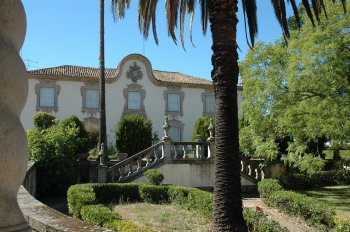
This former manor house overlooking the Serra da Estrela has been restored and is in good condition. It features a garden with boxwood hedges that follow the contours of the lake at ground level and a fountain between two flights of stairs. In the center of the lake is a fountain composed of a simple stone pedestal.
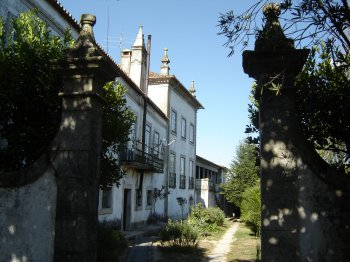
Museu Etnográfico da Freguesia de Meruge
- heritage
Lage Grande, 9
3400-359, Meruge
A space where you can enjoy some objects and testimonies of local ethnography.
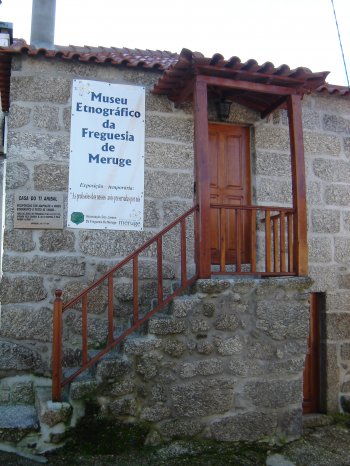
Casa Museu da Fundação Dona Maria Emília Vasconcelos Cabral
- heritage
Praceta Doutor António Saraiva
3400-073, Oliveira do Hospital
The former "Casa de Baixo" (Lower House), dating from the 18th and 19th centuries, belonged to the nobleman Francisco Cabral Metello. This museum recreates the romantic monarchy of bourgeois society prior to the establishment of the Republic.
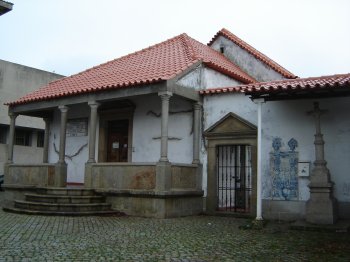
Museu Municipal Doutor António Simões Saraiva
- heritage
Rua João Borges Brito, 4
3405-018, Bobadela
Museum opened in 2005, where you can appreciate works of painting, sculpture, oleographs, engravings, and some ethnographic notes, such as pieces donated by individuals from all over the municipality.
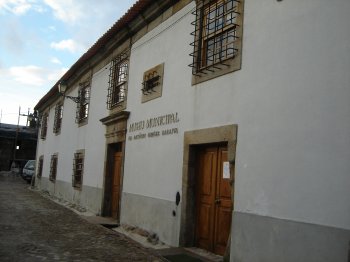
Ruínas Romanas de Bobadela
- heritage
Rua João dos Santos Pestana Coelho - Largo da Igreja
3405, Bobadela
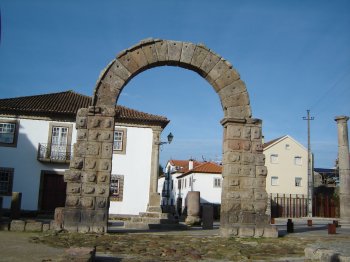
The Roman Ruins of Bobadela bear witness not only to the importance of the Roman city in ancient times, but also to the presence of ancient peoples, such as the Romans, who left their mark before the 4th century BC. From the ancient Roman city, a perfect round arch with a rusticated structure supported by strong pillars, the Roman amphitheater, several tombstones, and other remains of significant interest remain.
Castelo de Avô e Ermida de São Miguel
- heritage
Rua do Castelo, 10
3400, Avô
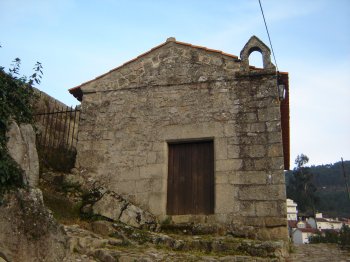
The castle sits on the banks of the Alva River, with a wall measuring 3.50 meters high and 2.70 meters wide. It was built in the 13th century and rebuilt in the 14th century. Next to the gate is the Chapel of São Miguel, with a nave featuring a projecting, vaulted chancel with two side niches.
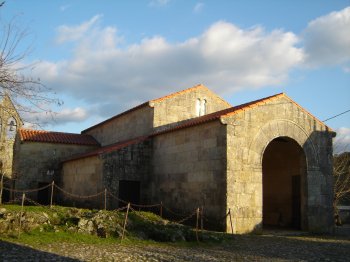
Igreja de São Pedro / Igreja Matriz de Lourosa
- heritage
Largo do Monumento Nacional
3400, Lourosa
Its pre-Romanesque origins make this church a rare example in Portugal. This Mozarabic temple reflects the diversity of influences it experienced during the First Reconquista. The uniqueness of this church also stems from the reused Roman, Visigothic, and Arab materials, and the monumentality of the galilee and the three naves with horseshoe arches.