Explore the best places
Heritage in Portugal


Capela do Santo Cristo
- heritage
Rua de Alcolena
1400-005, Lisboa
This chapel is an example of the manueline religious architecture. Inside are worthy of notice the glazed tiles application. You may find them on the walls of the single nave, covered with figurative glazed tiles panels, as well as the chapel walls, the altar and the pews of the nave.
Capela de Nossa Senhora do Carmo
- heritage
Largo do Carmo
1200-309, Lisboa
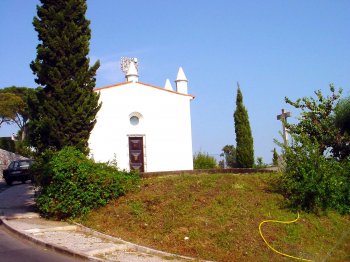
The construction of this chapel was ordered by Dom Nuno Alvarez Pereira, located on a first floor.

Capela de Santo Amaro
- heritage
Calçada de Santo Amaro
1300, Lisboa
The chapel has beautiful glazed tiles and a wonderful lavabo at the sacristy. The two altars and the golden carving retable stand out.

Capela de São Jerónimo
- heritage
Rua Pero da Covilhã
1400-296, Lisboa
TThe São Jerónimo Chapel is placed on a hill over Belém. From the garden you have a privileged view of the river. This is a work from the Manueline period with beautiful details deserving a closer look.
Palacete Norton de Matos
- heritage
Alameda das Linhas de Torres, 150-152
1750-149, Lisboa
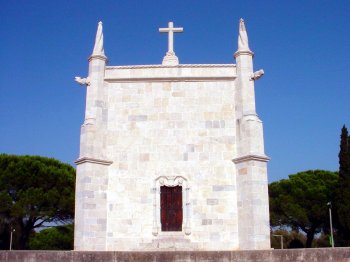
Baroque and Rococo Palace, irregular longitudinal plant, consisting of a central body highlighted and some extreme bodies access portals. On the main façade, highlighted by the two portals with late-Baroque influences.
Palacete na Alameda Linhas de Torres / Villa Sousa
- heritage
Alameda das Linhas de Torres, 22
1750-146, Lisboa

Coliseu Figueirense
- heritage
Largo do Coliseu
3080-171, Figueira da Foz
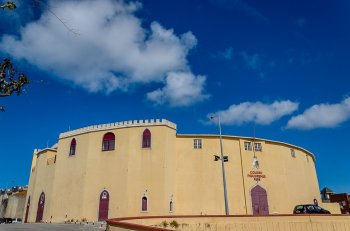
Bullring opened in August 1985, with capacity for 6000 seats. It is used for bullfighting shows, but also for musical concerts and other cultural events.
Arco da Rua Augusta
- heritage
Rua Augusta
1100, Lisboa
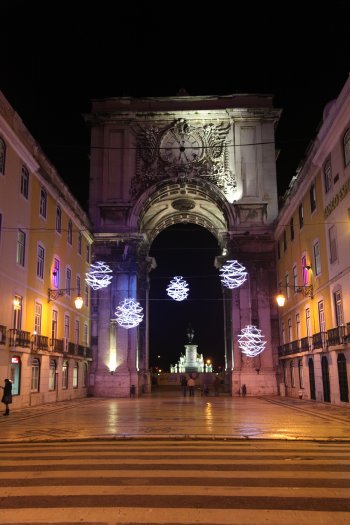
The Arco do Triunfo is located at the Augusta Street. It is a work from the XVIII century which symbolizes the city recovery after the earthquake in 1755.
Núcleo Antigo da Rua do Lumiar
- heritage
Rua do Lumiar
1750, Lisboa
Small rural nucleus of the suburbs of Lisbon, incorporating an ancient medieval core, developed around a Royal rural property that evolved from the 16th century to a linear urban formation.

Palácio Porto Côvo
- heritage
Rua de São Domingos, 37
1200-678, Lisboa
The palace is built between 1770/1790, being the residence of Jacinto Fernandes Bandeira, the first Porto Covo baron. The building is later bought by the British State and became the Embassy of the United Kingdom in Lisbon. The palace is organized in U, integrating the chapel as a semi-autonomous entity. At the garden may be seen a tank with a small cascade and a small swimming-pool built for the workers for the company that presently runs here.