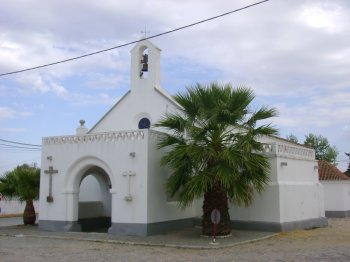
Explore the best places
Monuments in Reguengos de Monsaraz


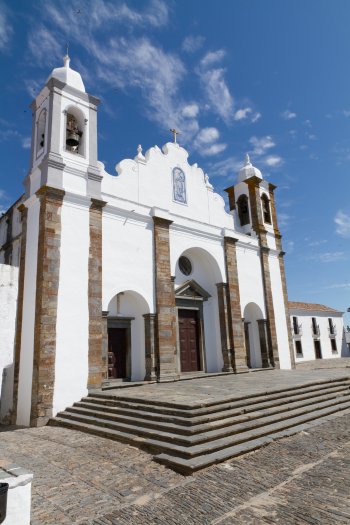
Igreja de Nossa Senhora da Lagoa
- heritage
Largo Dom Nuno Álvares Pereira
7200-175, Reguengos de Monsaraz
The 16th-century Parish Church of the Town of Monsaraz replaced the previous Gothic church, which had been contaminated by the plague. The marble tomb arch by Gomes Martins Silvestre, depicting a funeral procession of 17 people, is one of the most important monuments. In the center of the pediment, a tile panel depicts the Virgin of the Conception. The façade features two quadrangular towers and a false portico with three blind arches.
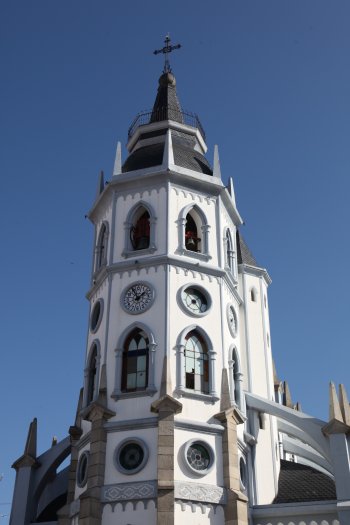
Igreja Matriz de Reguengos de Monsaraz / Igreja Matriz de Santo António
- heritage
Praça da Liberdade
7200-370, Reguengos de Monsaraz
Construction began on October 27, 1887. The bell tower stands in the center of the façade, and inside, three naves and three chapels can be seen in the transept area. The transept protrudes, and the giant flying buttresses and the tower's positioning in the center of the façade make this church one of the finest examples of neo-Gothic architecture in Portugal.
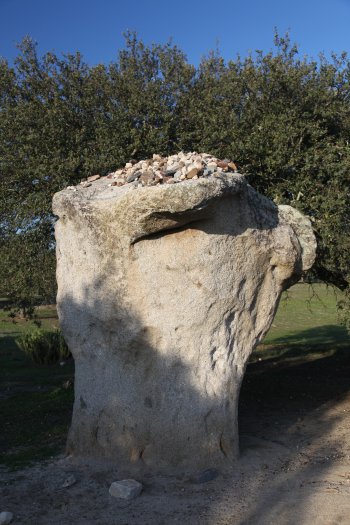
Rocha dos Namorados
- heritage
Rua de São Pedro
7200-132, Reguengos de Monsaraz
This granite monument, shaped like a mushroom, stands over 2 meters tall. It has a peculiar morphology, resembling a mushroom, with the base narrower than the top, and the height greater. Its symbolism became an attraction, as it was customary for local girls to throw a stone at the menhir to find out if their marriage was imminent. Each lost stone represented a year of waiting. Today, it is still observed on the first Monday of Easter.
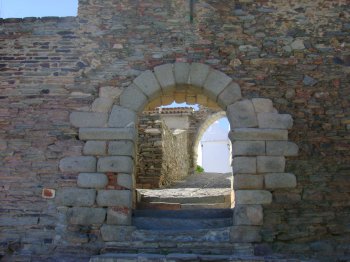
Porta do Buraco ou da Cisterna
- heritage
Travessa da Cisterna
7200-175, Reguengos de Monsaraz
It's one of four gates that provide access to the walled interior of Monsaraz Castle and reflects the military concerns of the time. Each gate is composed of granite, red clay mortar, and lime. This one, like the Alcoba Gate, is carved in a round arch.
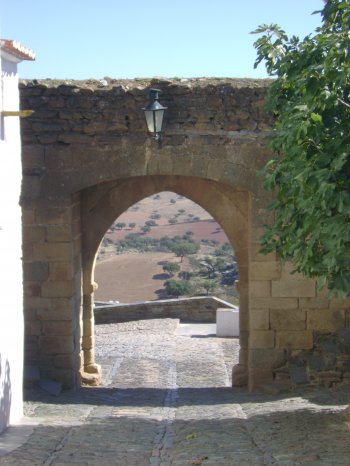
Porta de Alcoba
- heritage
Travessa Dom Dinis
7200-175, Reguengos de Monsaraz
It is one of four gates that provide access to the walled interior of Monsaraz Castle. Each gate is composed of granite, red clay mortar, and lime. The scenic effect they create is admirable, as this one is carved in a round arch. It has been subject to successive renovations for its preservation.
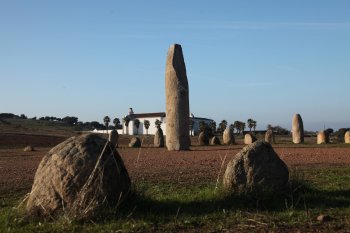
Cromeleque do Xerez
- heritage
Monsaraz
7200-173, Monsaraz
This group of fifty menhirs, defining a regular quadrangular enclosure, was discovered and identified by the Portuguese. Although fractured, some have a phallic shape, others almond-shaped, surrounding a gigantic central post with a phallic shape, four meters high and weighing seven tons. It was the only monument moved to another location in the entire Alqueva region and was installed in 2004.
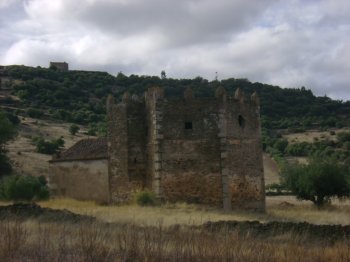
Ermida de Santa Catarina de Monsaraz
- heritage
Monsaraz
7200, Reguengos de Monsaraz
A 12th-century temple with architectural and symbolic features of the Order of the Temple. This National Monument, located outside the Monsaraz wall, may have served as a defensive stronghold for pilgrims and travelers passing through the area.
Paços da Audiência de Monsaraz
- heritage
Rua Direita
7200-175, Reguengos de Monsaraz
This monument of indisputable architectural value arose in response to the economic and administrative development of the village of Monsaraz. It dates back to the second quarter of the 14th century. It is known for the fresco of the Good and Bad Judge. The lower panel depicts the figures of the Good and Bad Judge, in a civil trial.
Centro Histórico da Vila de Monsaraz
- heritage
Largo do Castelo
7200-175, Reguengos de Monsaraz
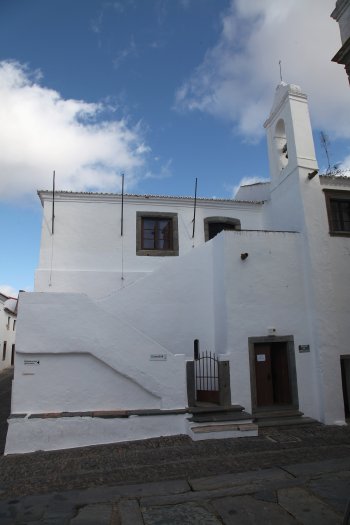
The citadel has a trapezoidal plan and is flanked by four square towers. The medieval wall was encircled in the 17th century by bastioned fortifications, which encompassed the entire town and the suburb of São Bartolomeu, with the gates of Alcoba, Buraco, and Évora, ending at the Porta da Vila.
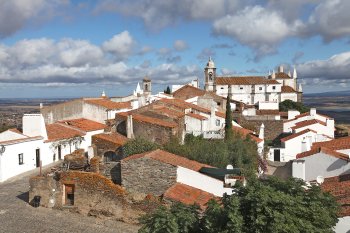
Igreja de Nossa Senhora da Caridade
- heritage
Largo da Igreja, 7
7200-230, Caridade
Small church situated in the locality of the same name, about 3 kilometers from Reguengos de Monsaraz. The first reference to this 16th century Church dates back to 1326. Was being constructed over the centuries, although the earthquake of 1755 may have caused some damage. Was recovered in 1998.