Explore the best places
Discover new places in Cartaxo


Capela do Senhor dos Passos
- heritage
Rua Mouzinho de Albuquerque, 25
2070-104, Cartaxo
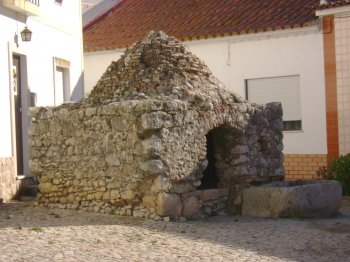
It has a peculiar location, as it is surrounded by two houses on a street close to the main church and the city center. Built in the 16th century, this chapel, of Manueline religious architecture, is attached to a manor house with internal communication through the upper choir. Its most notable features are the quartered coat of arms, the 16th-century portal, the triumphal arch, and the coffered vault. In 1808, it is believed to have sheltered Junot's troops during the French Invasions.
Mercado Municipal do Cartaxo
- heritage
- shopping
Rua Doutor Manuel Gomes da Silva, 16
2070-096, Cartaxo
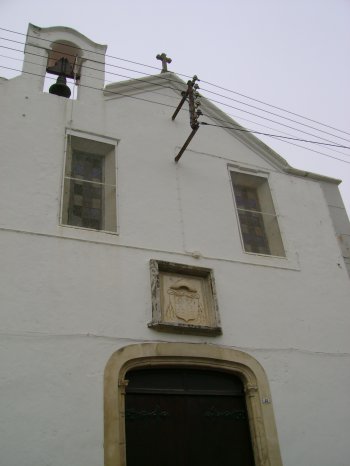
It is known locally as "praça" (square) and is a building, inaugurated in 1947, that occupies a vast area, very close to the city center. There you can find fresh products such as fruits, vegetables, fish, meat, bread, and food establishments. The headquarters of the Association of Portuguese Wine Municipalities is located in its tower, and on one of its sides there is a very pleasant spot, the Duck Pond.
Praia Fluvial de Valada / Fluvina de Valada
- beach
Rua 1 de Maio
2070-516, Valada
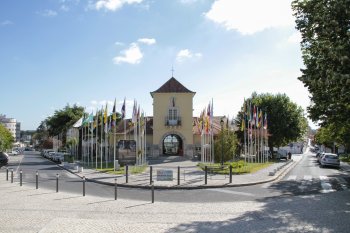
It is one of the must-see spots in the riverside parish of Valada. Fluvina welcomes small and medium-sized recreational boats and is a pleasant leisure area, from where it is possible to contemplate a beautiful panoramic view over the Tagus River and the floodplain fields. It is also quite popular with fans of water sports and, right next to it, there is a river beach, much appreciated in the warmer months. There is also a picnic area nearby.
Palhota
- country
- heritage
Palhota
2070-502, Palhota
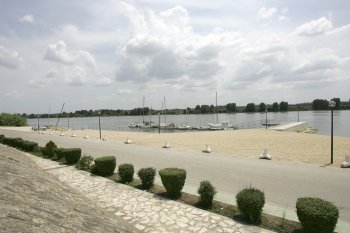
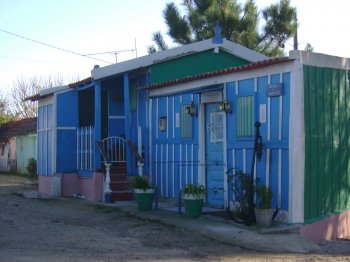
It belongs to the parish of Valada and is one of the few fishing villages of Avieiros, who came from the Vieira de Leiria area, that still maintain their characteristics. The writer Alves Redol, known for writing about the Tagus River and its people, was one of the most famous inhabitants of this typical fishing village. The houses are colorful and made of wood, of the stilt house type, supported on pillars, in order to prevent the occurrence of floods, which normally plague this region in winter.
Praça de Touros do Cartaxo
- heritage
Largo Vasco da Gama
2070-050, Cartaxo
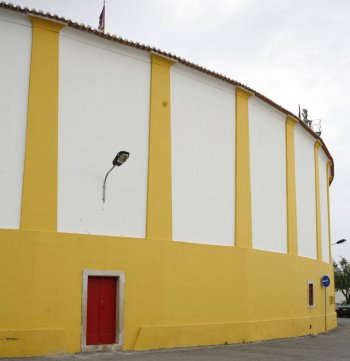
The town has a long tradition of bullfighting, and its bullring, located near the city's courthouse, remains very popular with aficionados. It has a capacity of five thousand spectators and was inaugurated in 1874. It has a classic style, with a circular floor plan and an arena with a perimeter of almost 100 meters, bleachers, and 44 private boxes.
Museu Rural e do Vinho do Cartaxo
- heritage
Avenida 25 de Abril
2070-158, Cartaxo
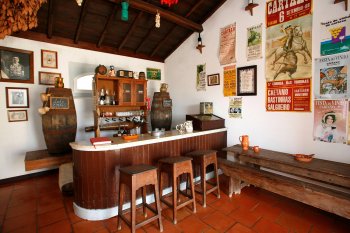
Open since 1985, it is one of the oldest museums in the country dedicated to the theme of wine. It aims to promote traditions linked to the rural world, especially wine production and vine cultivation. It evokes the history and the different steps necessary for wine production, from planting the vines to bottling. It has a typical tavern, a restored old wine cellar, and a permanent exhibition with decorations alluding to bulls, horses, and cowboys.
Centro Cultural Município do Cartaxo
- art
Rua 5 de Outubro
2070-059, Cartaxo
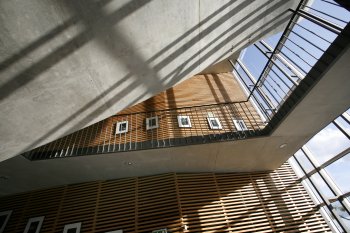
It was inaugurated in 2005 on the site where the old Cine-Teatro Ribatejo operated for half a century, closing in 1988. The building features contemporary architecture, with a predominantly glass facade, and aims to be a diverse space offering cultural events. It has two performance halls, which allow not only the screening of films, but also the presentation of plays and dance and music performances. It also regularly hosts temporary exhibitions, colloquiums and workshops.
Igreja de Nossa Senhora da Purificação
- heritage
Rua da Igreja
2070-403, Pontével
This is the main church of Pontével, a town located about five kilometers from the municipal seat. It is believed to have been founded in 1302 and has been rebuilt several times, most recently in the 17th century. Some of its most distinctive features are the three bronze bells, with intricately worked edges, in its bell tower, as well as the late 16th-century tiles and the baptismal font.
Igreja de Nossa Senhora da Expectação / Igreja Matriz de Valada
- heritage
Largo da Igreja
2070-514, Valada
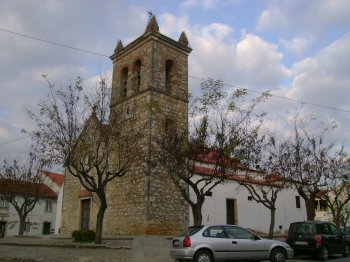
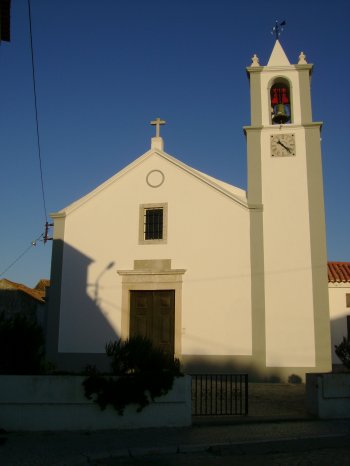
Located practically on one of the banks of the Tagus River, the Parish Church of Valada is very old, probably dating back to 1211. It has undergone several renovations over the years, the last of which took place at the beginning of the 20th century. The façade is of Mannerist religious architecture, with an angular gable and a bell tower. Inside, the 16th-century baptismal font stands out, without a shaft or base, while the nave walls have 19th-century patterned tiles.
Poço de São Bartolomeu
- heritage
Largo de São Bartolomeu
2070-561, Vale da Pinta
It is one of the landmarks of the town of Vale da Pinta and, according to legend, King Afonso Henriques drank water there before the Battle of Ourique. The name of the well, believed to have been built in the 9th century, also comes from that time, as it is thought that the men who accompanied the first king of Portugal saw an image of Saint Bartholomew there.