Explore the best places


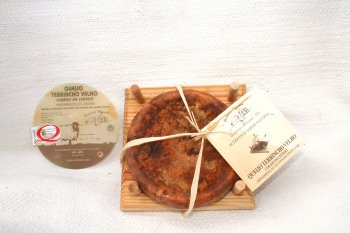
Queijo Terrincho
- leisure
Alfândega da Fé
5350-051, Alfândega da Fé
This cheese, originally from the Bragança district, is a PDO (Protected Designation of Origin) product. It is made from raw milk from Churra da Terra Quente sheep. It is a mature cheese with a semi-hard to hard texture and a color ranging from white to yellowish.
PR1 - Percurso de Vilares da Vilariça
- heritage
Colmeais
5350-431, Alfândega da Fé
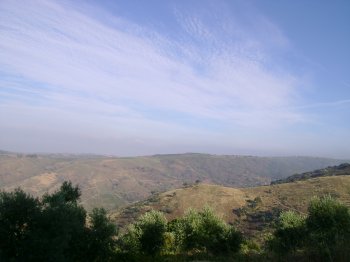
A circular walking trail of approximately seven kilometers, the Burga Dam is the landmark, passing alongside it first and enjoying distant views throughout. The trail climbs the slopes of the Serra de Bornes to Monte do Carvalhal, then passes through Colmeais.
Torre do Relógio
- heritage
Rua do Relógio, 67
5350-046, Alfândega da Fé
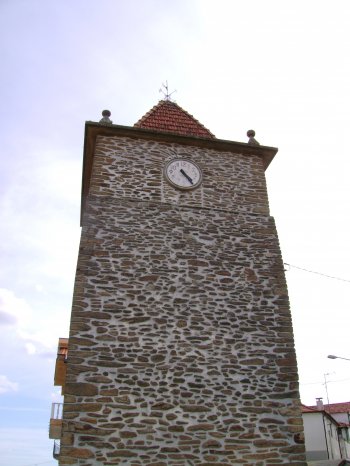
Medieval clock tower, consisting of a quadrangular plan and a pyramidal spire roof topped by a weather vane. Served as a military tower, it underwent several renovations during medieval times.
Solar dos Morgados de Vilarelhos
- heritage
Largo do Terreiro
5350, Alfândega da Fé
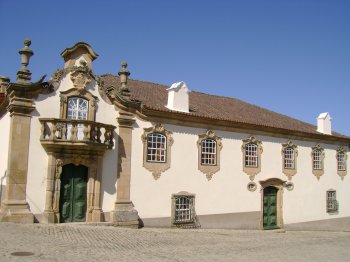
An eighteenth-century mansion with a U-shaped plan, incorporating a Baroque chapel. Initially, it had a longitudinal layout until wings were added in the 19th century, transforming the plan into a U. The date 1744 is inscribed on the portal.
Portal de Entrada da Casa dos Mendonças
- heritage
Avenida Doutor Francisco Sá Carneiro
5350, Alfândega da Fé
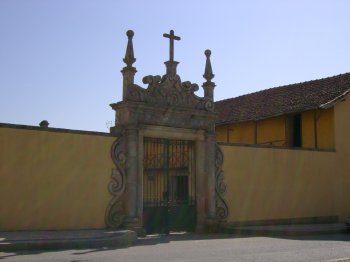
Mannerist granite portal, probably built in the last quarter of the 17th century. It features a straight span with jambs flanked by two Tuscan half-columns and topped by two pinnacles and a Latin cross. It is believed to have been integrated into the wall delimiting the courtyard in the 20th century.
Monte da Cerca
- heritage
Gouveia
5350, Alfândega da Fé
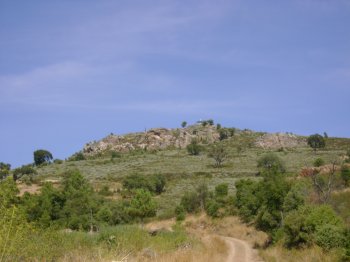
Monte da Cerca was a fortified settlement with both residential and military functions, located on an isolated elevation overlooking Sendim da Serra, at the eastern end of the ridgeline that begins at Gouveia Castle, with which it is thought to be related. At the summit, an alignment of schist stones is visible, forming a slope that defines a line of walls that surrounded the hill. The settlement's structure and the construction of the wall date back to the Iron Age, and it was used as a defensive stronghold in the High Middle Ages. In the 20th century, part of the …
Serra de Bornes
- country
Serra de Bornes
5350, Alfândega da Fé
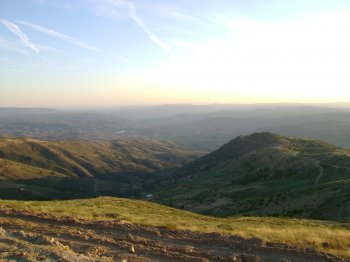
A mountain range with a maximum altitude of 1,200 meters, located in the extension of the Montesinho mountain range. It's a good option for paragliders and hang gliders.
Praia da Bordeira
- beach
Praia da Bordeira
8670, Aljezur
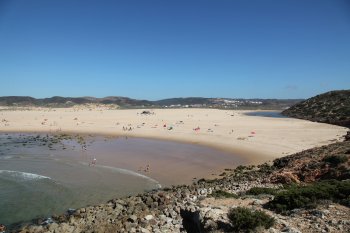
A long sandy beach, the largest in the entire Algarve, the northern part transitions from the rocky escarpment to the extensive dune ridges that reach almost to the sea. This area of the beach is very popular with naturists. On the southern side, a stream flows into the sand, separating it from the road and the cliff. Sometimes, a lagoon forms between the beach and the road, where children can play safely. It offers excellent surfing conditions. Nearby are remains of an 18th-century fortress, Mesozoic formations, and a fossil reef structure of great paleontological value.
Museu do Mar e da Terra da Carrapateira
- heritage
Rua do Pescador
8670-230, Carrapateira
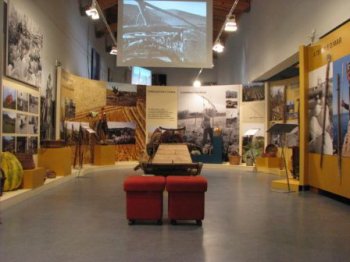
Located in the village of Carrapateira, this museum is a cultural space that focuses on local development and belongs to the new generation of community-focused local museums. It also addresses the issue of integrating traditional activities into the future of local communities.
Museu Municipal de Aljezur - Núcleo de Arqueologia e Etnografia
- heritage
Largo 5 de Outubro
8670-053, Aljezur
Located in the town's historic area, more precisely in the old Town Hall, the museum has two sections. In the Archaeology section, you can see archaeological finds that marked human presence in the municipality, from the Mirense period, the Bronze Age, and the Muslim occupation. The Ethnography section houses a collection of agricultural implements. The Municipal Art Gallery is located in the same building.