Explore the best places
Results for click today PROBLEMGO.com how much to bail my brother out tonight in Portugal


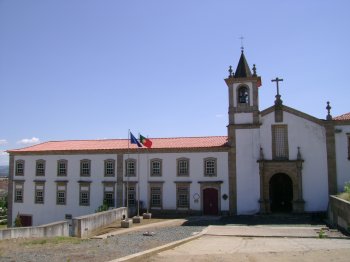
Igreja da Misericórdia – Núcleo de Arte Sacra
- heritage
Rua 5 de Outubro - Largo da Misericórdia
7750-333, Mértola
Manueline, Mannerist and Baroque Temple. Stands out the Mannerist portal adorned with filacteras and Windings. In this space is installed the Museum of sacred art. Taking advantage of the body of the Church, the sacristy and two annexes of the late 19th century. XX, boasts an important collection of imaginary and a liturgical set of 15th-18TH CENTURY, from different churches in the municipality of Mértola. Although transformed into museum space remains linked to the cult.
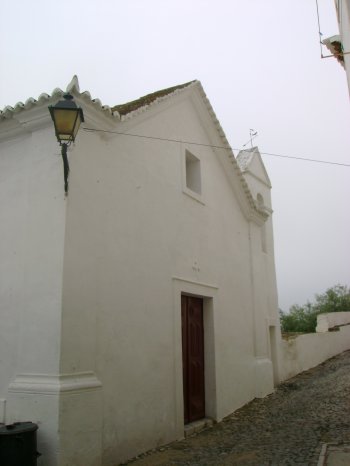
Villa Romana de Sendim
- heritage
Lugar do Agrelo
4610, Sendim
Archaeological excavations carried out from 1997 onwards revealed the existence of a large Roman Villa with compartments paved in geometric mosaics. What is there is the equivalent of what is now called the Quinta. It was occupied until the middle of the 5th century, as the evidence on a brick found in the place where the sign of Solomon is engraved, shows. It is possible to find the houses of the slaves who worked in the fields and the communication routes so typical of the Romans.
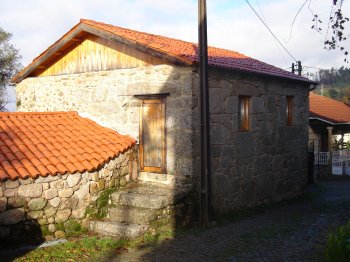
Redondo Lodges & Camping
- hotels
Rua do Casal Rei, 6 - Poço Redondo
2300-035, Tomar
Camping Redondo, located in Poço Redondo, in Tomar, is a site with a secure, comfortable environment and clean, where you can relax in the pool or explore and enjoy the rich culture and landscape of Portugal. Its location, in the vicinity of the dam of Castelo do Bode, gives you the possibility to carry out nautical activities such as canoeing. Alternatively, explore and pay a visit to the historic heritage of the city of Tomar, just 10 miles away.
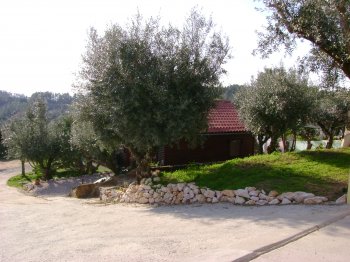
Igreja e Mosteiro de Vilar de Frades
- heritage
Lugar do Socorro
4750-000, Areias de Vilar
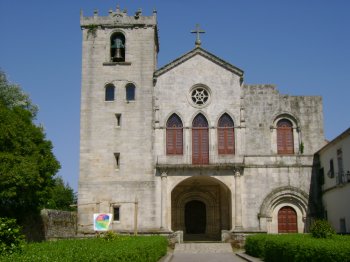
This church, with its 16th-century features, has a segmental arched porch at the entrance supported by two columns. Inside, the remarkable vaulted ceiling of the nave, with its crossed ribs, and the 18th-century tile panels that adorn two of the side chapels stand out. From the original 11th-century monastery, a magnificent Romanesque portal with two archivolts remains, resting on four small columns with historiated capitals.
Parque Urbano do Rio Ul
- country
- leisure
Avenida do Vale
3700, São João da Madeira
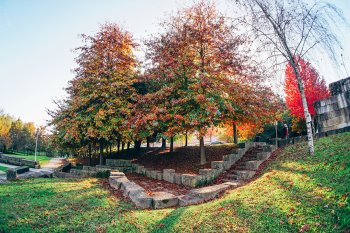
The Ul River Urban Park, a green space covering an area equivalent to 30 football fields, is a modern and functional place for walks and leisure. Located in the city center, it was designed by architect Sidónio Pardal and is characterized by its surrounding granite walls and a wooded interior that winds along the Ul River. It is a spacious area that invites long walks or family outings amidst the coolness of the river and the weirs that were built there.
Silvares
- country
- heritage
Silvares
6230, Fundão
Silvares is on of the oldest villages in the parish and its houses are placed around the mother church, on the banks of the Zêzere river. It stands out for its narrow streets with old houses and features the following monuments: chapels of Saint Sebastião, Espírito Santo, Saint Eufémia and Saint Luzia, the crucifix, the fountains and th roman fountains. The crafts work includes drums, flutes, adufes (a kind of a tambourine), iron objects, regional embroideries and more.

Jardim Afonso de Albuquerque
- country
- leisure
Praça Afonso de Albuquerque
1400, Lisboa
The square has strong connections with the Discoveries, this was the former sand-pit where the Real cais de Belém used to anchor. Now it is a gardened area, sided by quickset hedges and trees (nettle-tree and stone pine), lake and sculptures, with the Afonso de Albuquerque, vice-king of India, statue, manueline style, standing out. This garden presents also four statues created by Barata Feio, placed at the square corners.

Convento da Conceição / Museu Rainha Dona Leonor
- heritage
Largo da Conceição, 5
7800-131, Beja
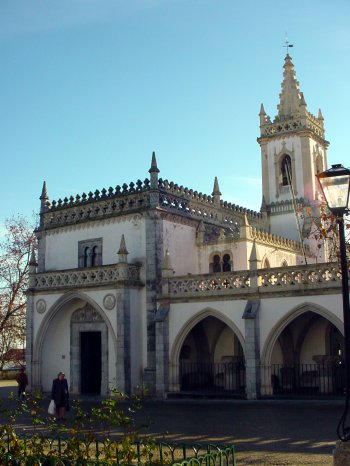
Church of the former Franciscan Convent of Santa Clara, founded in the 15th century. At the end of the 19th and beginning of the 20th centuries, the city of Beja suffered extensive destruction of its heritage, and only the church, the cloister, the chapter house, and adjacent rooms survived from this former convent. The Gothic portal on the facade stands out, and inside, the gilded woodcarving and tilework are noteworthy. The Queen Dona Leonor Museum is now located within the convent.
Convento dos Capuchos
- heritage
Rua Miradouro dos Capuchos
2825, Caparica
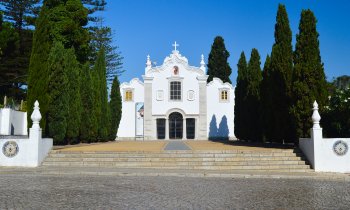
Convent built by D. Lourenço Pires de Távora in 1558. It has a façade surrounded by corners topped off in the acroteria by flames and an interior porch with three arches. The large window of the choir is topped by a niche with a clay sculpture. In the galilee, tile panels stand out. Located in the area of the Protected Landscape of Arriba Fóssil da Costa de Caparica, from there you can contemplate the landscape of the coast of Lisbon, Estoril and Cascais.
Convento e Igreja de São Francisco
- heritage
Rua de São Francisco, 59
5300-037, Bragança
Built in the 13th century to house the mendicant order of San Francisco, it underwent several renovations in the following centuries, with the Mannerist façade dating back to 1635. In the second half of the 19th century, in the convent area, it was built the Military Hospital and, later, the Duke of Bragança Asylum. Among the various 18th century altarpieces it has, the one in the Chapel of Nossa Senhora da Conceição stands out, in which some rocaille applications are notorious.