Explore the best places
Results for check portal now PROBLEMGO.com how to get my brother out of jail today for money in Portugal


Castelo de Barbacena
- heritage
Largo do Castelo
7350-431, Barbacena
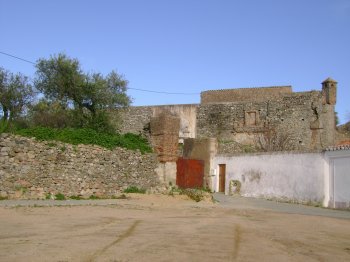
Built in the 16th century and rebuilt in the 17th century, this quadrangular castle retains only the original walls and low turrets. It features a carved stone portal, forming a pediment with two spires and a crown. The courtyard has a central cistern without water, two abandoned cannons, and buildings all around.
Igreja Matriz de Torre de Moncorvo
- heritage
Rua do Hospital, 14-24
5160-272, Moncorvo
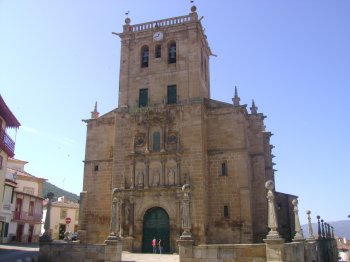
Renaissance temple with a façade integrated into an impressive stonework tower. It has a full arched portal framed and topped by seven niches with images. Inside, it is possible to see fragments of frescoes and altarpieces of Joanine carving. A curious fact: it took around a century to be built, starting in the first half of the 16th century.
Igreja Matriz de Nave Redonda / Igreja de São Tiago
- heritage
Nave Redonda
6440-033, Figueira de Castelo Rodrigo
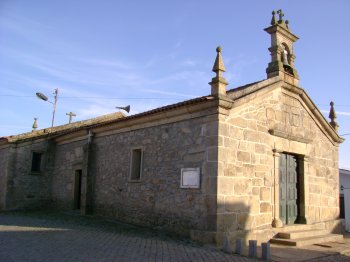
Late-seventeenth-century Church of longitudinal plant, consisting of a nave, a chancel and a vestry located near more closely. Features a main facade in truncated by a simple bell gable and torn by a straight Dick portal. In the interior, especially the angled side altarpieces and the main retable of gilt national style.
Igreja de São Vicente
- heritage
Rua Combatentes da Grande Guerra, 8
5300, Bragança
This monument, considered by some authors as romanic and gothic by others, was remmodeled in the 16th, 17th and 18th centuries. In the exterior, a special note to the mannerist portal and to the fountain with th royal arms of 1746, the Passo and the that commemorate the proclamation of Genarl Sepúlveda against the French invasion. Inside, a special not to the Chapel of the Saint Christ.

Igreja de Santa Maria de Barrô
- heritage
Calçada da Igreja
4660-034, Barrô
Located on a steep slope overlooking the Douro River, the Church of Barrô is a well-preserved example of medieval architecture, despite the changes of the Modern Period. The main façade and the chancel are worth highlighting. The facade of the Church presents a program with some monumentality, reflected in the careful portal and the arrangement of the false large window.
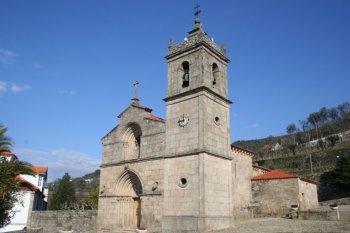
Igreja de São Cosme e São Damião / Igreja Matriz de Gondomar
- heritage
Rua João Paulo II, 95
4420, Gondomar
Baroque church consisting of a nave and a chancel, where a bell tower and a sacristy are adjacent. The portal is surmounted by an interrupted curved pediment, surmounted by a choir window and two niches with the images of São Cosimo and São Damião. Highlights include the Baroque carved altars and the tile paneling that runs through the nave.
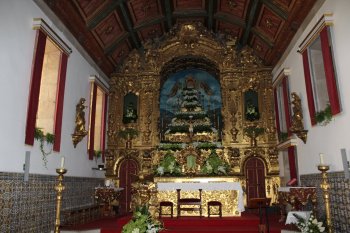
Igreja da Conceição Velha
- heritage
Rua da Alfândega, 108
1100-585, Lisboa
The primitive church was destroyed in 1755, and its reconstruction was ordered by Dom José, at the ruins of the Misericórdia Church, from which was save the lateral portal, manueline, two windows, also manueline, a low embossed work of Nossa Senhora da Misericórdia and the Santíssimo Sacramento chapel, from the XVII century.
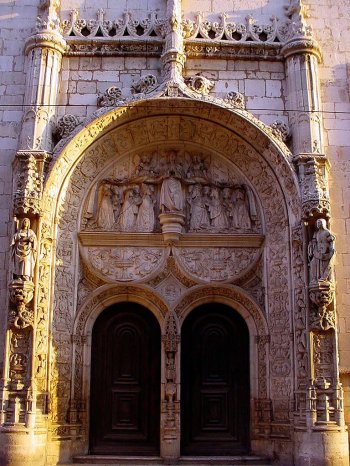
Mosteiro de Celas
- heritage
Avenida Bissaya Barreto, 105
3000-132, Coimbra
The Celas Monastery is a construction of sober character, showing the influence of several architectonical styles. At the church are worthy of notice the manueline arched roof, a 17th century glazed tiles panelling and several portals and arches with renaissant and manueline characteristics. The cloisters’ galleries present pictures representing memorable events at the chapiters.
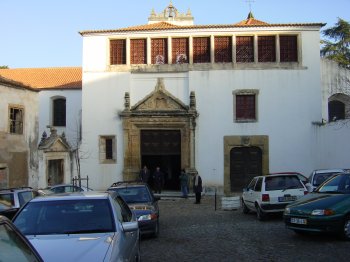
Antigo Hospital e Capela da Misericórdia de Pinhel
- heritage
Rua Silva Gouveia
6400-455, Pinhel
Welfare-oriented religious monument, with features plateaux, composed of two floors and adjoining chapel. You can still see the big window and balcony with panoramic porch. The interior retains the division between floors, being at the bottom are the shops, while in the second, stands out the room that connects to the chapel. The interior of the chapel stands out by the representations which preserves the Sagrada Familia and the Mystical Lamb, among other elements. Access to the hospital's side of the Gospel.
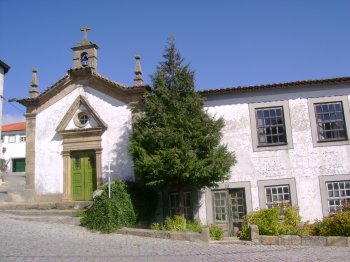
Convento de Jesus / Museu de Setúbal
- heritage
Largo Miguel Bombarda
2900-261, Setúbal
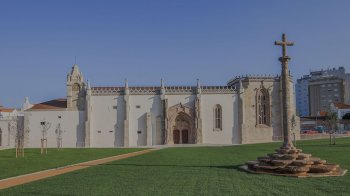
The convent was founded by Justa Rodrigues Pereira, wet nurse of King Manuel I, in 1490, during the reign of King John II. This monarch, who visited the construction the following year, decided to expand the initial project. He entrusted the construction to Diogo Boitaca, the first architect of the Jerónimos Monastery, who carried out his first work in the country here. The convent has a beautiful portal and Manueline windows. Inside, the beautiful twisted columns of the hall church, which belonged to the convent of the Franciscan Poor Clares, deserve special mention. Because they belonged to a cloistered order, …