Explore the best places
Heritage in Portugal


Percurso Pedreste do Rio Tinhela
- heritage
CM1285
5090, Murça
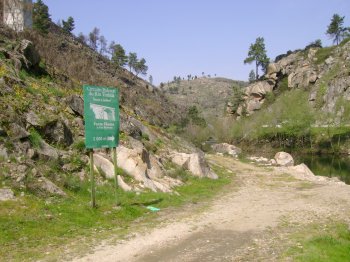
Two-kilometre pedestrian circuit, in full contact with nature.
Capela da Misericórdia de Murça
- heritage
Rua Alfredo Pinto, 2
5090-115, Murça
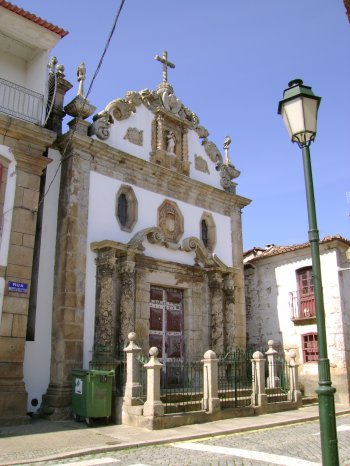
Chapel built in 1692 where the carved stonework stands out. The portico is flanked by four very elaborate columns. On the top there is a niche with an image. The inside is composed of a nave, highlighting the altarpieces.
Pelourinho de Murça
- heritage
Praça 5 de Outubro, 10
5090-112, Murça
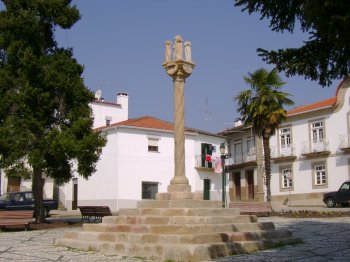
A contemporary of King Manuel I, who granted the town a new charter in 1512, and being one of the best preserved in Portugal, the Pillory is built on eight steps, has a spiral shaft topped by a capital with heraldic symbols and is topped by five spiral pinnacles.
Crasto de Palheiros
- heritage
Palheiros
5090-210, Palheiros
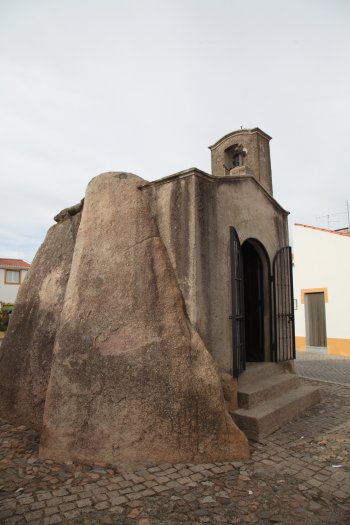
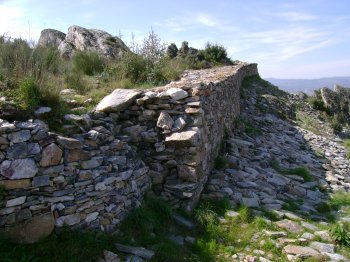
The Crasto de Palheiros, or Fragada do Castro, is an imposing quartzite ridge that was carved and built by the populations of that region of the Trás-os-Montes Hot Land between the beginning of the third millennium BC and present times.
Porca de Murça
- heritage
Largo 31 de Janeiro
5090-111, Murça
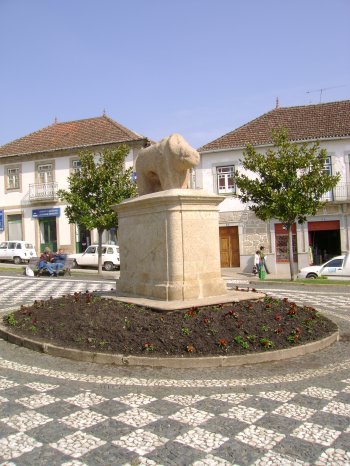
Shrouded in popular legends and its origin or purpose not known for certain, Porca de Murça (Murça´s Female Pig) is an unequivocal symbol of the town, even giving its name to well-known region's wines. It is a zoomorphic stone sculpture from protohistoric times and is thought to be a votive statue to sacred animals.
Conjunto de Edifícios da Igreja Matriz de Brotas
- heritage
Rua da Igreja
7490-017, Mora
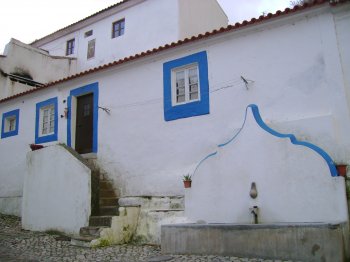
This group of buildings, similar to a neighborhood, supported the pilgrimages from the Brotherhoods of Nossa Senhora das Neves. All houses have two floors and some have stairs to access the balconies. You can also see a fountain, with a spout and a rectangular sink and the Sanctuary of Nossa Senhora das Brotas.
Cromeleque do Monte das Fontainhas Velhas
- heritage
EN251
7490, Mora
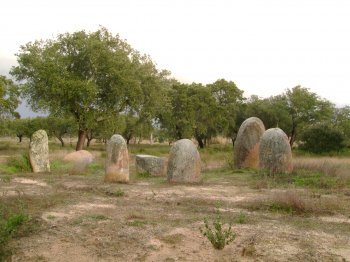
Space where you can see the remains of six granite-shaped megaliths dating from the beginning of the fourth and middle of the third millennium BC. Only three are standing.
Torre das Águias
- heritage
Outeiro do Peso
7490, Mora
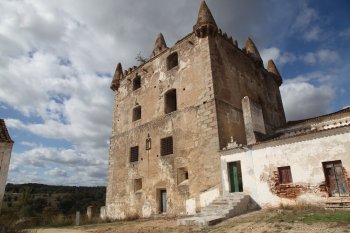
It is a rural, fortified manor, with a square plan, crowned with cut merlons, from the reign of King Manuel. The main facade is arranged in three registers, the first marked by the portico and the others by the openings of two rectangular windows. Internally, the ground floor develops into a large hall, covered with a vault with three sections of ribbed warheads; the first floor is occupied by the main hall, covered by a vault with ribbed warheads and adjoining divisions and the following floors are covered by vaults with a lowered dome.
Casa Museu Manuel Ribeiro de Pavia
- heritage
Largo dos Combatentes da Grande Guerra, 11
7490-422, Mora
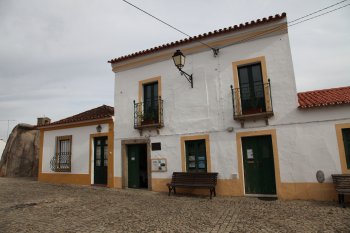
Manuel Ribeiro de Paiva was born in Pavia in 1910 and was a neorealist draftsman, watercolorist and illustrator. His illustrations can be seen in books by writers, such as Alves Redol. The themes of his works refer, above all, to the Alentejo and the peasants. He died in 1957. This space has been operating in his honor since 1984 and preserves around twenty paintings, original drawings, some reproductions and several illustrated books.
Anta de Pavia / Capela de São Dinis
- heritage
Rua São Diniz
7490, Mora
Funerary monument in granite and masonry, used as a chapel. On the front main altar you can see 18th century and baroque tiles. It is one of the largest in the Iberian Peninsula.