Explore the best places
Results for Aventura Park in Portugal


Penha Longa - Atlântico
- leisure
Estrada da Lagoa Azul
2714-511, Sintra
The Natural Park of Sintra is the framing of this path suspended between the sea and the hills of Portugal's most romantic and regarded by professionals as one of the best in the European circuit. Whimsical framed by boulders that form the serra de Sintra, source of inspiration for Lord Byron, who called it "Glorious Eden", the Atlantic field is a fabulous 18-hole course situated 20 minutes from Lisbon. Robert Trent Jones II designed it in such a way as to combine, optimally, the irregularity of the terrain with perspectives of landscape of mountains and surrounding sea. The holes 6 …
Casas do Areeiro
- hotels
Rua da Ribeira do Cabo, 39
9900-302, Capelo
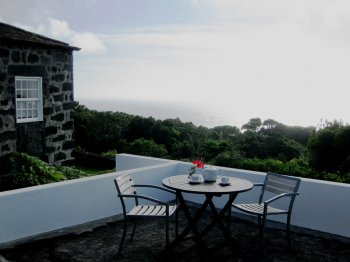
Consisting of four houses, Casas do Areeiro is located to the southwest of the island of Faial, in the village of Areeiro. Are traditional houses faialenses, the second quarter of the 20th century, which were in ruins and were recovered by keeping the stroke and rural style. The interiors have been completely refurbished, creating new spaces and adapting the conditions of habitability to current life though preserving some original traits. The ancient orchards have given way to terraces and gardens by creating a leisure space around each one of the houses. With the sea on the horizon and surrounded by …
Carya Tallaya – Casas de Campo
- hotels
Rua do Saco, 6
6320-551, Vale das Éguas
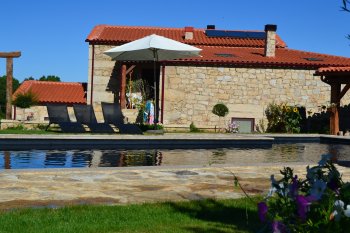
Accommodation unit Carya Tallaya-Villas offers 4 houses (three T2 and T1) so beautiful and seductive how surprising, by contrast with between traditional construction techniques from abroad (granite stone – typical houses of Beira Alta) and sophisticated decor, contemporary and harmonious interior, in a perfect fusion of rustic and modern. The houses are fully equipped, with a fireplace and central heating, kitchenette in self-catering equipped with all utensils and other equipment to cook and dine. The houses are prepared for a stocking of 14 persons (7 rooms with double bed). May be increased by the busload for 8 more people, extra …
Loriga
- country
- heritage
Loriga
6271-906, Seia
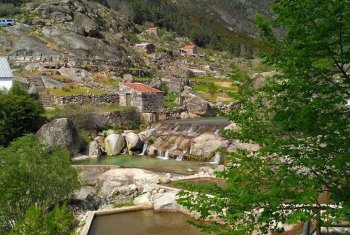
Located at an altitude of 770 metres, on the southeast foothills of the Estrela Mountain, the small town of Loriga was, until 1855, the siege of the parish, with a town hall, a prison and a pillory. Its name comes from an armour. The valley is quite rich in historical vestiges (the romans, the sueves, the visigoths and the moors were there) and several archaeological vestiges remain: a man shaped grave, a roman bridge, a well preserved part of a roman road and a medieval balcony. Loriga is the main town in a lovely valley that was originated by a …
Bairro Operário da CUF
- heritage
Rua Lavoisier - Rua da CUF - Rua Liebig
2830, Barreiro
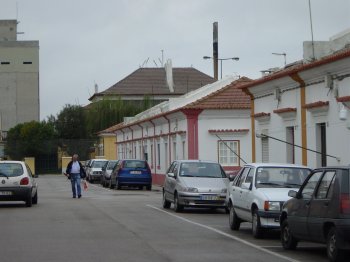
In the beginning of the 20th century, most precisely in 1907, Afredo da Silva buys a plot of ground from the Bensaúde family in the Lezíria, between the North Beach in Barreiro and the Moinhos Beach in Lavradio, and there he builds the C.U.F. factories. It started labouring in the next year with an olive husk transformation unit in order to produce soap, which employed 100 workers. In 1909 appears the first factory of sulphuric acid and super phosphate to produce fertilizers. As the century went on, the industry continued growing and this old village of fishermen and millers, with …