Explore the best places
Heritage in Portugal


Escadas do Adro
- heritage
Viela dos Padres
3750-178, Águeda
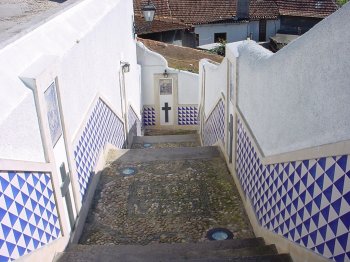
A staircase paved with Portuguese cobblestones where one can see several tile panels depicting the Stations of the Cross.
Carreira dos Moinhos
- heritage
Carreiros
4540-026, Carreiros
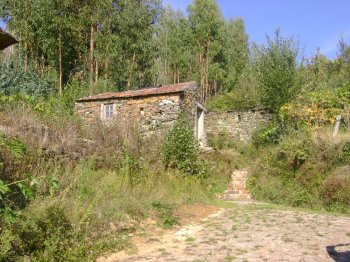
This heritage site is believed to be unique in the country, due to the way the 17 windmills are arranged in a row. Located in the parish of Alvarenga, the windmills, built of schist and covered with slate, are beautiful examples of the region's traditional architecture.
Capela da Santa Casa da Misericórdia de Arouca
- heritage
Praça Brandão de Vasconcelos
4540-110, Arouca
Chapel built in 1612, very rich in its iconographic program, where Evangelists, Apostles, scenes of the Nativity, Life and Passion of Christ, among others, are represented. The interior consists of a very simple altar and the nave is entirely covered with tiles dating from the 17th century. Classified as a Property of Public Interest since 1959.
Torre dos Mouros
- heritage
Lourosa de Campos
4540-211, Lourosa de Campos
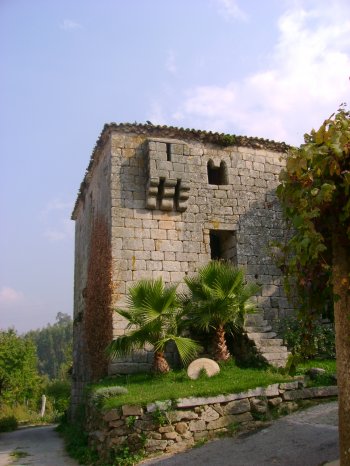
Also called the Medieval Tower, Moorish Tower, or Lourosa de Campos Tower. A stately tower with Gothic elements and defensive military characteristics. It is a unique building in the municipality and is in a good state of preservation.
Igreja São Miguel de Urrô
- heritage
Urrô
4540-659, Urrô
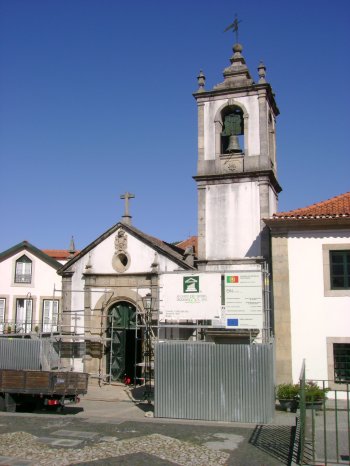
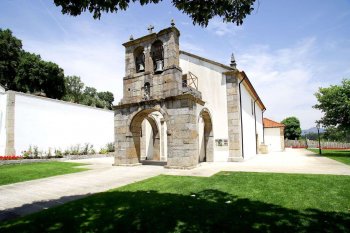
Built in the 17th century, this church belongs to the Mannerist style and displays the most naive elements of vernacular architecture. It has a Romanesque-style granite bell tower that rises in front of the main door.
Museu de Arte Sacra de Arouca
- heritage
Largo de Santa Mafalda
4540-108, Arouca
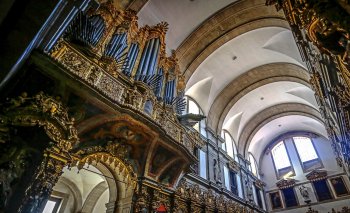
An annex to the monastery, with a varied collection consisting mostly of works of art that belonged to the Cistercian community of the monastery. Here you can appreciate collections of painting, sculpture, tapestry, goldsmithing, furniture, earthenware and others distributed throughout various rooms.
Museu das Trilobites - Centro de Interpretação Geológica de Canelas
- heritage
Lugar de Cima
4540-252, Canelas
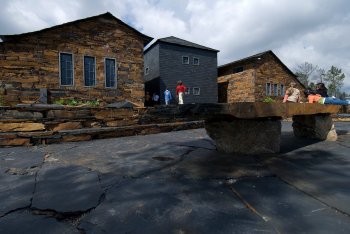
This space showcases fossils of Middle Ordovician invertebrates, which are 465 million years old and considered rarities worldwide. It brings together a multifaceted collection of fossils recovered over two decades of industrial work in the slate quarries.
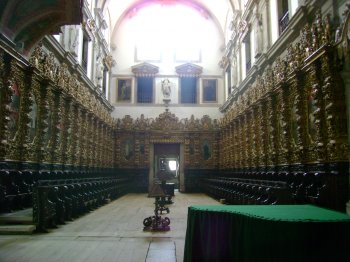
Mosteiro de Arouca
- heritage
Largo de Santa Mafalda
4540-108, Arouca
It began with a dual community – male and female – having become a female monastery and adopted the Rule of Saint Benedict at the end of the 11th century. The affiliation with the Cistercian Order, which occurred in the 13th century, is associated with the figure of Infanta D. Mafalda, daughter of D. Sancho I, who, in 1220, decided to incorporate the nuns into the new Order. Endowed with a vast patrimony, it became one of the most important Portuguese female monasteries. Retreating to the convent, D. Mafalda gained a reputation for holiness, to which the discovery of the …
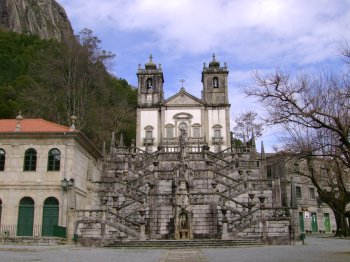
Santuário da Nossa Senhora da Peneda
- heritage
Peneda
4970-150, Gavieira
The sanctuary, located at an altitude of 780 meters, is built beside a rugged hill. This site is the stage for one of the most popular national pilgrimages, on September 7th, when the surrounding landscape takes on even more beautiful proportions.
Ponte sobre o Rio Vez
- heritage
Rua dos Milagres
4970-592, Arcos de Valdevez
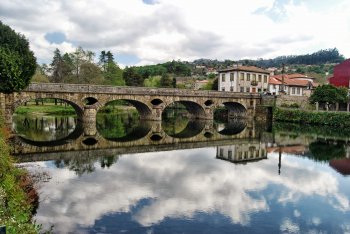
A bridge built between 1876 and 1880 that sought to maintain the architectural style of the old medieval bridge that stood here. It consists of four round arches.