Explore the best places
Results for come on in MAKEMUR.com Looking to pay a clerk to change the court date so I miss it Alabama in Portugal


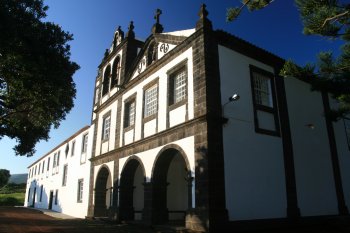
Pousada de Juventude do Pico
- hotels
Rua João Bento de Lima
9940-366, São Roque do Pico
Pousada installed in the former convent of São Pedro de Alcântara, dating from the 17th century, opened in 2009. Offers three double rooms, one triple room and eight multiple rooms. There is also a bar\/café, Hostelling International kitchen, laundry of Hostelling International, lounge and meeting rooms.
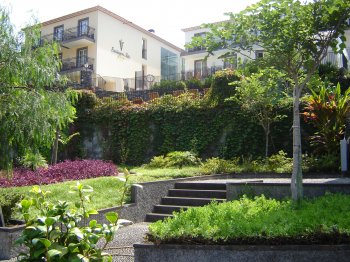
Estalagem do Vale
- hotels
Rua Doutor Gregório Dinis, 37 - Feiteiras de Baixo
9240-206, São Vicente
Manor House dating from the 18TH century, inserted in a rural area in the middle of the Laurissilva forest, declared and recognised by UNESCO as a World Natural Heritage. Offers fantastic views of the São Vicente Valley and the sea. It offers 41 rooms with all amenities, restaurant, bar, among other leisure infrastructures.
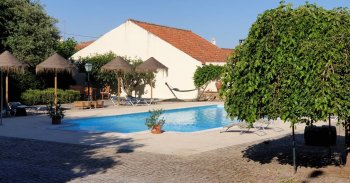
Casa do Redondo
- hotels
Rua Doutor Eurico Afonso Inocêncio - Quinta da Bacelada
6430-351, Rabaçal
Old baroque Manor House dating from the 18th century, integrated in Quinta da Bacelada. Offers ample agricultural land, where still produces olive oil, wine and honey and cattle is created. The House consists of five friendly rooms, exquisite common areas and a beautiful outdoor space.
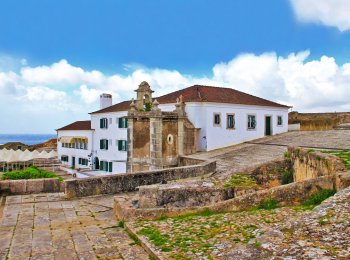
Castelo de São Filipe / Forte de São Filipe
- heritage
Estrada Castelo de São Filipe
2900, Setúbal
Located about 1 km from Setúbal, the fortress stands overlooking the sea. Without any towers, the fortress contained a group of buildings, most notably the governor's residence and the church. The interior of this church is covered with tile panels dating from 1736, depicting scenes from the life of St. Philip.
Casa do Governador do Concelho de Sortelha / Posto de Turismo de Sortelha
- heritage
Largo do Corro
6320-536, Sabugal
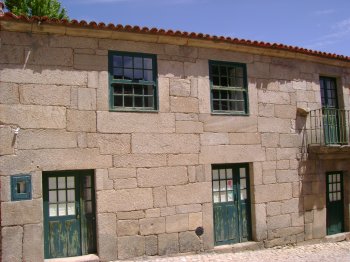
17th century house with irregular quadrangular, consisting of two floors and with coverage in roof of three waters. In 1645, it was rebuilt, date confirmed in a recording of the balcony window. Suffered substantial recovery works in the 18th and 19th centuries. In 1995, was bought by the City Council of Sabugal, which turned her into a tourist office.
Capela dos Santos Mártires e Torre
- heritage
Largo da Torre
6440-271, Figueira de Castelo Rodrigo
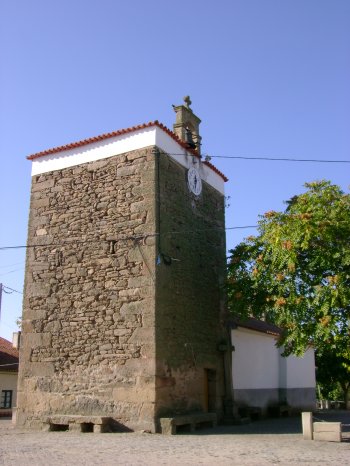
Set of a chapel and a Tower located near Atlanta, dating to 17TH century chapel and the medieval tower. The chapel features a longitudinal plan consists of a nave and a chancel, with homogeneous coverage more closely in gable roof. The Tower has a rectangular plant torn by arrow slits, currently running as the clock tower.
Capela de São Pedro de Balsemão
- heritage
Largo do Desterro
5100-125, Balsemão
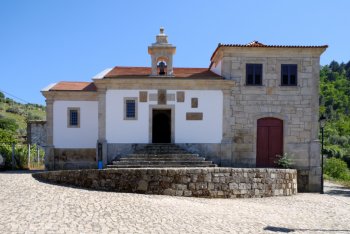
This chapel, probably dating from the 7th century, belongs to the limited group of monuments in Portugal featuring Visigothic architecture. It features three naves and a chancel, notable for its arches and capitals with phytomorphic decoration. Also noteworthy are the carved high altar, the polychrome wooden coffered ceilings, and the tomb with a recumbent statue.
Igreja Matriz de São João da Pesqueira
- heritage
Rua de São João, 8
5130-321, São João da Pesqueira
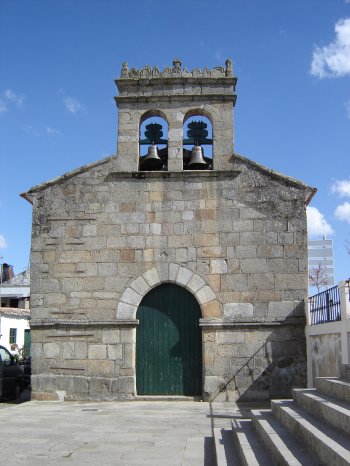
The Main Church of São João da Pesqueira continues to preserve some medieval features, especially in the main portal with its pointed arch. Inside this temple, whose construction dates back to the 14th century, the baroque main altarpiece and the 17th century paneled covering of the nave ceiling stand out.
Fábrica de Fiação e Tecidos de Santo Tirso / Fábrica Santo Thyrso
- heritage
Avenida da Fábrica de Santo Tirso, 88
4780-257, Santo Tirso
Founded in 1896 on land provided by Santa Casa da Misericórdia de Santo Tirso, the spinning factory began operating in 1898. It is still possible to see the working-class neighborhood today, dating back to the 40s of the 20th century. The company was in operation until 1990. It currently operates as a space for events.
Mamoa 1 de Pereiro
- heritage
Cambeses do Rio
5470-041, Cambeses do Rio
Megalithic monument partly destroyed, to present about 17 feet maximum diameter, a central depression accentuated. Are not visible Struts. In the surrounding area there are a few stones of walls that may have been mainstays. It is believed to date from between the end of the 5th Millennium BC and the beginning of the third millennium BC.