Explore the best places
Heritage in Portugal


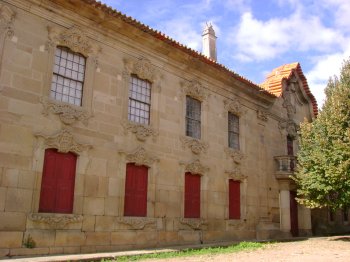
Casa de Almendra / Solar dos Viscondes do Banho
- heritage
Largo da Amoreira - EN332
5150-014, Vila Nova de Foz Côa
Built in the 18th century, this house is considered one of the finest examples of Baroque civil architecture. Constructed of granite, it features Rococo decoration concentrated in the windows and main door. This construction demonstrates elements of Douro Baroque architecture, influenced by Nicolau Nasoni. In the early 19th century, Napoleonic troops were stationed here, later setting fire to the building in 1810 before withdrawing. From 1895 onwards, it underwent partial reconstruction, initiated by the 3rd Viscount of Banho.
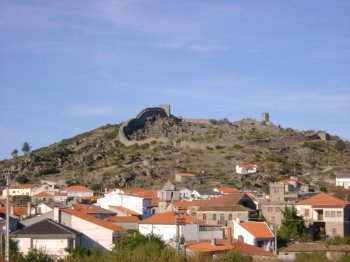
Castelo de Numão
- heritage
Rua Direita
5155-617, Numão
This castle possessed one of the best defensive border walls. Currently, only a few gates, sections of the wall, and towers crowning the hilltop remain. Several anthropomorphic tombs are also preserved near the east gate. Its layout had an irregular configuration, almost without battlements, and with three gates (the West Gate, the Arch Gate, and St. Peter's Gate), a keep, and four more towers.
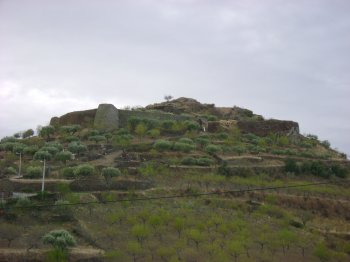
Castelo de Castelo Melhor
- heritage
Rua do Castelo, 15
5150-109, Castelo Melhor
Possibly built upon a Lusitanian hill fort, this castle sits on a hill. It retains some sections of the wall, gates, a small tower, and a cistern with a regular plan. It is possible to observe the perimeter of the wall that surrounded the inner courtyards and the Keep. From a distance, it resembles a king's crown planted on a mound of earth.
Igreja Matriz de Vila Nova de Foz Côa / Igreja de Nossa Senhora do Pranto
- heritage
Praça do Município, 16
5150-642, Vila Nova de Foz Côa
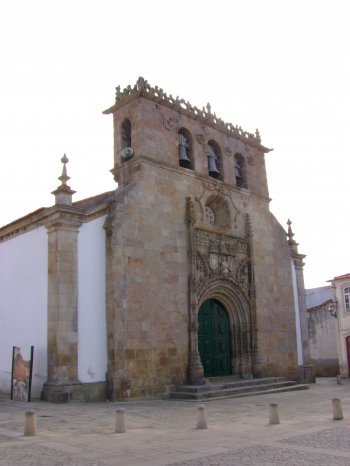
The church consists of three naves, a chancel, a sacristy, and an archive. The façade features a full-arch portico with Manueline decoration (flanked by two national coats of arms), armillary spheres, a fleur-de-lis, and a cross of Christ. It is topped by a bell tower with three windows and four Renaissance busts. Inside the church, the Baroque altars, the coffered ceiling of the chancel, the statuary, and the inclination of the columns are noteworthy.
Edifício da Pousada de Óbidos
- heritage
Calçada da Misericórdia
2510-122, Vila de Óbidos
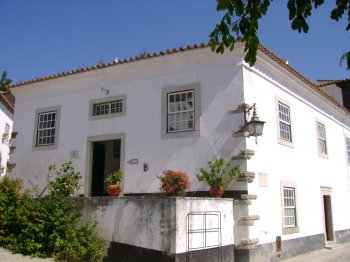
An 18th-century building with a longitudinal plan, composed of two volumes of two and three stories. In the mid-20th century, a new building was added to serve as a hospital and home for charitable institutions, where they remained until 2000. Currently, it houses the Pousada Castelo de Óbidos.
Chafariz do Poço / Chafariz do Arrabalde / Chafariz de Dona Maria I
- heritage
Rua Dom João de Ornelas
2510, Vila de Óbidos
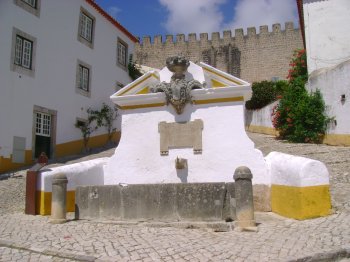
A fountain with a back wall dating from the 18th century, composed of a single curved panel topped by royal arms on the pediment. It was commissioned by Queen Maria I, on the site where the Arabs had a public well.
Centro Histórico de Óbidos
- heritage
Óbidos
2510, Óbidos
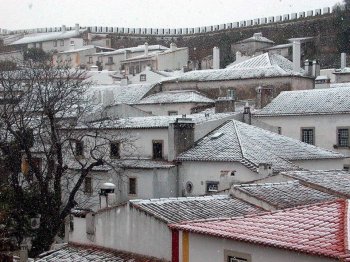
Along its narrow, almost exclusively pedestrian streets, the marks of time are visible, showcasing monuments with Gothic, Baroque, and Renaissance characteristics. The typical streets feature whitewashed houses with flowers on their balconies and windows. Passing the Camões Monument, you'll find the pillory, the Church of Santa Maria, the Church of Mercy, and Óbidos Castle.
Santuário do Senhor Jesus da Pedra
- heritage
Largo do Santuário
2510-071, Óbidos
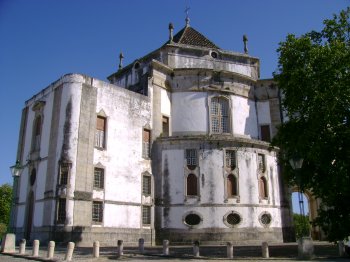
A Baroque church with a hexagonal floor plan inscribed within a circle, dating from the 18th century. It has undergone several renovations over the years and, in 1997, during the celebration of the Sanctuary's 250th anniversary, a museum section was inaugurated here.
Charretes de Óbidos
- heritage
Rua da Porta da Vila
2510, Vila de Óbidos
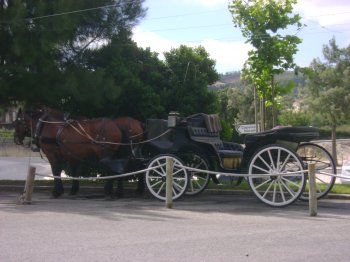
Reflecting the medieval atmosphere of this village, there are several horse-drawn carriages offering tourist rides, with different routes and prices.
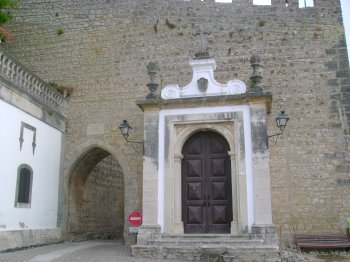
Porta da Vila de Óbidos
- heritage
Rua Porta da Vila
2510, Vila de Óbidos
The main entrance gate to the village, commissioned by King João IV in gratitude for the protection of the patron saint, Our Lady of Piety. Inside is the chapel-oratory dedicated to this saint, with a baroque balcony and blue and white tiles.