Explore the best places
Results for go to site PROBLEMGO.com buy a fake letter from the bank saying my loan is paid off in Portugal


Jardim das Portas do Sol
- country
- leisure
Largo do Alcáçova, 1
2000, Santarém
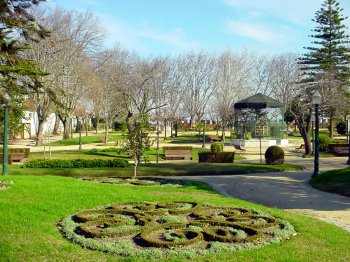
It is the preferred green space for the inhabitants of Santarém and the most beautiful viewpoint in the city, offering superb views over the Tagus River and the vast, expansive floodplain. Located within the walled area, it boasts the remains of two medieval gates, various species of large trees, birdcages, a playground, and numerous benches. It also houses the Urbi Scallabis - Interpretation Centre, a space where archaeological finds from the old Alcáçova (citadel) can be found.
Miradouro da Varanda dos Carqueijais
- country
- leisure
EN339
6200, Covilhã
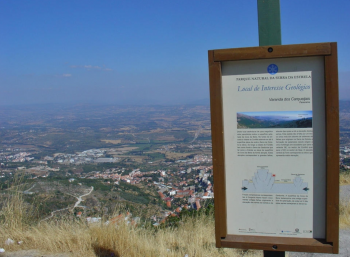
It's a "must-see" stop for anyone heading up to the Serra da Estrela mountain range via the EN339 from Covilhã, as this viewpoint offers magnificent views of the city itself and the surrounding Cova da Beira region. Right next to the road, on a sharp bend, you'll find an exit that allows you to enjoy one of the best panoramic views in the area. Further up you'll find Penhas da Saúde, a mountain village.
Castelo de Melgaço
- heritage
Rua do Castelo, 30
4960-537, Melgaço
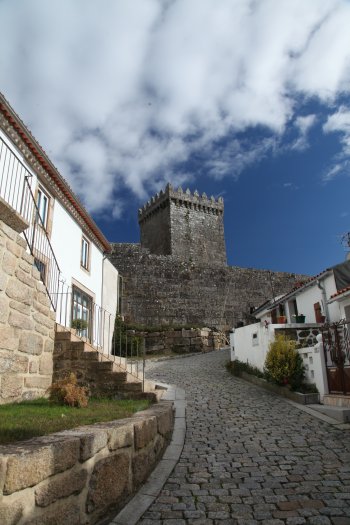
Melgaço Castle currently consists of an imposing keep - with three floors, a parapet protruding over corbels, crowned by pyramidal merlons and with a hipped tile roof - and the surrounding walled enclosure, in a good state of conservation. It is believed that it may have had 3 towers and two doors, according to Duarte de Armas in his “Livro das Fortalezas” (Book of Fortresses) from 1509. The current tower houses the Melgaço Keep Tower Museum.
Convento da Conceição / Museu Rainha Dona Leonor
- heritage
Largo da Conceição, 5
7800-131, Beja
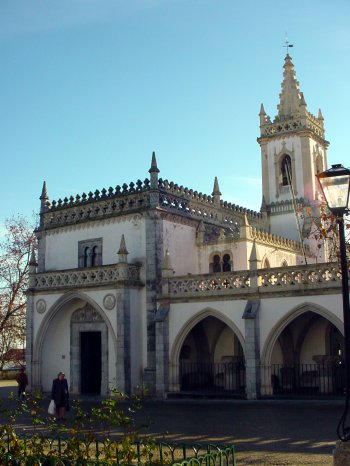
Church of the former Franciscan Convent of Santa Clara, founded in the 15th century. At the end of the 19th and beginning of the 20th centuries, the city of Beja suffered extensive destruction of its heritage, and only the church, the cloister, the chapter house, and adjacent rooms survived from this former convent. The Gothic portal on the facade stands out, and inside, the gilded woodcarving and tilework are noteworthy. The Queen Dona Leonor Museum is now located within the convent.
Casa do Capitão-Mor
- heritage
Rua Capitão-Mor, 23
6110-206, Vila de Rei
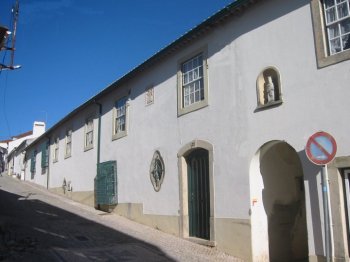
Civil construction from the 17th century, with ten balcony windows, interrupted by the coat of arms of the Mattos e Silva family and by a niche where the image of Queen Saint Isabel appears, alluding to the passage of Dom Dinis' wife through this town who spent the night in a building where this house was later built. During the French invasions, it was the headquarters of the Portuguese-English troops, and the Duke of Wellington and General Beresford stayed here.
Capela da Misericórdia de Álvaro
- heritage
Praça de Misericórdia
6160-011, Oleiros
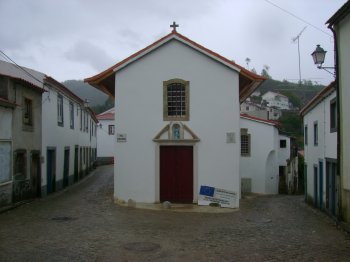
Religious architecture consisting of nave and chancel, separated by a Transept. The interior retains some of the symbolic religious figures, like a dead Christ with the Holy Women and s. John the Evangelist. It stands out, too, the altar in gilded, coffered ceiling and the niches of the main Chapel, where you can see 2 figures carved in stone from Ançã, depicting Joseph of Arimathea and Nicodemus. The ceiling panels saves the Via Crucis.
Capela das Almas / Capela de Santa Catarina
- heritage
Rua de Santa Catarina, 426-428
4000-124, Porto
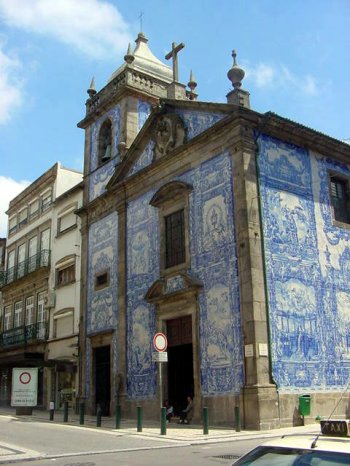
With a great architectonical simplicity, the Almas chapel dates from the beginning of the XVIII, and was repaired and enlarged in 1801. In 1929, the façades were covered with azulejos, by Eduardo Leite, representing the life of São Francisco de Assis and of Santa Catarina. The main façade presents a glass window by the painter Amândio Silva. Inside, the panel painted by Joaquim Rafael, representing the Lord’s Ascension and the image of Nossa Senhora das Almas stand out.
Museu Municipal de Arqueologia de Albufeira
- heritage
Praça da República, 1
8200-081, Albufeira
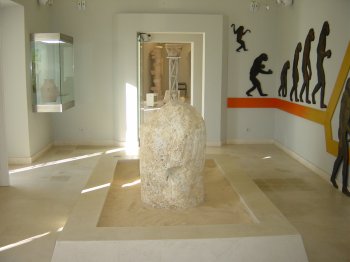
The Municipal Museum of Archaeology is located in the building where, during the 80s, was the City Hall. This space has areas of study, preservation, restoration and storing of the materials. There is also a small thematic library. The museum’s collection is deeply in touch with Albufeira’s history, from the most remote pre-historic days to the 17th century. The collection is divided in five thematic parts: pre-history, Roman period, Visigoth period, Islamic period and modern ages.
Museu Regional de Beja / Museu Rainha Dona Leonor
- heritage
Largo da Conceição
7800-131, Beja
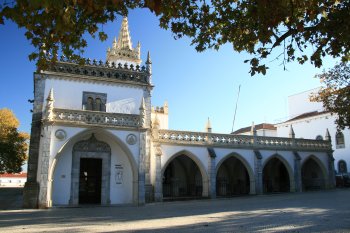
The museum is housed in the Convent of Our Lady of the Conception, founded in 1459 by the Infantes D. Fernando and D. Brites. Highlights include the 17th-century Portuguese tiles, the 16th-century Sevillian tiles, and the Baroque vault of the Chapter Room. Also, noteworthy are the paintings produced in Portugal, Spain, and Holland between the 15th and 18th centuries, the Roman section, and the collection of large classical capitals from the Forum of the Ancient Pax Julia (Roman Beja).
Museu de Mértola - Basílica Paleocristã
- heritage
Largo do Rossio do Carmo
7750-326, Mértola
This funerary basilica was located next to the Roman road connecting Mértola to Beja. This important monument was partially excavated in the late 19th century, and several funerary inscriptions were recovered from it, now housed in the National Archaeological Museum in Lisbon. Currently, it houses a museum where the foundations and floors of the former church are preserved. This museum contains inscribed stelae, which constitute the most important collection of Early Christian tombstones found in Portugal.