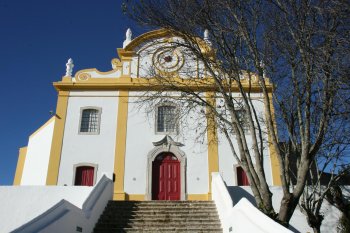
Explore the best places
Heritage in Portugal


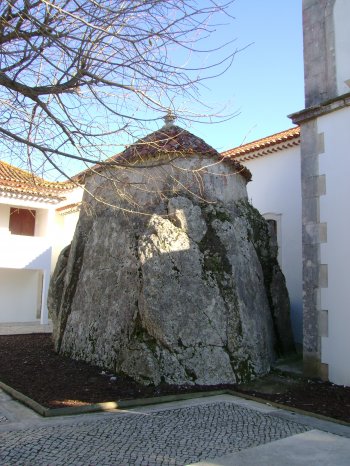
Dólmen de Alcobertas
- heritage
Alcobertas
2040, Ribeira de Cima
This is one of three megalithic monuments in Portugal. Belonging to the Alcobertas Parish Church, this funerary dolmen consists of a chamber and a corridor formed by large pillars. Notable features include the tile covering and stone altar.
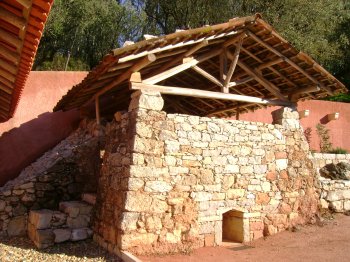
Forno de Alcobertas
- heritage
Rua dos Potes Mouros
2040, Alcobertas
This medieval oven, discovered in the 1950s, served as a communal oven, specifically for baking pottery, tiles, and other utensils. It measures approximately 1.5 meters on each side and has a grate on which the pieces to be fired were placed. The roof, made of tiles and stones, was dismantled once the firing was complete to remove the pieces.
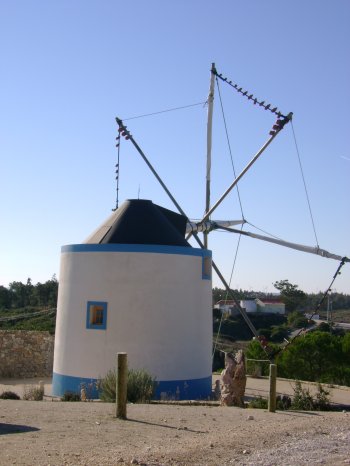
Moinho de Rio Maior
- heritage
Alto da Serra
2040-233, Rio Maior
A blue-and-whitewashed windmill located in the Serra d'Aire e Candeeiros Natural Park. It has been converted into a residence, with only two bedrooms and a nearby restaurant.
Pelourinho de Santa Comba Dão
- heritage
Largo do Município
3440-337, Santa Comba Dão
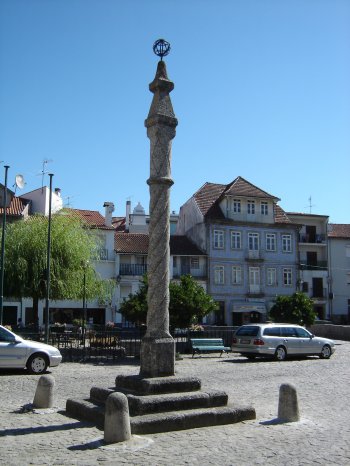
It has a cylindrical shaft, stringed to the ring, with diamond-shaped ornaments at the top. Its crown is composed of two pyramidal trunks topped by an iron armillary sphere. It sits on a platform with three steps.
Igreja da Misericórdia de Santa Comba Dão
- heritage
Rua Mouzinho de Albuquerque
3440-387, Santa Comba Dão
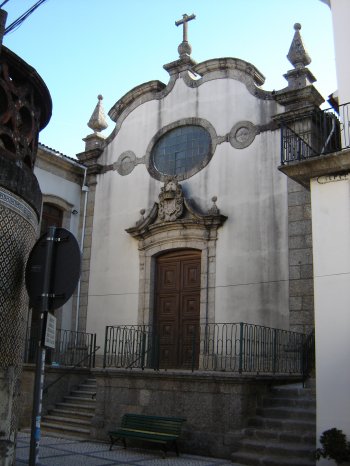
Baroque church with a single nave, high choir, chancel, and sacristy attached to the chancel. The altarpieces are carved, Rococo, and feature wooden imagery.
Núcleo Urbano de Santa Comba Dão
- heritage
Santa Comba Dão
3440-387, Santa Comba Dão
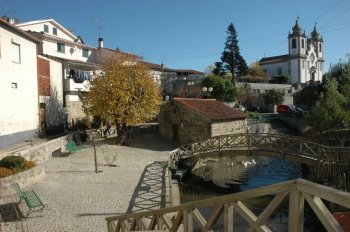
It encompasses Mouzinho de Albuquerque Street, Santa Columba Street, Avenida da República Street, General Leão Street, João de Deus Street, and the street that runs down to the fire station on Avenida Sá Carneiro. This interesting cluster, comprised of narrow, rural streets and stately homes, is well worth a close look.
Casa dos Arcos / Biblioteca Municipal Alves Mateus
- heritage
Rua Santa Columba
3440-361, Santa Comba Dão
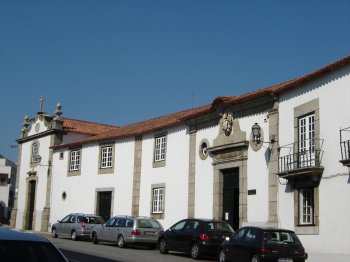
A manor house characterized by its arcaded structure, supporting a first floor with a colonnaded balcony, connected to a unique and monumental chimney. It features an attached chapel with a single nave and a chancel. Notable are the frescoes of perspective architecture on the vault and Rococo carving elements with fine scrolls, plant bands, and floral garlands in the chapel. Currently, the Municipal Library is located on the first floor.
Museu Municipal de Santiago do Cacém
- heritage
Praça do Município
7540-136, Santiago do Cacém
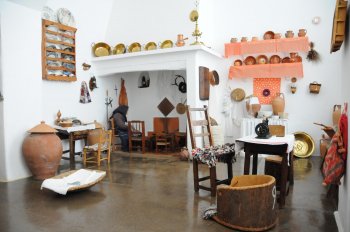
Housed in the former county jail building, built in 1844, across from City Hall, here you can explore a remarkable archaeological collection that traces the human presence in the region, from the Paleolithic to the medieval period. Of particular note is Miróbriga, an important Roman settlement, which occupies a special place in this museum, with a dedicated room where you can view exhumed pieces.
Ruínas Romanas de Miróbriga
- heritage
Estrada das Cumeadas - EM550
7540-236, Santiago do Cacém
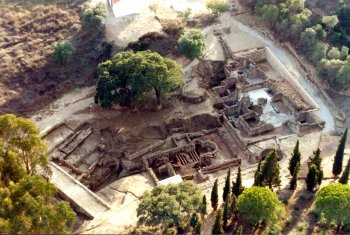
A fortified settlement from the Late Bronze and Iron Ages, upon which a city was built in Roman times. Temples, a commercial area, baths, pavements, and a hippodrome, among other remains, are evident. Of note is the ancient spectacle site, the Roman circus, with a capacity of 25,000 people.
Igreja Matriz de Santiago do Cacém/ Tesouro da Colegiada de Santiago
- heritage
Rua do Castelo
7540, Santiago do Cacém
This church's highlights include the ogival side portico, the vault covering the high choir, and the 14th-century Gothic stone high relief depicting Santiago fighting the Moors. Over the centuries, the building underwent alterations, revealing vestiges from various periods. The four sections of the central nave and side naves, separated by broken arches on octagonal pillars with cubic capitals, the Porta do Sol (Sun Gate) with its broken archivolt, the high relief in the subchoir, and the tomb of Álvaro Mendes Brito are some examples of the Gothic style. The Manueline style is evident in the structure of the original transept, …