Explore the best places
Heritage in Portugal


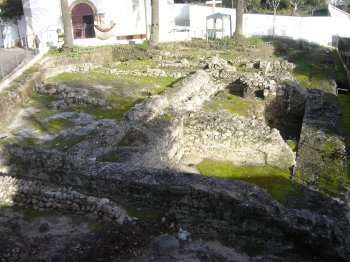
Cripta Arqueológica do Castelo de Alcácer do Sal
- heritage
Rua do Convento de Aracoelli, 12
7580-131, Alcácer do Sal
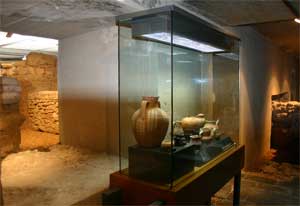
Considered the largest archaeological crypt in the country, it is located beneath the Castle of Alcácer do Sal, now transformed into the Pousada D. Afonso II. It presents traces of the Iron Age dating from the 6th century BC, as well as structures from the Roman period and the Islamic occupation, covering a considerable area. Medieval walls from the post-Reconquista Christian era were also found, based partially on Roman walls which, in turn, overlap older pre-existing structures dating from the Iron Age.
Museu Etnográfico do Torrão
- heritage
Rua das Torres
7595-124, Torrão
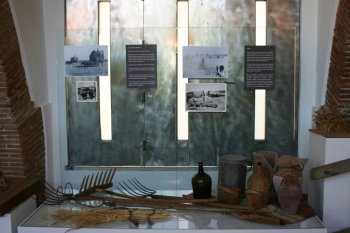
An old olive oil press, restored using traditional techniques and materials, has now been adapted into a museum. It is dedicated to the bread-making cycle, from sowing to baking. In addition to the permanent exhibition, the MET hosts temporary exhibitions.
Igreja de Santa Maria do Castelo / Igreja Matriz de Alcácer do Sal
- heritage
Rua da Matriz
7580-197, Alcácer do Sal
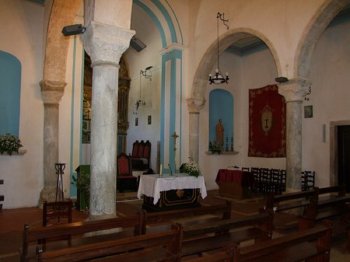
The foundation of this temple is attributed to the Order of Santiago and dates back to the end of the 12th century. It is a Romanesque-Gothic church with three naves, notable for its portals and capitals with zoomorphic decoration.
Estação Arqueológica do Senhor dos Mártires
- heritage
Rua Matriz
7580, Alcácer do Sal
The station is buried beneath an olive grove. It is classified as a National Monument. Four types of graves were found at this station, all of them cremation graves.
Castelo de Alcácer do Sal
- heritage
Rua do Castelo
7580-197, Alcácer do Sal
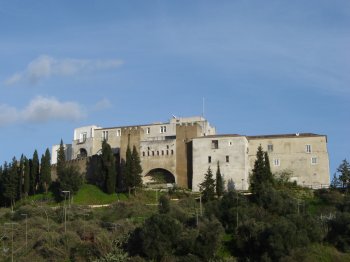
A castle of Muslim construction whose occupation dates back to the 6th century BC. Definitely conquered by the Portuguese crown in 1217, it lost its military function in the 15th century. In the 16th century, the Carmelite Order of Aracoelli founded its convent there, remaining until 1834. Currently, it is possible to observe ruins of the castle, the Aracoelli convent, the 13th-century church of Santa Maria, remains of the town and various dwellings, and the Archaeological Crypt on the lower floor of the Pousada (inn).
Cais Palafítico da Carrasqueira
- heritage
Carrasqueira
7580, Carrasqueira
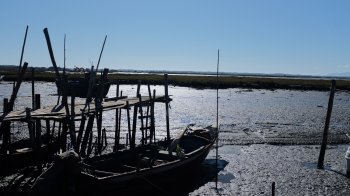
The Carrasqueira Palafitic Pier is formed by an immense network of walkways built of wood buried in the mud of the marshland that extends into the Sado River. These improvised constructions date back a little over fifty years and are the result of man's struggle against the silting up of the Sado River.
Ponte do Arco de Baúlhe
- heritage
Rua 5 de Outubro
4860-044, Arco de Baúlhe
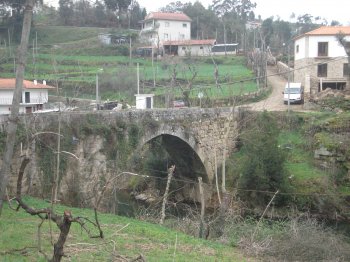
19th-century bridge with a flat deck resting on a semicircular arch.
Igreja Paroquial de Santa Senhorinha de Basto
- heritage
Basto
4860-103, Basto
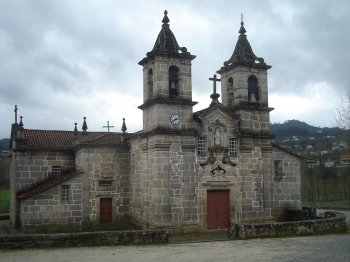
Also known as the Church of Santa Senhorinha, it is a rural building with a longitudinal plan consisting of a single nave, with side chapels and sacristies, and a bell tower. It incorporates the Chapel of Santa Senhorinha, the Chapel of São Francisco, and the Chapel of Senhor dos Passos.
Núcleo Ferroviário de Arco de Baúlhe (Museu de Cabeceiras de Basto)
- heritage
Rua da Estação
4860-068, Arco de Baúlhe
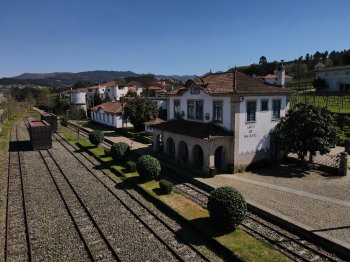
This space houses the Historic Train (1890-1908) and other material representative of railway activity. The train arrived in Arco de Baúlhe on January 15, 1949.
Pelourinho de Cabeceiras de Basto / Pelourinho de Refojos de Basto
- heritage
Largo do Pelourinho
4860-338, Cabeceiras de Basto
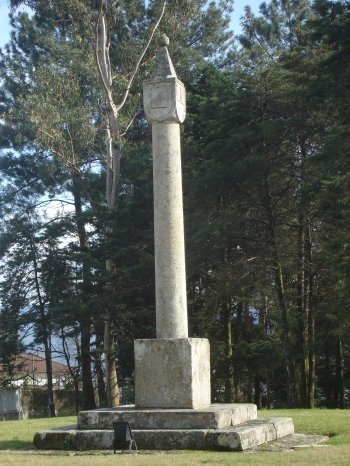
Pillory set on a square pedestal with three steps. It has a smooth shaft, topped by a capital with heraldic symbols and finished with a pyramid containing a sphere.