Explore the best places
Results for enter portal quick PROBLEMGO.COM Need to hire a bail bondsman with cash now Rezekne in Portugal


Edifício na Rua da Galeria de Paris
- heritage
Rua da Galeria Paris, 28
4050-284, Porto
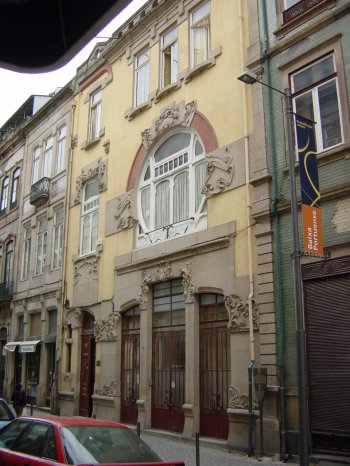
The building at the Galeria de Paris Street was built in 1906. Its façades is Art Nouveau style covered with azulejos (tiles). The decoration in ashlar masonry and the unusual circular window that overlays the portal stand out. This circular window is dived in three parts, of glass and iron, and is at the first floor.
Ermida de Nossa Senhora da Oliveira
- heritage
Rua de São Julião
1100-527, Lisboa
Chapel that occupies the ground floor of a three storeys building from the Marquês de Pombal period. On the façade there’s a portal cased with ornamental ashlar masonry and tympanum, formed by three doors. Inside, the single nave is covered with white and blue glazed tiles representing the life of the Holly Mary.

Ermida de Nossa Senhora do Rosário / Capela de Nossa Senhora do Rosário
- heritage
Largo das Forças Armadas
2860-626, Moita
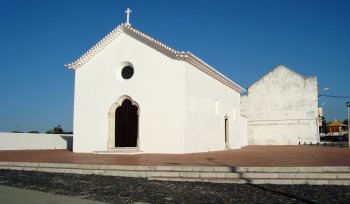
Dedicated to Saint John the Evangelist, it was built in 1532 by patron Cosmo Bernardes de Macedo, owner of Quinta de Mortim Afonso and nobleman of the Casa Real. It features an arch and a Manueline-style portal. In the 18th century it underwent some renovations and in the 19th century it underwent improvements to the roof.
Igreja e Convento de São Francisco
- heritage
Largo de São Francisco
7860-007, Moura
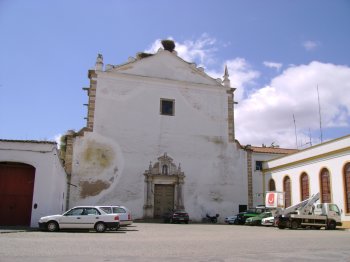
Temple that demonstrates various mannerist, baroque and rococo details. As an example, the portal-reredos on the front stands out, which dates back to the early Baroque era. In the Rococo style, the carved altarpieces of the second chapel on the Gospel side, the chapel on the Epistle side and the main chapel stand out.
Igreja de Nossa Senhora da Conceição
- heritage
Largo da Infantaria, 21
6200-048, Covilhã
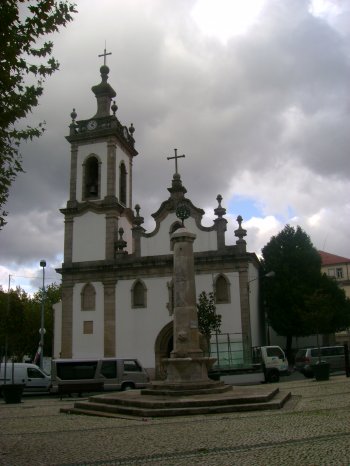
Nave church with a Baroque feature, façade of the late 19th century, and a Gothic portal. Inside, also include the gothic vaults decorated with starry warheads, the chapels for coffin and the 16th century Baroque carved the main altar. Stands out for its combination of Gothic, manueline and Baroque elements.
Igreja de Santa Maria do Castelo
- heritage
Rua Doutor Adriano Franco, 69
2530, Lourinhã
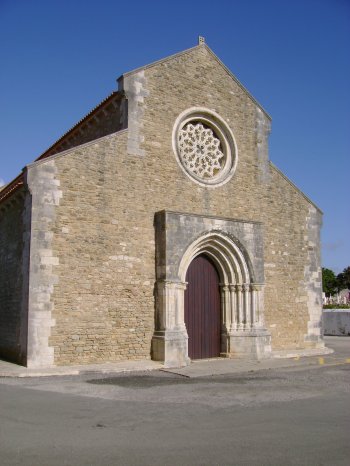
A Gothic temple whose decorative design extends beyond the church's structure. The main façade features a portal topped by a rose window. The three-nave interior features eight arches supported by columns with capitals decorated with phytomorphic motifs. A highlight is the Gothic-style holy water font.
Igreja Paroquial de Portuzelo / Igreja de Santa Marta
- heritage
Avenida Comendador Parente Ribeiro
4925-001, Viana do Castelo
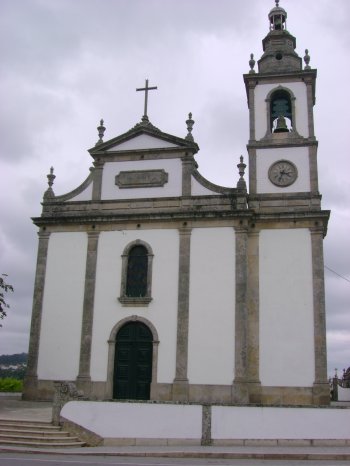
Neoclassical Church of longitudinal plant, consisting of a nave, a chancel lower and narrow and a Tower located near. The lateral façades are torn by vain symmetrical and the main façade presents pilasters defining three cloths and is torn by a round arch portal. In the interior, highlighted by two pulpits and the main altarpiece.
Igreja da Misericórdia de Celorico da Beira
- heritage
Rua da Misericórdia, 11
6360-309, Celorico da Beira
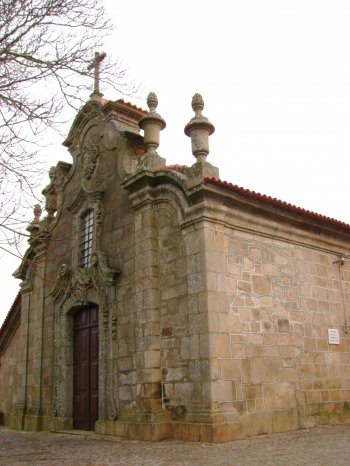
This church, built between the 17th and 19th centuries, features Baroque characteristics but with some Neoclassical touches. The main facade is divided into three wall sections separated by Tuscan pilasters, and also features a segmental arch portal with a double carved molding. Inside, the decoration, in plaster and painting, is noteworthy.
Palácio dos Viscondes de Carreira ou dos Távoras
- heritage
Passeio das Mordomas da Romaria
4900-350, Viana do Castelo
A building of the 16th century, reformed in the 18th century, that has a façade with two floors. The manuelin influences are notorious in three of the portals. In the centre of the façade thre is the coat of arms of the Abreu Lima that replaced the one of the Távoras, destroyed during the time when the Marquês de Pombal was prime minister.
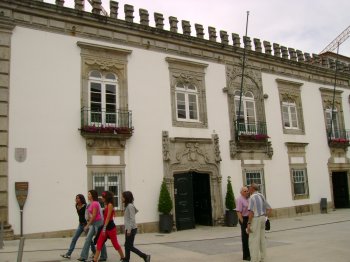
Solar dos Pinheiros
- heritage
Rua Doutor Miguel Fonseca
4750-322, Barcelos
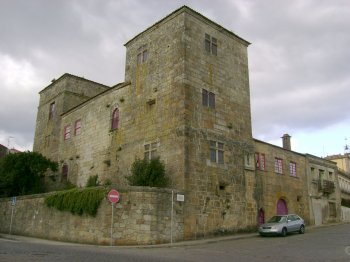
A 15th-century building designed by Pedro Esteves, auditor of the House of Braganza. It consists of a central volume and two rectangular towers. It has an extensive façade, flanked by two towers and with pointed, twin, and rectangular windows. The portal, the twin openings, and the shutters on the ground floor indicate a medieval character.