Explore the best places
Monuments in Campo Maior


Castelo de Ouguela
- heritage
EM373
7370-200, Ouguela
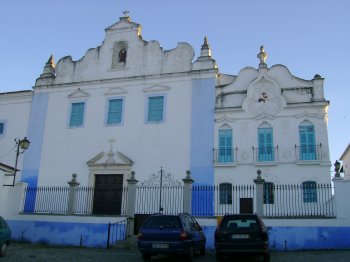
The castle was rebuilt by King Dinis in 1310 and underwent restoration work in the 18th century. Of the old fortification, situated atop a hill, only some sections of the wall and towers remain, in addition to the 17th-century fortifications, with escarpments, parapets, and ravelins, built during the Restoration War. The Church of Our Lady of Grace stands out, with its gable façade, framed straight lintel portal, and oculus. This castle is a characteristic example of the border fortresses of lowland regions, with a bastioned system determined by pyrotechnic artillery.
Povoado Pré-histórico de Santa Vitória
- heritage
Campo Maior
7370, Campo Maior
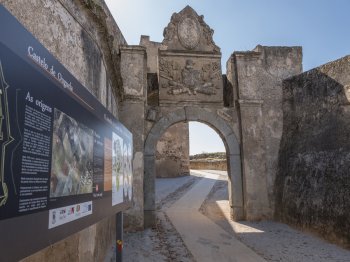
Prehistoric archaeological site, where excavations uncovered megalithic monuments.
Portas de Santa Maria
- heritage
EN371
7370, Campo Maior
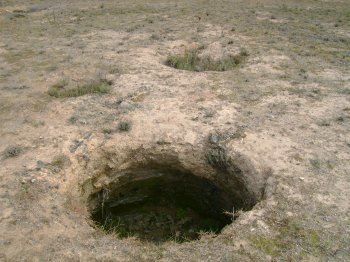
The Portas da Vila, also known as Portas de Santa Maria, are one of the most characteristic monuments of Campo Maior, and also one of the main entrances to the town.
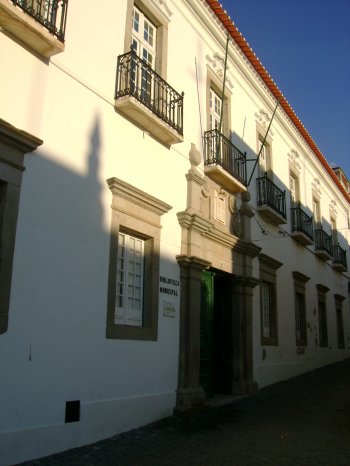
Palácio Visconde Olivã e Jardins / Biblioteca Municipal de Campo Maior
- heritage
Rua de Olivença
7370-118, Campo Maior
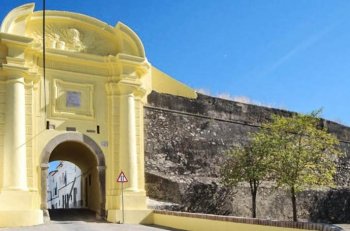
A 17th-century palace with proto-Baroque and Baroque architecture. It has a Baroque garden with a fountain and pavilion decorated with vegetal and shell-shaped stucco elements.
Igreja Matriz de Campo Maior
- heritage
Largo Doutor Regalla, 11-B
7370-027, Campo Maior
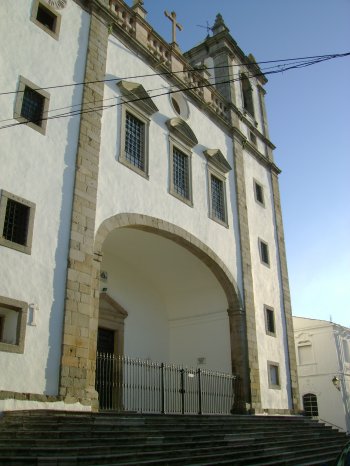
Built between 1570 and 1646, it has a tripartite main façade with embedded pilasters. The central part features a wide round arch forming a narthex, surmounted by three windows with three pediments. On the sides, two strong bell towers covered by domes are visible. Inside, with three naves, the silver liturgical objects and vestments woven and embroidered with gold from the 16th century stand out. It is also known as the Church of Our Lady of Expectation.
Capela dos Ossos
- heritage
Largo Doutor Regala, 4
7370-047, Campo Maior
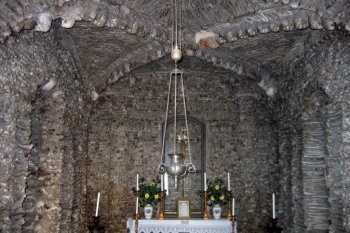
Built in 1766, the Chapel of Bones, also known as the Chapel of Souls, is attached to the main church. The interior decoration features human bones, a tribute to those who died in the 1732 catastrophe, which killed 2/3 of the village's population.
Castelo de Campo Maior
- heritage
Rua dos Quartéis, 8
7370-102, Campo Maior
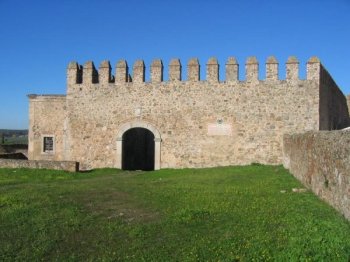
Castle where some sections of the medieval wall and the north tower are still visible. Of the 17th-century fortified perimeter, the moat and counterscarp are largely preserved, along with bastions, gates and barracks. The castle has two of its six towers, with a rectangular plan. The Manueline molding stands out in the western tower. A large hall, with two naves divided by strong ashlar pillars, has a groin vault. Ordered to be rebuilt by King Dinis in 1310, it is assumed that fortifications existed in this area of Campo Maior since Roman or Visigothic times. During the reign of King …
Quinta de São Pedro
- heritage
Largo Doutor Humberto Santos
7370, Campo Maior
18th century farmhouse with portal with pediment of windings and frames of the bays decorated with vegetal elements. The chapel's chancel altarpiece neoclassical revival and revivalist decorative elements. The tiles of the main façade are of Sacavém factory according to the technique of airbrushing of the 1st half of the 20 century.
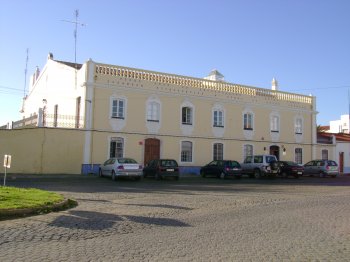
Quinta dos Avós / Quinta de São João / Quinta dos Mata
- heritage
São João Baptista
7370, São João Baptista
Recreational farm with Baroque style. Has green spaces, with places of modesty and water elements throughout the property, as sources, Lake, Fresh House and tank.
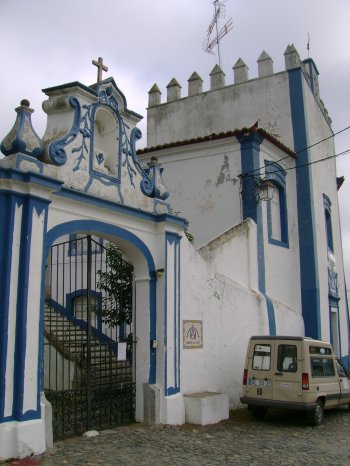
Igreja e Convento de Santo António
- heritage
Rua 5 de Outubro
7370, Campo Maior
Baroque and Rococo architecture Church Franciscan convent with ship, chorus-alto, chancel, the throne room and the Bell Tower façade s. is Rococo, with stucco works of great decorative wealth. Inside stands the austerity typical of Franciscan architecture.