Explore the best places
Results for castelo in Portugal


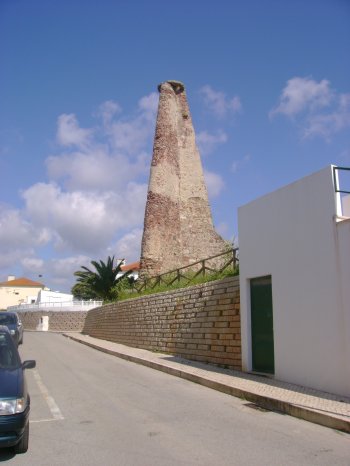
Castelo de Penedono
- heritage
Praça 25 de Abril
3630-246, Penedono
It is a military monument of great beauty, classified as a National Monument since 1910. It dominates the landscape from a height of 930 meters, in the middle of Serra de Serigo. Built in the 14th century, its current construction is probably the result of 16th century alterations to the original medieval castle. It is a citadel with a triangular plan and a door flanked by two turrets, with small balconies above, supported by corbels and crowned with prismatic battlements. Inside the small castle, there is not much to see, but the magnificent landscape that surrounds it is more than …
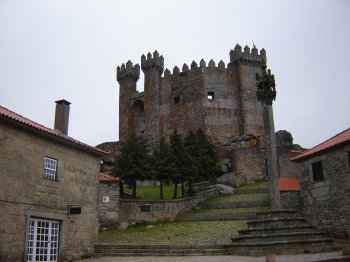
Castelo de Penela
- heritage
Rua do Castelo, 5
3230-280, Penela
Castle overlooking the town, where the Church of São Miguel, dating from the 15th century, and a set of anthropomorphic graves from the late Middle Ages stand out. It has a polygonal, irregular shape and is made up of walls and several towers from the 15th and 16th centuries. It preserves the Vila Door and the Betrayal Door, the latter with Moorish influences. This is the second-largest castle on the Mondego defensive line.
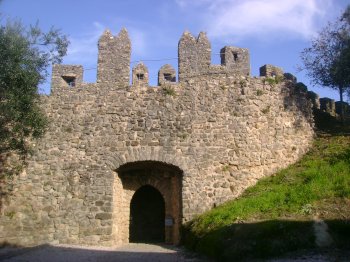
Castelo de Pinhel
- heritage
Rua do Castelo, 4
6400-340, Pinhel
This castle was formerly a Lusitanian fortification, but it was the Romans who made it militarily important. During the reign of King Dinis, fortification and expansion work was carried out, with six towers being erected and walls being built around the town. After losing its defensive function, the castle fell into decline. Currently, only a few sections of the walls, some gates, and two towers remain. It is believed that this site once housed a castrum built by Lusitanians, Vetoans, or Turduli who took refuge there. It was later occupied by the Romans. The first restoration work was carried out …
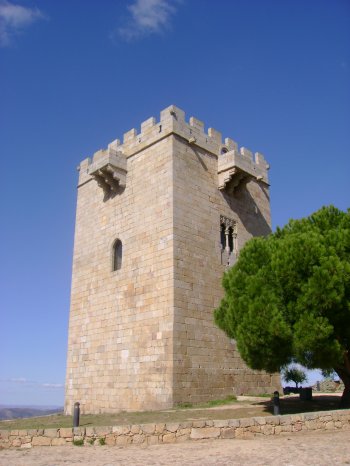
Castelo de Pombal
- heritage
Rua da Encosta do Castelo
3100-826, Pombal
Within this magnificent monument, the extensive walls, the quadrangular turrets, the keep, and what remains of the barbicans are preserved, bearing witness to its defensive value. Rebuilt during the reign of King Manuel I, the armillary sphere, a Manueline-style window opening in the coastal wall, and the royal coat of arms are visible. Inside the walls, vestiges of the Chapel of Saint Michael and a Romanesque colonnade remain.
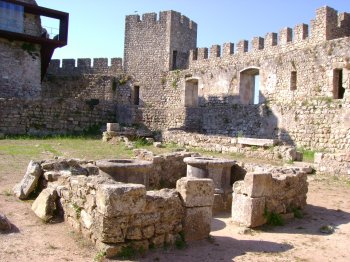
Castelo de Portalegre
- heritage
Rua Luís Barahona, 8
7300-158, Portalegre
Castle founded by Dom Dinis in 1290, deployed in the most Uptown. Originally, had a double wall with twelve towers and eight gates. This unique construction, only a few walls and panels of three towers.
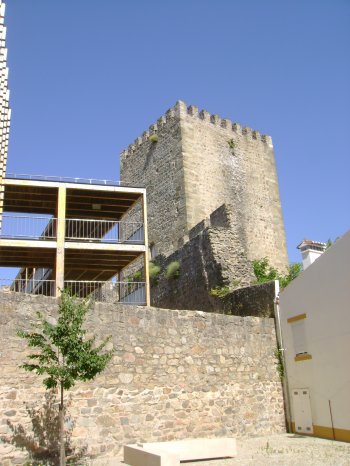
Castelo de Portel
- heritage
Rua dos Arcos - Praça Dom Nuno Álvares Pereira
7220-375, Portel
An important example of military architecture, this castle was built in the 13th century. It has the shape of an irregular octagon, and the keep, with rooms covered by Gothic vaults, is made of marble. Currently, the Palace of the Mayors and the Dukes of Braganza, and the Manueline-Mudejar chapel, remain. The residential buildings, barracks, and military warehouses in the Plaza de Armas are in ruins.
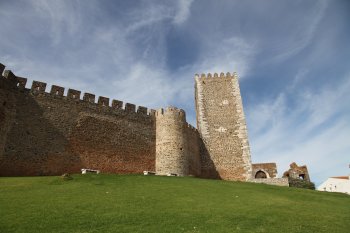
Castelo de Portuzelo
- heritage
Rua António Pereira da Cunha
4925-020, Viana do Castelo
Romanesque Palace with Castle features, with quadrangular and differentiated coverage in terrace. Features elevations of two floors and three corpses, topped by a central tower. In the 13th century, there was here an ancient Manor House, couto de Portuzelo. The current building was designed in 1853 by António Pereira da Cunha.
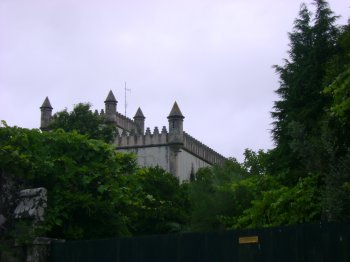
Castelo de Ranhados
- heritage
Rua do Castelo
6430-362, Ranhados
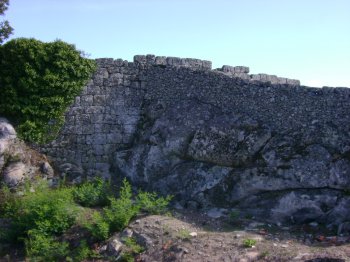
Classified as a Property of Public Interest in 1977, Ranhados Castle sits on a hill overlooking the village of the same name, approximately 838 meters above sea level. Archaeological evidence attests to the existence of a protohistoric fortified settlement, later Romanized. Its construction dates back to the reign of King Dinis, when he granted the town a charter (1286) to encourage its settlement and defense. At the end of the 14th century, these lands were donated to two Távora brothers, and some authors argue that it was built during this period, given the simplicity of the design and the apparent …
Castelo de Redondo
- heritage
Rua do Castelo
7170-054, Redondo
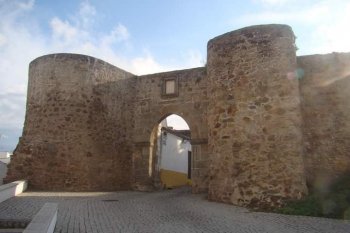
Castle built by King Dinis in the 14th century, possibly on previous fortification. It has an oval fence with six turrets, two towers and two gates. Currently, retains primitive walls parts, the doors of Ravessa and of Relógio, and remains of the city hall, with ogival slots. The Bell Tower was built in the reign of King João II and was the residence of the Earls Borba-Redondo.
Castelo de Redondos
- heritage
Rua de Santa Cruz, 28
3080, Buarcos
Also referred to as Castle of Buarcos, represents what remains of an ancient medieval castle. Given its deployment on the ground, should be in its origin the existence of a fortified village.