Explore the best places


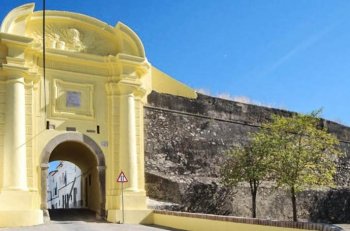
Portas de Santa Maria
- heritage
EN371
7370, Campo Maior
The Portas da Vila, also known as Portas de Santa Maria, are one of the most characteristic monuments of Campo Maior, and also one of the main entrances to the town.
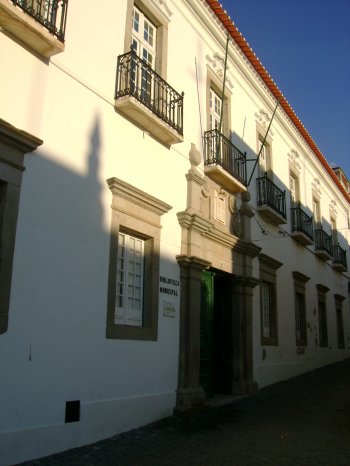
Palácio Visconde Olivã e Jardins / Biblioteca Municipal de Campo Maior
- heritage
Rua de Olivença
7370-118, Campo Maior
A 17th-century palace with proto-Baroque and Baroque architecture. It has a Baroque garden with a fountain and pavilion decorated with vegetal and shell-shaped stucco elements.
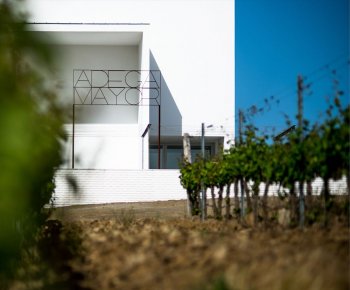
Adega Mayor
- leisure
Herdade da Argamassas
7370-171, Campo Maior
The building, designed by renowned architect Siza Vieira, houses Rui Nabeiro's project for the production and sale of regional wines. Adega Mayor offers guided tours, booked in advance, to showcase the entire winemaking process, provide details about the building, and offer wine tastings. At the end, visitors can purchase quality products at the Mayor shop.
Igreja Matriz de Campo Maior
- heritage
Largo Doutor Regalla, 11-B
7370-027, Campo Maior
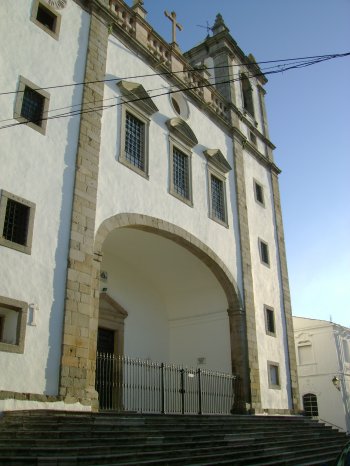
Built between 1570 and 1646, it has a tripartite main façade with embedded pilasters. The central part features a wide round arch forming a narthex, surmounted by three windows with three pediments. On the sides, two strong bell towers covered by domes are visible. Inside, with three naves, the silver liturgical objects and vestments woven and embroidered with gold from the 16th century stand out. It is also known as the Church of Our Lady of Expectation.
Capela dos Ossos
- heritage
Largo Doutor Regala, 4
7370-047, Campo Maior
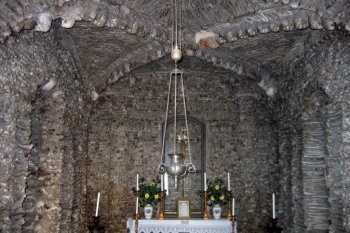
Built in 1766, the Chapel of Bones, also known as the Chapel of Souls, is attached to the main church. The interior decoration features human bones, a tribute to those who died in the 1732 catastrophe, which killed 2/3 of the village's population.
Castelo de Campo Maior
- heritage
Rua dos Quartéis, 8
7370-102, Campo Maior
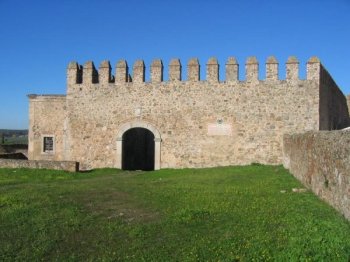
Castle where some sections of the medieval wall and the north tower are still visible. Of the 17th-century fortified perimeter, the moat and counterscarp are largely preserved, along with bastions, gates and barracks. The castle has two of its six towers, with a rectangular plan. The Manueline molding stands out in the western tower. A large hall, with two naves divided by strong ashlar pillars, has a groin vault. Ordered to be rebuilt by King Dinis in 1310, it is assumed that fortifications existed in this area of Campo Maior since Roman or Visigothic times. During the reign of King …
Aldeia de Ouguela
- country
- heritage
Ouguela
7370, Ouguela
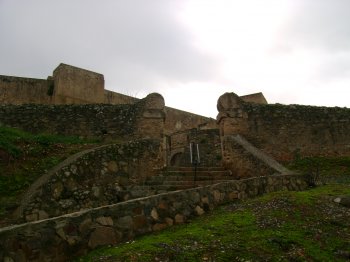
This ancient medieval village is located at an altitude of 270 meters. A cluster of 17th and 18th-century houses is situated within the walls of the old 17th-century castle. The settlement is called the suburb, meaning outside the walls, and is situated on sloping areas, along steep cobblestone streets. The sanctuary of Our Lady of Enxara is located nearby.
Barragem do Abrilongo
- beach
- country
Nossa Senhora da Graça dos Degolados
7370, Degolados
A dam in the parish of São João Baptista, which shelters the Abrilongo stream. It was built with the aim of serving as a base for an extensive irrigation system, however, due to the excellent conditions it offers, it also allows for the practice of sporting activities.
Barragem do Caia
- beach
- country
São João Baptista
7370, São João Baptista
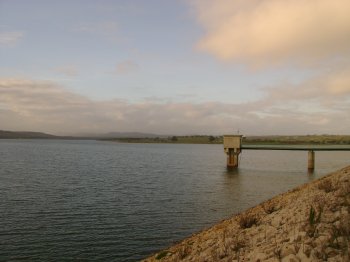
A mixed-type dam (earth and buttress) located in a rugged area of fields and olive groves on the Caia River. Sports and leisure activities are restricted to certain areas of use.
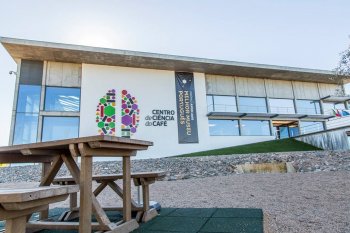
Centro de Ciência do Café
- heritage
EN371 - Herdade de Argamassas
7370-171, Campo Maior
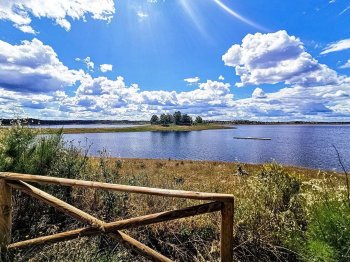
Owned by the Delta Cafés company, it is one of the few specialty museums in the world and the only one in the Iberian Peninsula. Its aim is to promote coffee cultivation worldwide and its relationship to the activities of the company that founded it.