Explore the best places
Heritage in Portugal


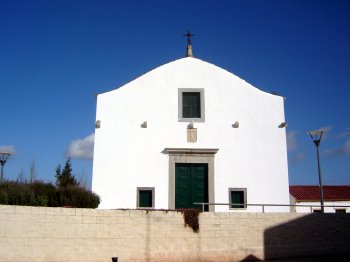
Igreja de São Sebastião
- heritage
Rua São Gonçalo de Lagos, 9
8590, Castro Marim
Church located near the Fort of São Sebastião. One of its most important features is the rich interior decoration with tempera murals adorning all the elevations.
Núcleo Museológico do Castelo de Castro Marim
- heritage
Castelo de Castro Marim
8950-188, Castro Marim
Located within the castle itself, this is a space where you can learn more about the history of Castro Marim. Here you can appreciate documents, drawings and engravings displayed on the walls, archaeological artifacts and historical-ethnographic pieces exhibited in various showcases, from the Late Bronze Age, the Iron Age, the Roman period, among many other historical periods.
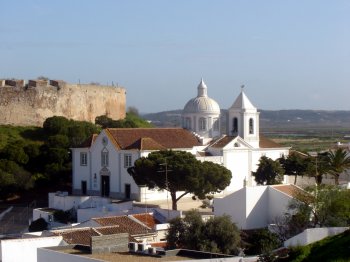
Igreja Matriz de Nossa Senhora dos Mártires
- heritage
Travessa do Castelo
8950-137, Castro Marim
The main church has quite peculiar architectural details. The narthex is Renaissance, although quite altered, the chancel has a lunette vault and has Neo-Manueline elements in the parapet of the south facade.
Forte de São Sebastião
- heritage
Castro Marim
8950, Castro Marim
An important work in the renovation of the town's military defense system, as evidenced by its proximity to the castle and the wall. An irregularly shaped fort with five bastions.
Castelo de Castro Marim
- heritage
Travessa do Castelo, 3
8950-122, Castro Marim
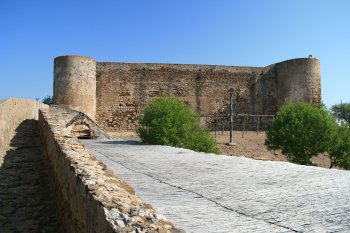
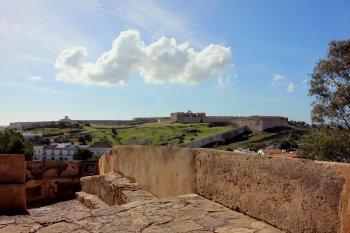
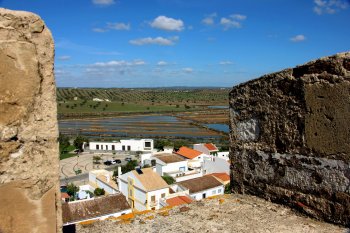
The outer wall, semicircular in shape, surrounded the medieval village and the so-called Old Castle. Today, only the remains of the castle with four turrets and a gate, the ruins of the Church of São Tiago, a 14th-century construction, and the Palace of the Mayors remain. The Castle offers a unique viewpoint over the Guadiana River, the village, the salt pans, and vast sea horizons.
Igreja da Misericórdia de Tancos
- heritage
Rua da Escola Velha
2260-314, Vila Nova da Barquinha
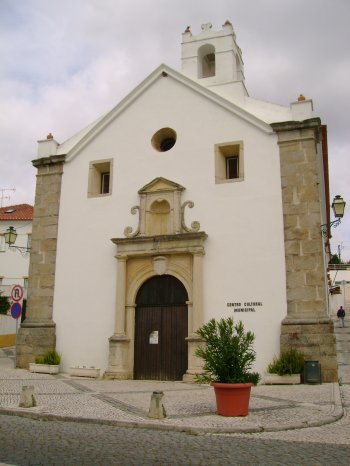
A 16th-century church with a single nave, pilasters at the corners, a main façade finished with a gable and cornice, with openings forming a central axis consisting of the Mannerist portal surmounted by a niche with an image of Our Lady of Mercy. The interior is completely stripped of its former structure and decoration, preserving only the chancel arch, a perfect arch on pilasters, with traces of paint.
Museu das Tropas Paraquedistas Portuguesas / Museu das Tropas Aerotransportadas
- heritage
EN3 - Polígono de Tancos
2260-209, Praia do Ribatejo
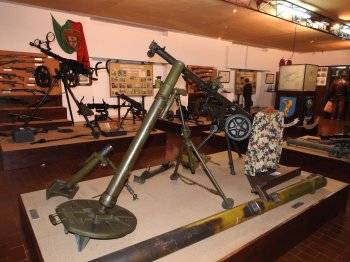
The museum, inaugurated in 1990, aims to preserve the past and showcase the history of the military personnel of this force. There is a room dedicated to honoring soldiers who died overseas.
Castelo de Almourol
- heritage
Ilhota do Rio Tejo - Praia do Ribatejo
2260, Vila Nova da Barquinha
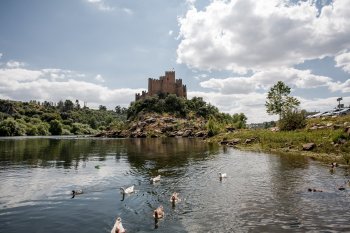
Located on a rocky Islet in the river Tagus, a Templar Castle warrant lift by Gualdim Pais, in the 12th century. Previously, it is believed to have existed a castro lusitano, improved by the Romans. The walls are flanked by ten towers that surround the keep and which gave the set an important defensive capabilities. Inside, there are several monumental doors that make communication between the different parts of the Castle. The access is made by river in a small boat crossing, lasting about five minutes.
Igreja Matriz da Atalaia
- heritage
Rua Patriarca Dom José
2260-039, Vila Nova da Barquinha
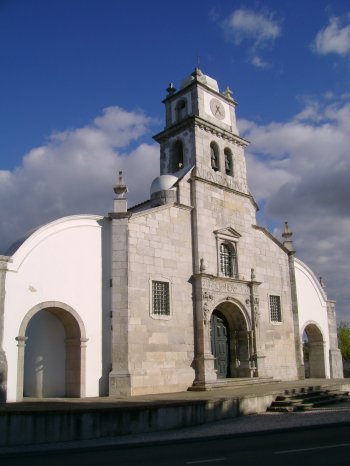
This Renaissance church was founded by Dom Pedro de Menezes in 1528. It has a unique facade, where the gable slopes symmetrically down to the pillars, opening into two arches. Of particular note are the carved stonework, the star-vaulted ceiling of the chancel, the early 17th-century tiles, the pulpit, and the wooden balcony.
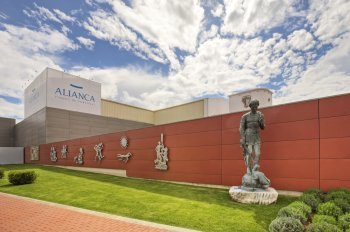
Aliança Underground Museum
- heritage
Rua do Comércio, 444
3781-908, Sangalhos
At the Aliança Underground Museum, visitors can explore different artistic worlds, with a wide range of activities throughout the year. In this museum, sparkling wines, still wines, and brandies are perfectly integrated with seven art collections, including archaeology, ethnography, mineralogy, paleontology, tilework, and ceramics. It showcases the various grape varieties, allowing visitors to journey through the world of aromas and nectars produced in the region.