Explore the best places
Heritage in Portugal


Santuário de Nossa Senhora de Aires
- heritage
Viana do Alentejo
7090, Viana do Alentejo
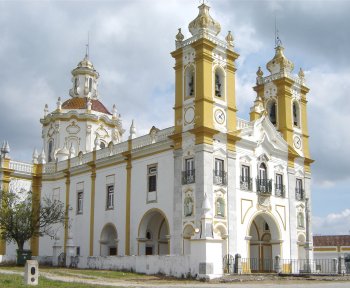
The longitudinal nave is divided into three sections, from which the transept arms and the two towers of the façade stand out. The façade is imposing, marked by two symmetrical lateral bell towers. The nave has a full-round vault roof, and lighting is provided by the nave's large windows. The church's entrance portal, dating from 1755, is a meticulous Rococo piece.
Igreja Matriz de Alcáçovas / Igreja do Salvador
- heritage
Estrada da Cruzinha
7090-025, Viana do Alentejo
A temple with three naves and Doric columns, with three Baroque altars in gilded woodwork. The chancel, covered in tiles, features a Mannerist altarpiece.
Paço Real da Vila / Paço dos Henriques
- heritage
Praça da República
7090-026, Viana do Alentejo
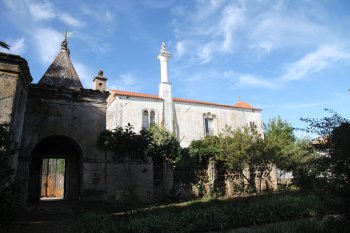
It is a 13th-century building that was completely altered in the 16th century to house the chapel of São Jerônimo. Its floor plan consists of two rectangular elements arranged perpendicularly. Notable features include the courtyard portico, a small square opening in the cellars, and three Manueline-framed windows, one of which opens onto a balcony. Also, noteworthy is a single-flight staircase leading to a small portico.
Igreja Matriz de Aguiar / Igreja de Nossa Senhora da Assunção
- heritage
Largo 25 de Abril, 8
7090-226, Viana do Alentejo
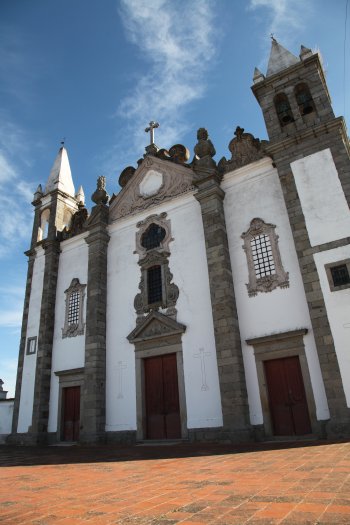
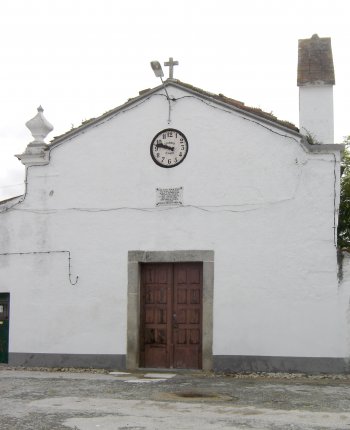
Its exact foundation is unknown. However, it is mentioned in royal documents from 1320. In the 17th century, its main elevation underwent major architectural changes. It features a granite portal, a lintel, a triangular pediment topped by a stone cross, a spire at the north end, and a robust, sharp-pointed bell tower opposite, made of masonry decorated with artistic sgraffito, two eyelets, and an equal number of cast bronze bells, the oldest dating from 1772.
Castelo de Viana do Alentejo
- heritage
Largo de São Luís, 7
7090-271, Viana do Alentejo
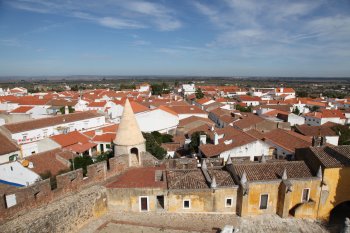
Originally called "Viana de a par de Alvito," the town was repopulated in the 13th century by King Gil Martins. In 1313, King Dinis granted it a charter and privileges and ordered the construction of the castle, which, rebuilt by King João II, still retains the characteristics of the original design. It is a pentagonal monument with cylindrical towers with cruciform arrow slits at its corners.
Igreja Matriz de Viana do Alentejo
- heritage
Travessa das Torres, 10
7090-268, Viana do Alentejo
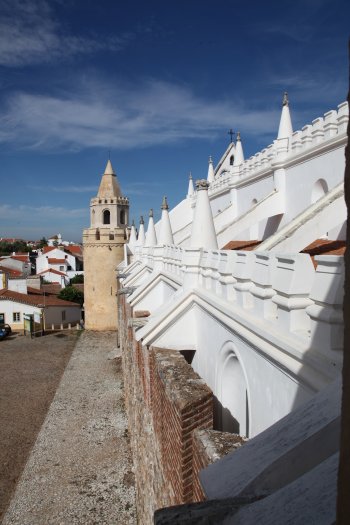
Manueline building with Mudejar influences, designed by Diogo Arruda. The church features a wide nave with a small apse flanked by two apsidioles. The main façade features a wide Manueline portal and a small openwork window with a round arch. It is decorated with 18th-century murals. Inside, the church is structured in three naves of five bays, with the apse almost embedded in the wall.
Igreja Matriz do Topo / Igreja de Nossa Senhora do Rosário
- heritage
Rua Joaquim Homem da Silveira Noronha
9875, Topo
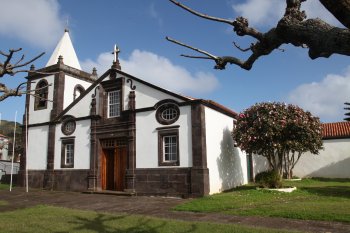
The church was built in the 16th century and later expanded and restored in the 18th century. This reconstruction was necessary due to the devastation caused by the earthquake known as Mandado de Deus (Mandate of God). The majestic façade features a portal, three large windows, and two oculus windows, not to mention the bell tower, atypical for the island's architecture. Inside, the gilded carvings and numerous paintings stand out.
Farol da Ponta do Topo
- heritage
Ponta do Topo
9875-115, Topo
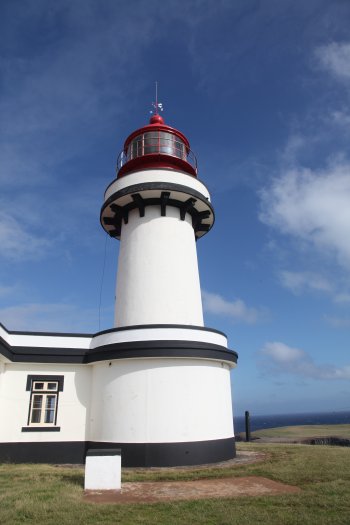
Lighthouse located on the southwestern tip of the island, more specifically on Ponta do Topo. It consists of a 16-meter-high circular tower and annexes housing the lighthouse keeper's quarters and a storage area.
Fajã do Além
- heritage
Fajã do Além
9875-027, Topo
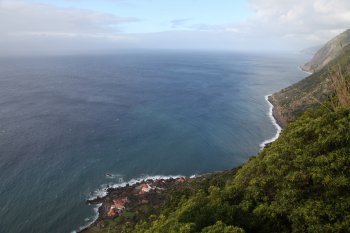
Access to this fajã, located between Fajã de São João and Fajã do Ginjal, is via a narrow path, where you can enjoy fantastic views. However, this route is only accessible on foot, by donkey, or on horseback. The several houses here are now inhabited only on weekends. The land is used for agricultural purposes, primarily for growing yams and vineyards.
Fajã das Fonduras
- heritage
Fajã das Fonduras
9850, Calheta
A small fajã located between Fajã da Ponta Grossa or Fajã do Mero and Fajã da Abelheira. It is almost completely abandoned, except for the inhabitants of Norte Pequeno, who come here to graze their cattle and cultivate the land. There are many springs, and it is known that an old watermill once stood here. Access is on foot, via a shortcut that begins in Norte Pequeno, or by car, descending the Fajã da Penedia path to Canto da Abelheira, then continuing on foot.