Explore the best places
Results for [COKHERE.com] order hydromorphone Wanaka private pure product in Portugal


Mamoa de Tojais
- heritage
Pindo
5470-057, Cervos
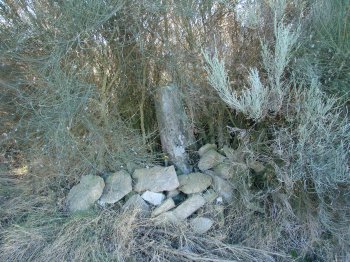
About 100 yards West of the Via Romana, in the Pindus, near a bifurcation of paths and already in private land is what remains of megalithic monument. It is not possible to determine its dimensions, since it was nearly destroyed by agricultural work. However, retains a mainstay stuck about 0.90 metres high and 0.67 meters wide, which was later reused as a divisive landmark properties. On one side they seem to bring out two crosses recorded. A property wall, about 50 meters, lies what appears to be another mainstay, decorated with a Sun motif. Nearby this monument there's record of …
Solar da Loureira
- heritage
Estrada de São Pedro
4920-065, Gondarém
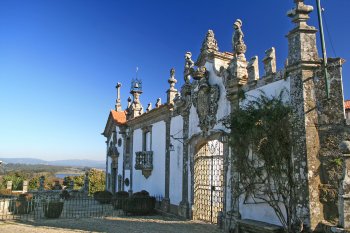
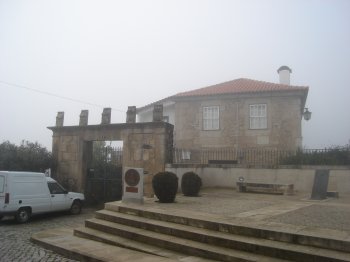
Stately residence dating from the 18TH century, an interesting architectural ensemble of Baroque style, typically Minho. This beautiful palatial residence, although privately owned, well worth a visit, at least to the outside. Through the iron gate you can see the pretty walled courtyard where stands out the upper gallery alpendrada. In the courtyard in front of the gate there is a fountain lined with tiles and the original Sundial. off the patio, front part to the majestic gate, deserves attention an interesting Baroque fountain, transferred from the Franciscan convent of São Paio of Mount for this site in 1899, and …
Castelo de Amieira do Tejo
- heritage
Praça Dom Nuno Álvares Pereira
6050-136, Amieira do Tejo
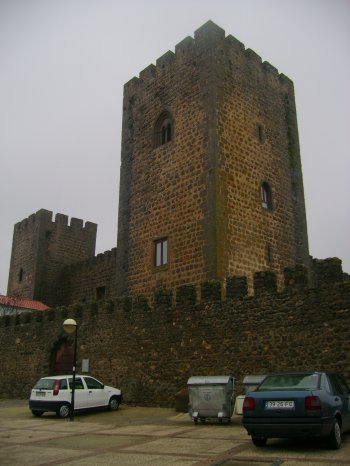
Castle ordered to be built by Álvaro Gonçalves Pereira in 1350, having undergone several modifications in the following centuries. This castle was part of a vast line of fortresses and watchtowers that protected the much attacked banks of the Tagus River. Its architectural design indicates a function aimed at the protection and refuge of populations. Made of dressed granite, it is an important symbol of Portuguese military architecture of the time. Located in a privileged location, on the banks of the Tagus River, it has a good panoramic view. It is shaped like a quadrilateral and is flanked by four …
Casa da Pereira
- heritage
Rua Fernão de Magalhães
5060-333, Sabrosa
Although the certainties are not absolute, everything suggests that Fernão de Magalhães was born in this house, and there is even a reference to Sabrosa in the navigator's will. Being a rural farm house, it has popular civil architecture, characterized by small openings, without erudite elements. The coat of arms inserted in one of the cornerstones of the house would have been chopped by order of King Manuel I, as the navigator made his great voyage of discovery at the service of the kings of Spain. The house was never sold and passed to the current owners by inheritance. In …
Indoor Karting Famalicão
- leisure
Lugar do Xisto, EN14 (Lago Discount)
4760-727, Ribeirão
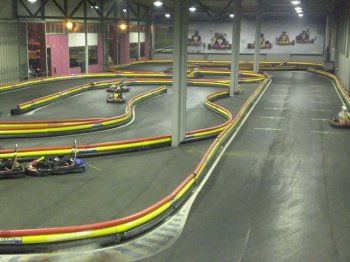
This space with a total length of 100 meters has a total area of 2,500 m2. The total area is divided into two spaces, one for the go-kart track and the other support areas. The go-kart track is equipped with two sets of traffic lights, one with red lamps to signal the departures of racing. The pavement of the runway is asphalt, a pioneer in the country in Indoor karting and has been meticulously studied and tested in the laboratory in order to allow a smooth driving, with little physical effort but demanding with regard to the accuracy of the …
Mosteiro de Ermelo
- heritage
Ermelo
4970-140, Arcos de Valdevez
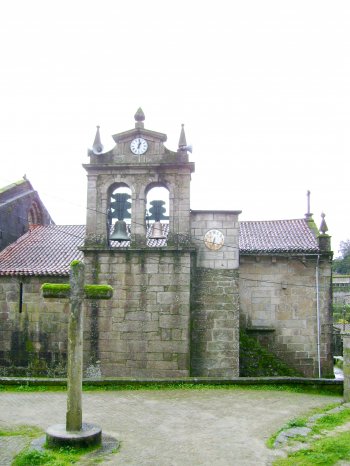
Despite its integration into the Cistercian Order, the life of this monastery was turbulent and short. During his visit in 1553, the Abbot of Clairvaux found it in a state of complete neglect and poverty, which is why it was secularized in 1560, becoming a parish church. What we see today in Ermelo is a beautiful Romanesque church adapted to the life of a small parish, first in the 16th century and again in the 18th century. Of the nave that stood to the south, only the beautiful triumphal arch remains, now open to the sky outside. The monastery's dependencies …
Mosteiro de Santa Cruz
- heritage
Praça 8 de Maio
3000-300, Coimbra
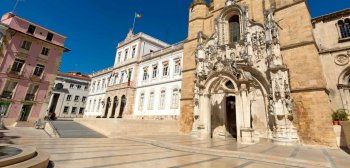
A Romanesque temple founded in 1131, during the reign of King Afonso Henriques, outside the walls of Coimbra. In the first half of the 16th century, the Monastery was completely renovated by order of King Manuel I. Its main portal, executed by Chanterenne between 1522 and 1525, is its most emblematic piece. Inside, highlights include the Manueline vault covering the nave of the church, the tombs of King Afonso Henriques and King Sancho I, the Chapter Room (a Manueline work executed by Diogo de Boutaca), the Chapel of Saint Teotónio (a Mannerist work by the sculptor Tomé Velho), and the …
Sé Velha de Coimbra
- heritage
Largo da Sé Velha - Rua do Norte, 4
3000-383, Coimbra
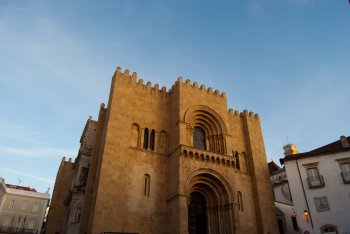
This is one of the most beautiful Portuguese Romanesque monuments, with an external appearance resembling a fortified church. The current construction began in 1162, during the reign of King Afonso Henriques. It served as the Episcopal See until 1772 and subsequently belonged to the Misericórdia (a charitable institution) until 1778. From 1785 to 1816 it was occupied by the Third Order of Saint Francis, and after that date it became the seat of the parish of São Cristóvão. The main façade features a magnificent portal, formed by arches supported by columns with decorated capitals. The 13th-century cloister was the first …
Hotel Casa Melo Alvim
- hotels
Avenida Conde Carreira, 28
4900-343, Viana do Castelo
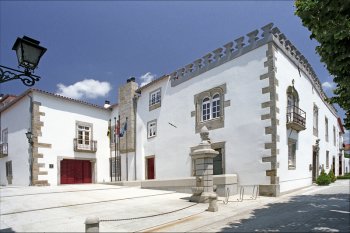
Built in 1509 to taste Manueline Casa Melo Alvim is the oldest urban Manor of Viana do Castelo. Completely restored, this Inn offers comfort and harmony with the surrounding space. During this restoration, existed the care to preserve the architectural and cultural wealth, but also in enhancing the details, with the purpose to take the guest to cover different periods of history. The Inn has 20 rooms, all with different decoration, which combines current taste with the memories of the past. This taste extends to the restaurant, to press for the use of products from the region, underscoring its genuine …
Forno Cerâmico Romano
- heritage
Rua da Nogueira - CM1244
5030-224, Fornelos
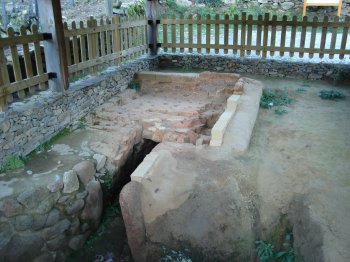
It is a ceramic oven from the Roman period, which consists of two overlapping chambers separated by a perforated grill, with four brick arches that support the cooking chamber grill. Cooking products were placed on the grill, which was then topped with a vault with a chimney, to evacuate gases and smoke, of which only traces remain. The chamber is preceded by a corridor furnace with brick walls that slope towards the center and a slab base. The mouth of the oven is made of stones placed vertically. The vault with the grill and chimney constituted the "laboratorium", still documented …