Explore the best places
Heritage in Portugal


Torre dos Alcoforados
- heritage
Rua da Torre Alta
4580-867, Lordelo
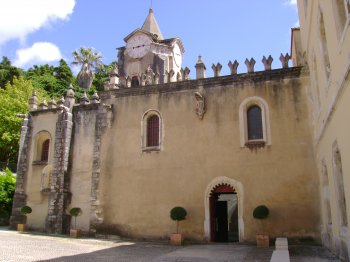
This is a medieval tower with a quadrangular plan, initially part of the estate belonging to the Brandões lineage, which served as a fortified manor house with three floors. It consists only of the ruined structure of the four granite ashlar walls. On the northeast façade, a window extending to its base and corbels where a balcony (a type of wooden structure) would have rested stand out. On the main façade, a round-arched doorway with a lintel stands out. Visits are limited as it is located within the courtyard of a private house.
Mosteiro de São Pedro de Cête
- heritage
Largo do Mosteiro
4580-312, Cête
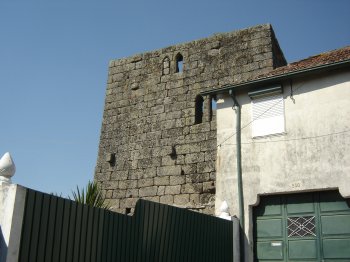
A Romanesque monument, one of the oldest in Portugal. Of the Monastery, only the Church, the chapter house, and the pre-Manueline cloister remain after centuries of decay. The semi-warlike appearance of the convent church, with its crenellated side tower, thick walls, and the giant flanking its portal, gives it a religious and, at the same time, defensive function. Inside, the highlights are the depth and height of the nave, as well as the robustness of the granite vault of the chancel and the well-preserved tomb chests of noble knights. Also noteworthy is a vestige of a mural painting representing St. …
Torre do Castelo de Aguiar de Sousa
- heritage
Lugar da Vila
4585-005, Aguiar de Sousa
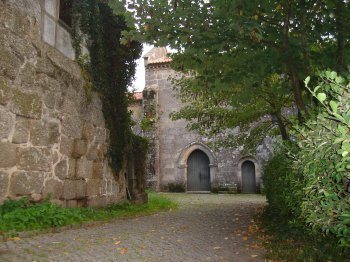
This tower is highly prestigious, not so much for the existing remains, but for its strategic location and the importance the castle held in the historical context of the Reconquista, as it was located on the defensive line of the territory, highly valued by the Asturian kings. It was attacked by Almanzor in 995, led a land in the process of territorial reorganization in the 11th century, and was also a powerful judicial district, one of the most affluent between the Douro and Minho rivers, accumulating great wealth, its territory extending from Porto to near Penafiel. The ruins reveal a …
Ermida de São Sebastião
- heritage
Rua José Malhoa
2500, Caldas da Rainha
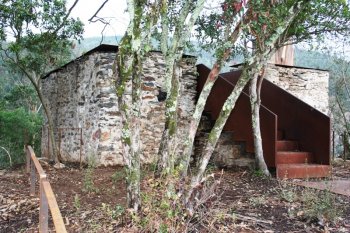
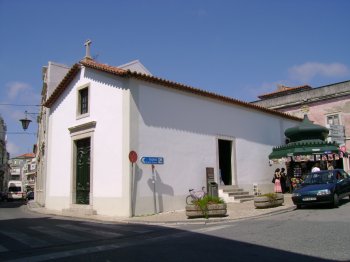
Chapel built at the end of the 15th century, having been renovated in the 18th century. The south façade boasts a stone with a sculpted rosette. Internally, it has a wooden ceiling in the nave and a vault in the chancel. Simple, rectilinear façades, covered with figurative tiles from the 17th century.
Casa Museu São Rafael
- heritage
Rua Rafael Bordalo Pinheiro, 53
2500-246, Caldas da Rainha
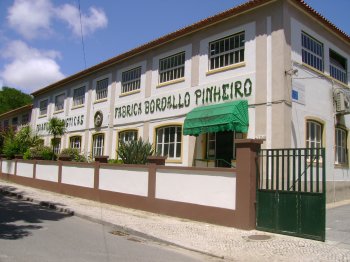
The museum is housed in the former workshop of Rafael Bordalo Pinheiro. Here you will find a vast collection of ceramics from the Bordalo Pinheiro Factory on display.
Museu do Ciclismo
- heritage
Rua de Camões, 57
2500-107, Caldas da Rainha
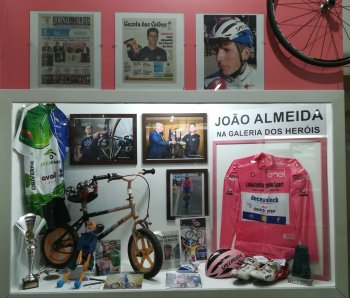
Opened in 1999, this museum presents a collection related to the history of cycling in Portugal.
Chafariz das Cinco Bicas
- heritage
Rua do Diário de Notícias
2500, Caldas da Rainha
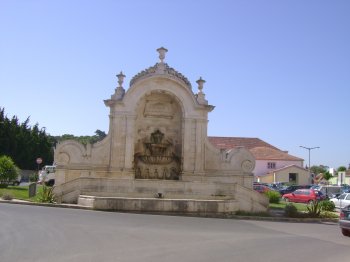
Fountain with a sharply carved stone back. The central body is topped by pinnacles and flanked by volutes. Water flows from five spouts into a niche with three superimposed bowls.
Museu do Hospital e das Caldas
- heritage
Rua Rodrigo Berquó
2500-246, Caldas da Rainha
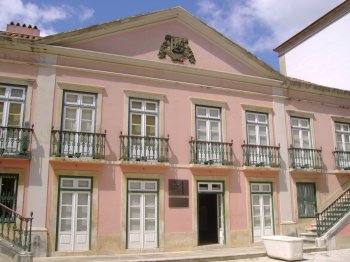
Housed in the former "Royal House" (so named because it was home to Queen Saint Isabel), this museum worked as a hospital for many years. In 1861, it underwent rehabilitation works, overseen by the engineer Pedro José Pezarat, and began serving as accommodation for the institution's directors and the royal family. In 1992, it underwent further renovations, transforming it into a museum.
Edifício do Hospital Termal Dona Rainha Leonor
- heritage
Largo Rainha Dona Leonor
2500-174, Caldas da Rainha
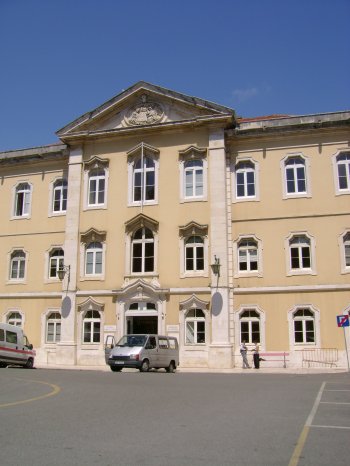
A building of Pombaline and Neoclassical architecture, with construction and repairs in the 15th, 18th, and 19th centuries. From early on, visitors were attracted by the British-style architecture of the thermal baths, where the largest structure is the Thermal Hospital. A complex dating from 1485, sponsored by the wife of King João II, Queen Leonor. It is considered one of the first works of what would later be called the "Manueline style".
Igreja Nossa Senhora do Pópulo / Igreja Matriz das Caldas da Rainha
- heritage
Largo Conselheiro José Filipe
2500, Caldas da Rainha
Manueline construction, built to be the chapel of the hospital founded by Queen Leonor. A single-nave church with a square chancel featuring a star-shaped vault. Highlights include the triumphal arch, the vaulted ceiling, the decorated bosses, the 16th-century wood paintings, the baptismal font, and the 17th-century tiles. Also noteworthy is the Mannerist altarpiece in stonework, within a triumphal arch, of Serlian influence.