Explore the best places
Heritage in Portugal


Convento dos Lóios / Convento de Nossa Senhora da Assunção
- heritage
Pousada de Arraiolos - Nossa Senhora da Assunção
7044-909, Arraiolos
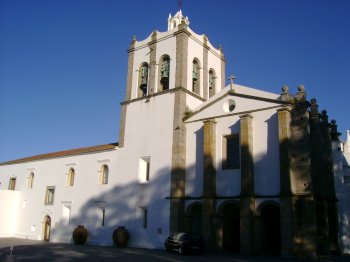
A 16th-century building characterized by the overlapping of architectural and decorative styles, with Manueline-Mudéjar predominating in the church and 17th-century Baroque in the convent. It was founded by the Order of Saint Elói and dedicated to Our Lady of the Assumption.
Igreja Matriz do Vimieiro / Igreja de Nossa Senhora da Encarnação do Sobral
- heritage
Largo José Caeiro da Mata
7040-620, Vimieiro
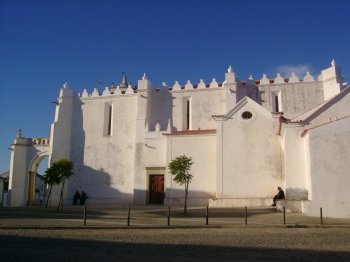
Manueline church founded in 1557 and renovated in 1768. It has a rectangular floor plan and a pointed arch vault with a transverse structural axis. On the exterior, noteworthy features include the portico with a triangular pediment and pilastered jambs.
Castelo de Arraiolos
- heritage
Rua do Castelo
7040-053, Arraiolos
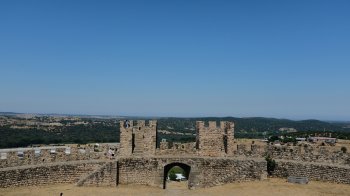
A Romanesque-Gothic castle built in the early 14th century, consisting of two fortified sets. The wall is quadrangular and defended by a tower, with two entrances: the Santarém Gate and the Town Gate. The mayor's palace, together with the wall on the north facade, was restructured in 1480. The Clock Tower has a Manueline design. In the middle of the walled enclosure is the old parish church, a 16th-century building that is quite damaged.
Centro Histórico de Arraiolos
- heritage
Arraiolos
7040, Arraiolos
A historic center that has undergone requalification and enhancement works, where you can find several houses with the famous Arraiolos carpets. A pleasant pedestrian area, where typical Alentejo houses and traditional shops stand out.
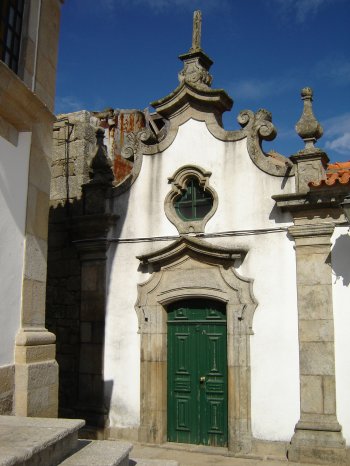
Fachada da Capela de São João Evangelista
- heritage
Largo da Misericórdia
3570, Aguiar da Beira
It features a plastered and whitewashed facade, framed by pilastered quoins marked by pinnacles. The portal is a segmental arch, crowned by a pediment with a projecting cornice.
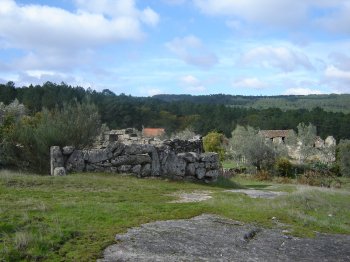
Ruínas da Aldeia de Sapateira
- heritage
Sapateira
3570, Dornelas
In these ruins of the village of Sapateira, one can still find uninhabited houses, a communal fountain and oven, and a threshing floor for drying grain. This ruined village gave rise to the current village of Dornelas.
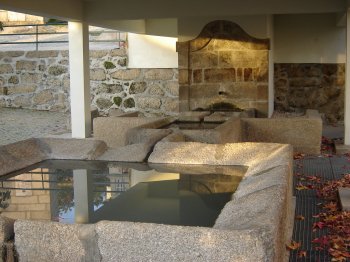
Fonte de Forninhos
- heritage
Largo do Poder Local
3570, Forninhos
This ancient stone fountain has several interconnected laundry tanks.
Igreja Matriz de Eirado / Igreja de Nossa Senhora do Repouso
- heritage
Eirado
3570-140, Eirado
In this church, with its Mannerist structure, some Baroque elements can be seen, notably in the finials on the main façade. On the façade, a frieze of tiles stands out under the cornice, and rayed crosses are inscribed on the cornerstones. Inside, the main altarpiece, in a hybrid style, is particularly noteworthy.
Igreja Matriz de Aguiar da Beira / Igreja de Santo Eusébio
- heritage
Rua do Padre Cruz, 1
3570-044, Aguiar da Beira
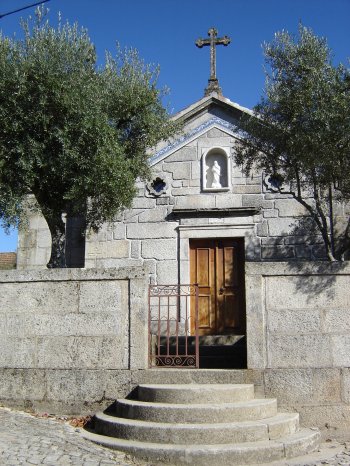
This church, probably built in the 18th century, underwent successive renovations over the centuries, especially in its interior, as can be seen by the diversity of decorative styles. Inside, the nave's ceiling stands out with its neoclassical painting, as does the chancel with 32 coffers depicting hagiographic themes, and the main altarpiece of polychrome and gilded wood in the Joanine Baroque style. The angled side altarpieces, also in polychrome and gilded wood, are in the Rococo style.
Biblioteca Municipal de Aguiar da Beira
- heritage
Avenida da Liberdade
3570-018, Aguiar da Beira
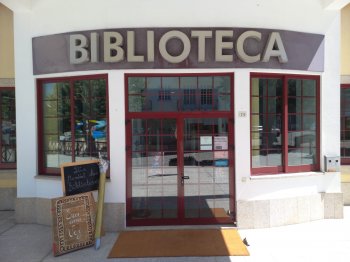
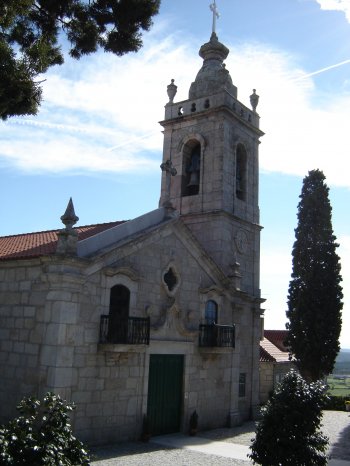
This library has a general reading room for adults, a reading and activities room for children/youth, and a multipurpose room for exhibitions and other cultural events.