Explore the best places
Heritage in Portugal


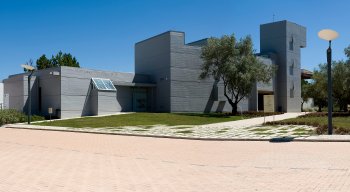
Museu Industrial e Artesanal do Têxtil
- heritage
Rua das Grutas, 593
2485-059, Mira de Aire
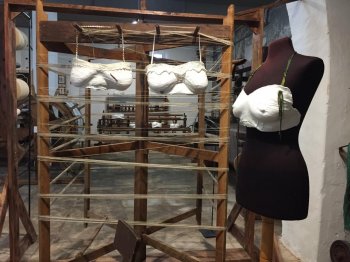
This museum allows visitors to discover a golden age of textiles in Portugal, when Mira de Aire and Minde formed one of the most important textile industrial centers in the 20th century.
Troço de Via Romana em Alqueidão da Serra
- heritage
Rua da Estrada Romana
2480, Alqueidão da Serra
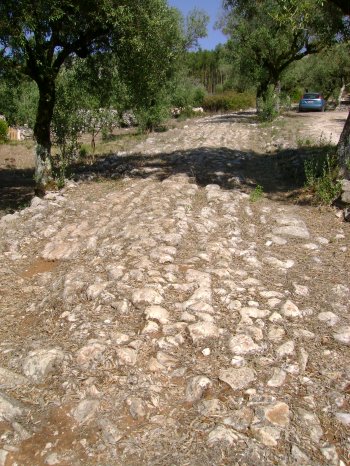
A well-preserved section of Roman road, approximately 150 meters long. It is believed to have been built in the 1st century BC or the 1st century AD.
Museu Municipal de Porto de Mós
- heritage
Travessa de São Pedro
2480-332, Porto de Mós
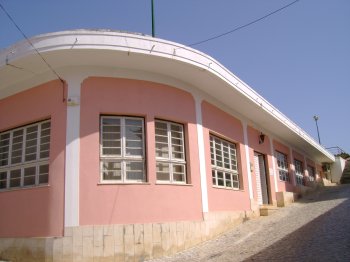
The museum has been operating since 1989. It is located next to the Porto de Mós Town Hall building. A highlight of the museum is its exhibition of fossils and dinosaur remains.
Centro de Interpretação da Batalha de Aljubarrota
- heritage
Avenida Nuno Álvares Pereira, 120
2480-062, São Jorge
This space is located in the São Jorge Military Camp. It features a documentary exhibition about the historical period 1369-1415 and the battle between the Portuguese and Castilian armies in 1385. The exhibition is divided into four parts corresponding to the Late Middle Ages, the Crisis of 1383-85, the Battle of Aljubarrota, and the Consequences of the Victory. It also has a multimedia space where adventure and scientific rigor meet.
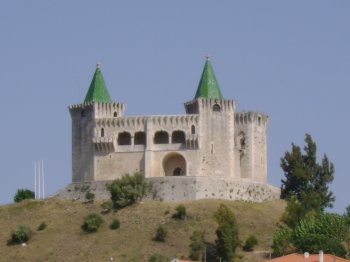
Castelo de Porto de Mós
- heritage
Rua do Castelo, 3
2480, Porto de Mós
The castle's floor plan is an irregular pentagon. It features a thick wall reinforced at each corner by a tower. Four of the five towers have been restored. The main façade is pierced by a semicircular arch, which provides access, through a vaulted opening, to the entrance door, with a segmental arch inside. On the second floor, there is a loggia with a double lanceolate arcade, resting on octagonal pillars and inverted cone-shaped corbels, with a pointed arch window on corbels on each side. It has four vaulted rooms that open onto a central courtyard, with a cistern in the …
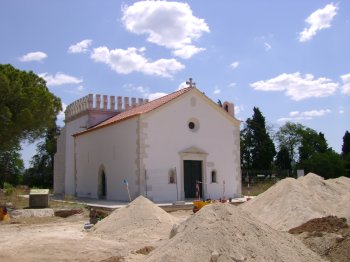
Capela de São Jorge
- heritage
Avenida Nuno Álvares Pereira
2480-062, São Jorge
Commissioned in 1393 by Constable D. Nuno Álvares Pereira, on the site where his standard was raised at the Battle of Aljubarrota, the Chapel of St. George is a small building with a chancel featuring a coffered vault whose keystone depicts a pelican. The interior is simple, with notable features including the slender columns of the triumphal arch on the main altar and the symbols of King João II on the keystone of the ribbed vault.
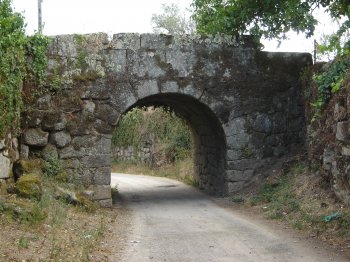
Ponte Romana de Midões
- heritage
Midões
3420, Midões
This Roman-era viaduct is in a good state of preservation.
Palácio de Midões
- heritage
Largo Dom Paz, 23
3420-136, Midões
This emblazoned house, which belonged to the second Viscount of Midões, is in a terrible state of disrepair.
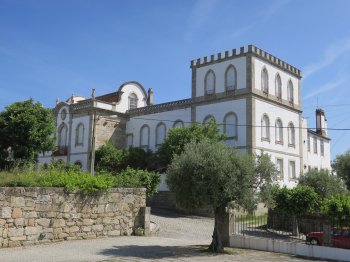
Biblioteca Municipal João Brandão
- heritage
Rua Doutor Francisco Beirão, 3
3420-325, Tábua
This library, housed in an old building, has a multipurpose room, an audiovisual room, an adult room, and a children's room. It offers magazines, daily newspapers, and local and regional newspapers for consultation.

Moinhos de Sevilha
- heritage
Sevilha
3420, Sevilha
This is a set of three granite watermills located on the Cavalo River. Owned by the local community, only two of them are currently in operation.