Explore the best places
Heritage in Portugal


Igreja de Caselas
- heritage
Rua da Igreja
1400-201, Lisboa
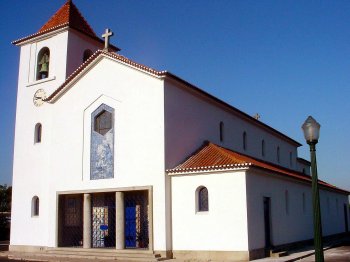
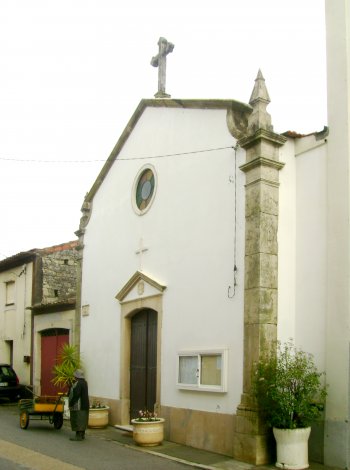
The construction of this church, devoted to the Holly Family, began in 1947. In following years were promoted fund-raising campaigns to repair works.
Museu de Geologia Fernando Real - UTAD
- heritage
Quinta de Prados - Apartado 1013
5001-801, Vila Real
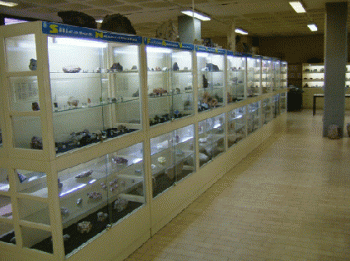
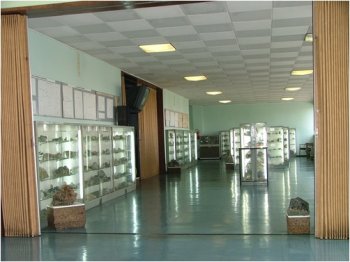
The Museum of geology at the UTAD was founded in 1985 by Prof. Dr. Fernando Real, notable geologist and Magnificent Rector of the Instituto Universitario de Trás-os-Montes that the following year would be the University of Trás-os-Montes e Alto Douro. For the creation of the Museum greatly contributed the professors that constituted the Department of geology at this time. The Museum is situated in the building of Geosciences, which constitutes the core of the campus of the University of Trás-os-Montes e Alto Douro. This museum, scientific character, has an area of approximately 250 m2. It houses collections of minerals, rocks …
Museu da FEUP
- heritage
Rua do Doutor Roberto Frias
4200-465, Porto
The Museu da Faculdade de Engenharia da Universidade do Porto has a museological heritage consisting of collections of objects that testify to the experimental teaching and research developed by the institution since its inception. For more detailed information about this and other mining and geological points of interest in Portugal, visit < a href = http:\/\/www.roteirodeminas.pt target = "_blank" > www.roteirodeminas.pt <\/a>.
Museu de Jazigos Minerais Portugueses
- heritage
Rua da Amieira - Apartado 1089
4465-021, São Mamede de Infesta
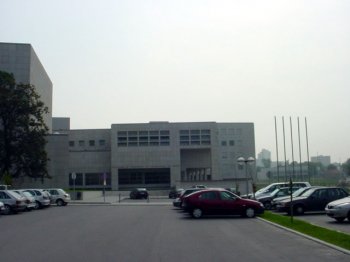
This museum, located at the Laboratório do Instituto Geológico e Mineiro (Laboratory of the Geology and Mining Institute), features one of the best and most complete national collections of the main Portuguese mines. A special note to the kaolin exploration of Senhora da Hora. It also shows archaeological findings that ilustrate the mining activities throughout the epochs in Portugal.
Castelo de Santa Cruz
- heritage
Rio Frio
4970, Parada
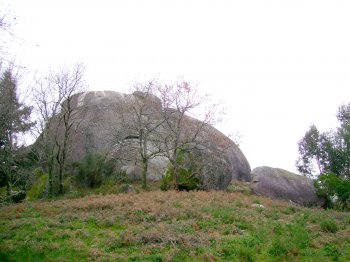
Despite the poor state of conservation and corresponding asset value, little castle of Santa Cruz or the arches has great historical significance and regional scientific interest enough for understanding the Organization and evolution of medieval settlement in the Minho region.
Museu da Vila Velha de Vila Real
- heritage
Rua de Trás-os-Muros
5000-657, Vila Real
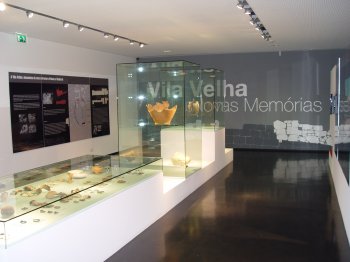
The Museum of Vila Velha is a new cultural equipment of Vila Real, housed in a building designed by the architect António Belém Lima, and aims to make known the fruits of archaeological excavations in Vila Velha, allowing an increasingly profound knowledge of occupation of this territory. The visitor can contact closely with the results of the interventions, but also with associated archaeological practices. On the lower level, offers an area dedicated to temporary exhibitions, diverse themed. On the top floor, an area for holding exhibitions of average duration. There is also an auditorium with capacity for 60 people.
Museu da Quinta de Santiago
- heritage
Rua de Vila Franca, 134
4450-802, Leça da Palmeira
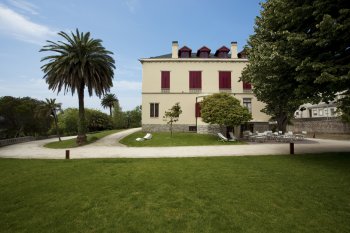
Built by João Santiago de Carvalho e Sousa at the end of the 19th century, it was designed by the Italian Nicola Bigaglia. In 1968, the Municipality of Matosinhos acquired the building and the surrounding garden and the space was adapted for the current Museum of Quinta de Santiago/ Centro de Arte de Matosinhos, opened in 1996. It is housed in a historic building, surrounded by a charming garden, and is a privileged witness to the profound urban and social transformations that took place in the city of Matosinhos-Leça at the end of the 19th century and throughout the 20th …
Museu Municipal Amadeo de Souza-Cardoso
- heritage
Alameda Teixeira de Pascoaes
4600-011, São Gonçalo de Amarante
This space aims to maintain the initial collections, mostly of archaeology, even though it is currently more devoted to modern and contemporary Portuguese artworks, namely of painting and sculpture, including important artists such as António Carneiro and Amadeo de Souza-Cardoso.
Monte de Santa Luzia
- heritage
Estrada de Santa Luzia
4900-408, Viana do Castelo
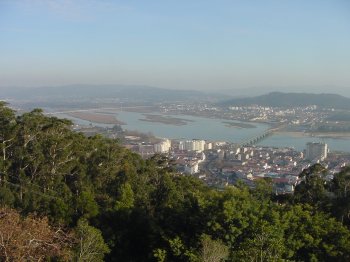
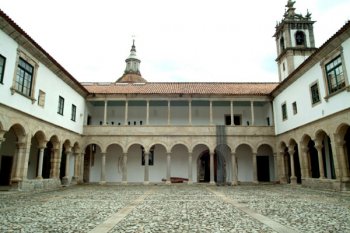
Pleasant place where you can walk in the gardens of dense vegetation, as well as enjoy the views from the viewpoint. From this point, you can see not only the entire city, but also the river and the sea, in a single frame. Be sure to visit the Basilica of Santa Luzia.