Explore the best places
Results for proceed to portal PROBLEMGO.com pay for early release from jail HMP Berwyn in Portugal


Palacete Pombal / Palacete dos Condes de Almeida Araújo
- heritage
Largo do Palácio Nacional de Queluz, 7
2745, Queluz
This extraordinary neoclassic building was outlined by José Costa e Silva and ordered to be built by the 2nd Marquis of Pombal in Queluz. The exterior spaces are developed around a central oval foyer. The sculptures were done by a sculptor from Mafra School, Francisco Leal da Costa and the stuccos pictorial decoration on the walls and ceilings is from Manuel da Costa.
Palácio dos Condes de Mesquitela
- heritage
Largo Doutor António de Sousa de Macedo, 1-N
1200-153, Lisboa
This is a large, sober construction from the XVII century, ordered by the minister António de Sousa Macedo, well integrated at the urban mesh. It started in a primitive nucleous where the chapel stands. The palace developed occupying the entire quarter, having the main façade facing north. It keeps panelling of glazed tiles from the XVII and XVIII centuries.
Mosteiro de Landim
- heritage
Quinta do Mosteiro
4770-328, Landim
This Convent was donated to the Canons regular of Augustinian Rule was sacred on the 16th century after some renovations. In 1562 it started to belong to the friars from Santa Cruz de Coimbra convent and was extinguished in 1770. This construction is under the renaissance style and it has some important features from it, such as the church, the Monastery house and all the land inside of the fence.
Parque de Campismo do Vilar - Barragem do Vilar
- hotels
EN533 - Barragem do Vilar
3620-520, Moimenta da Beira
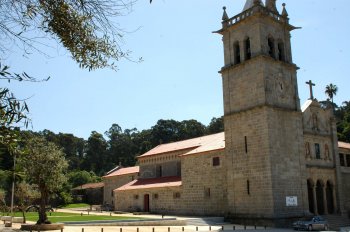
The Parque de Campismo de Vilar, located in Moimenta da Beira, on the banks of the river Távora, offers all the conditions and facilities to provide you with moments of rest away from the hustle and bustle of big cities. This lively and welcoming space offers sports and recreational activities, from walks through the traditional games to sport fishing.
Sarcófagos Medievais de Vila Cova à Coelheira
- heritage
Avenida do Brasil
3650-120, Vila Nova à Coelheira
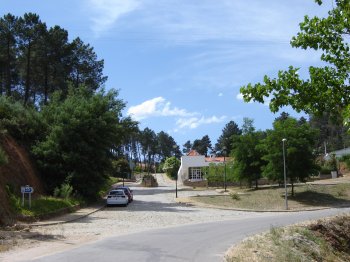
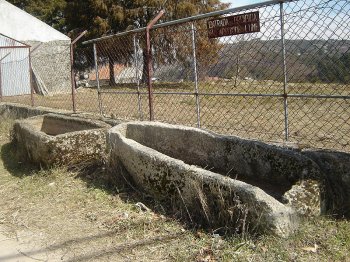
The Medieval Sarcophagi are located in Vila Cova à Coelheira, more precisely on Avenida do Brasil (next to the Main Church). They date back to medieval times but are displaced from the location of the archaeological find. These sarcophagi are carved from granite blocks in an advanced state of deterioration, they belonged to the cemetery of the old church of Vila Nova à Coelheira.
Solar dos Metellos
- heritage
Rua Teófilo Braga, 6
6400-458, Pinhel
This residential building has characteristics from plain architecture. It is composed by two floors and chapel, dated in 1770. During the XVII, XVIII and XIX centuries this residence was slowly increased, as the granites on the main façade can testify. The inside preserves the big rooms with walls covered with paper, some ceilings in wood and an atrium with tiles from the eighteen hundreds.
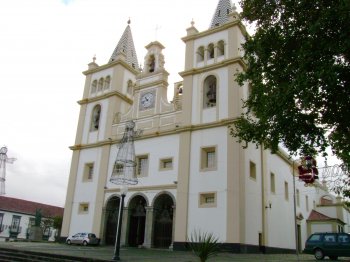
Sé Catedral de Angra do Heroísmo / Sé Catedral do Santíssimo Salvador
- heritage
Rua da Sé
9700-191, Angra do Heroísmo
It is the largest monument in the Azores, built in 1570 by Cardinal Dom Henriqueorders on an old Gothic church from the 15th century. Its interior is of great architectural interest, highlighting the high altar in ambulatory shape, various tiles, paintings and images from the 17th century, a sacristy with rosewood furniture and some religious vestments and oil portraits of diocesan prelates.
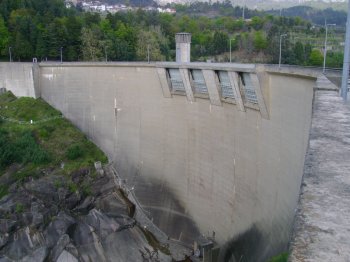
Barragem da Caniçada
- beach
- country
Barragem da Caniçada
4830, Cabo de Além
A dome shaped dam, on the Cávado river, built in 1955 for the production of electricity. The reservoir is one of the loveliest in Portugal, located on the southern borderline of the Gerês National Park. The best panoramic view of the valley and of the reservoir is from the Pedra Bela Belvedere, to the right from the Caldas do Gerês. Sports and leisure are authorized, even though only in certain areas.
A história nos azulejos da Sétima Colina
- heritage
Sétima Colina
1100, Lisboa
Organized by the National Centre of Culture (CNC), this walk allows you to know the history of Lisbon through this decoration art, which is an ancient tradition of our country. From the polychrome of blue and white, from the pattern decorative compositions to the elaborate and figurative assemblage, the glazed tile is an art of simple technical resources, resulting, however, in remarkable aesthetical effects. The purpose of this visit is to recreate the history of this Portuguese traditional art, from the XVI to the XIX centuries, during which you can you can admire the bright interiors and the “reflecting” façades …
Jardim de São Pedro de Alcântara - Jardim António Nobre
- country
- leisure
Rua de São Pedro de Alcântara
1200, Lisboa
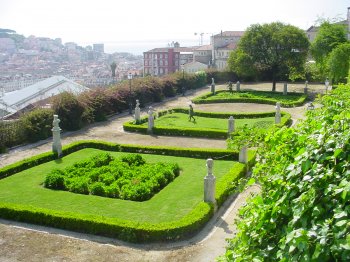
Romantic garden from the XIX century with the walkway built over the remains of the Águas Livres walls. It was later covered with Portuguese stone pavement, got a fountain from the Bemposta palace and, in 1904, a monument to Eduardo Coelho, founder of the newspaper Diário de Notícias. Close to the railing, a glazed tiles panel by Fred Kradolfer (1952) subtitles the landscape observed at the belvedere. It has a grove with dense vegetation, flowerbeds and statuary from the Greek-Roman mythology. At the lower section of the garden are French style busts, inspired on “Os lusíadas” and a sports field.