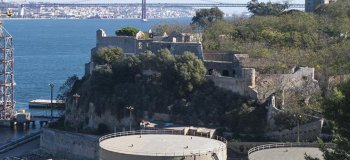
Explore the best places
Heritage in Portugal


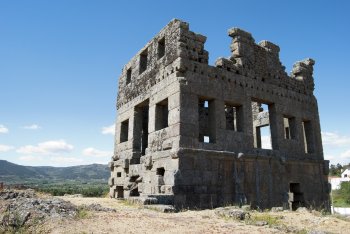
Torre de Centum Cellas
- heritage
Rua dos Bombeiros Voluntários, 26
6250-056, Belmonte
It is on the way to Colmeal da Torre that you can find this enigmatic building of Roman origin, classified as a National Monument since 1927. There are several theories and legends linked to this rectangular building with three floors, whose initial function remains undefined, but which was possibly integrated into a Roman villa. One of these legends maintains that it was a prison with 100 cells, where Saint Cornelius, who formerly also named it, would have been imprisoned.
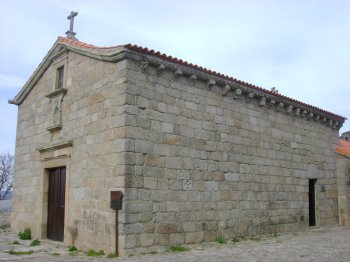
Igreja de Santiago / Panteão dos Cabrais
- heritage
Largo do Castelo
6250-067, Belmonte
Located in Largo do Castelo, this small church with a romantic style also features Mannerist and Gothic elements. It was built in the 13th century and its “ex libris” is the beautiful Pietá, in granite and polychromatic, which impressed the writer and Nobel Prize José Saramago, as reported in his book “Journey to Portugal”. Mural paintings and traces of a triptych with Our Lady, S. Tiago and S. Pedro can still be seen. The Cabrais Pantheon is next to the church.
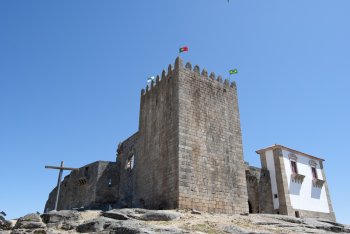
Castelo de Belmonte
- heritage
Largo do Castelo
6250-067, Belmonte
As we approach the entrance to the village, we come across its Castle, classified as a National Monument. Pedro Álvares Cabral, the most famous inhabitant of Belmonte, was born here. The fort was built in the 13th century, at the behest of D. Afonso III, and in 1466 it became the residence of the Cabral family. One of its most emblematic points is the Manueline-style window from the 16th century, from where you can enjoy a breathtaking view of the valleys and mountains that surround the village.
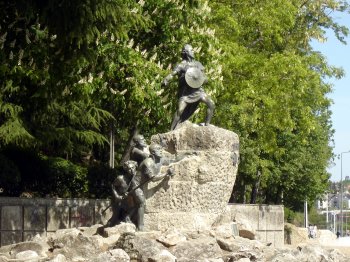
Estátua de Viriato
- heritage
Avenida Emídio Navarro
3500-122, Viseu
This bronze statue, about 2 feet tall, represents in heroic position Viriathus atop a stone surrounded by several soldiers lusitanos.
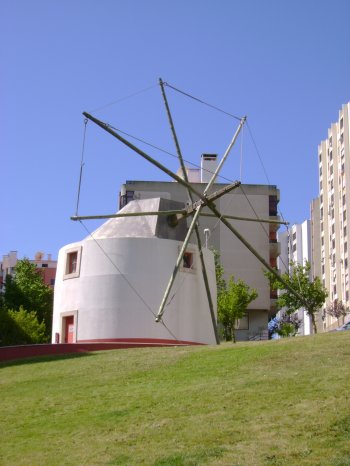
Moinho da Avenida das Laranjeiras
- heritage
Avenida das Laranjeiras
2700-334, Amadora
Restored windmill, located in a residential area.
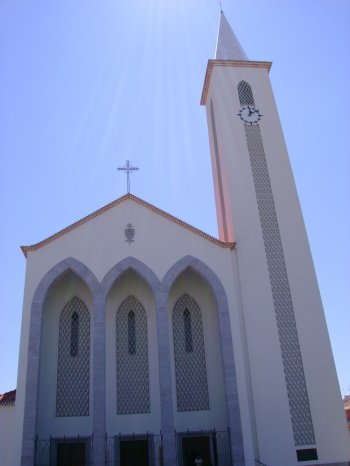
Igreja Matriz da Amadora
- heritage
Praça da Igreja, 28
2700-458, Amadora
Church where the bell tower with clock stands out, visible from several spots of the city. Inside it has three altars, dedicated to the Sacred Heart of Jesus, Saint Joseph and Our Lady of Fátima. The sculpture of Our Lady of Conceição, patron saint of the city, stands out.
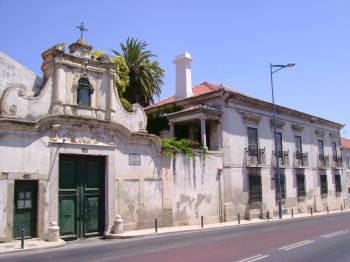
Quinta do Assentista
- heritage
Rua Elias Garcia, 116
2700-708, Amadora
Also known as Quinta dos Intendentes, the main façade dates from 1746, in which the Johannine gate stands out, despite the simplicity of the façade's features. At the top you can see a niche that houses the image of Nossa Senhora da Saúde. Inside, it has a living area, patio and gardens, in which you can admire various tree species, fountains, garden benches and a chapel.
Núcleo Monográfico da Necrópole de Carenque
- heritage
Lugar de Tojal
2700, Amadora
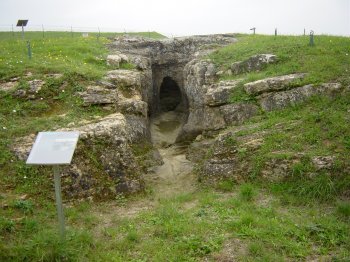
The municipal museum of archeology includes the monographic nucleus of the necropolis of Carenque, where it is possible to observe 3 artificial caves dating from the end of the 4th millennium BC, discovered in 1932. The necropolis of Carenque, National Monument, is a permanent exhibition on the Neolithic/ Chalcolithic of the region surrounding the caves.
Aqueduto das Águas Livres
- heritage
Carenque - Palácio de Queluz
2720, Amadora
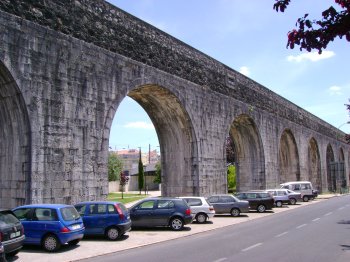
Belonging to the set attached to the Águas Livres aqueduct, it is an extensive stone aqueduct created to carry water to the Terreiro do Paço de Queluz for the royal stables' consumption. The work was created at the site of two springs: the Gargantada spring and the Pocinho spring, and served several fountains in Queluz. Built by King João V in 1731, it was only finished in the mid-19th century. The main section is 14 kilometers long, eight of which are in the municipality of Amadora.
Fortaleza da Torre Velha / Torre de São Sebastião de Caparica
- heritage
Porto Brandão
2825, Porto Brandão
Fortress prior to the Belém Tower intended, together with it, to protect the entire Tagus area. It is considered the oldest Portuguese maritime defense fortification.